

 en
en
 English
 繁体中文
繁体中文 Japanese
 Korean
 Russian
 German
News
Deepen Optoelectronic Resources, Lead Technological Breakthroughs
Deepen Optoelectronic Resources, Lead Technological Breakthroughs
Conventional wide-angle lenses can capture more of a scene than standard lenses, but their field of view can still be insufficient when a vision system needs to cover a large area from a restricted installation position. This becomes a practical limitation in machine vision, security monitoring, panoramic imaging, and inspection systems where blind spots can affect detection or coverage.
Fisheye lenses address this requirement through an extremely wide field of view, commonly around 180° or more. Their short focal lengths, strong nonlinear distortion, and large depth of field allow a single camera to capture a substantially larger scene. However, choosing a fisheye lens is not simply a matter of selecting the largest possible FOV. Sensor size, image circle, focal length, distortion characteristics, edge resolution, filter compatibility, and the required image processing workflow all influence the final result.
For industrial and scientific users, understanding these relationships is essential when selecting a fisheye lens or designing a customized panoramic vision system.
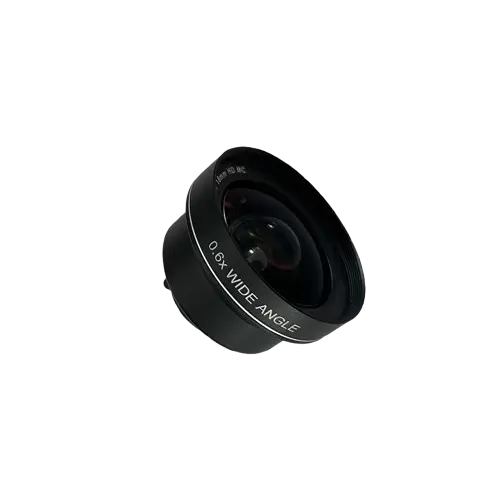
The defining characteristic of a fisheye lens is its extremely wide field of view. Depending on the optical design, a fisheye lens can provide approximately 180° or even wider coverage, with some designs reaching around 220°. This allows a camera to observe a large area from a relatively compact installation position.
Focal length is closely related to this coverage. Fisheye lenses commonly use short focal lengths in the approximate range of 8–15 mm, although the appropriate value depends strongly on the image sensor format and required field of view. The same focal length does not produce the same image coverage on every sensor. A larger sensor generally captures a larger portion of the image circle, while the lens must provide an image circle compatible with that sensor.
This is why FOV should not be evaluated independently from sensor size and image circle. A lens designed for a particular sensor format may produce vignetting or incomplete image coverage when paired with an incompatible sensor.
Fisheye lenses also intentionally introduce strong nonlinear distortion. Straight lines near the image edges appear curved, while objects around the optical center generally experience less apparent distortion. This projection behavior is fundamentally different from conventional rectilinear wide-angle lenses.
The distortion is not automatically a disadvantage. In applications where maximum scene coverage is more important than maintaining straight-line geometry, such as panoramic monitoring, fisheye projection can provide useful information that would otherwise require multiple cameras.
The challenge appears when the captured image must be used for measurement, object localization, automated inspection, or detailed analysis. In these cases, distortion changes the apparent position and shape of objects across the image. Software-based or optical distortion correction may therefore be required to transform the original fisheye image into a more geometrically useful representation.
Large depth of field is another important characteristic. Because fisheye lenses typically use short focal lengths, a relatively large portion of the scene can remain within acceptable focus. This is useful when targets are located at different distances, particularly in monitoring environments, large inspection areas, and complex industrial installations.
A fisheye lens filter should be considered part of the optical system rather than an independent accessory. Filter selection can affect light transmission, spectral response, vignetting, and edge image quality, particularly with compact fisheye designs where the incident light angle changes significantly toward the edges of the field.
For visible-light applications, an optical filter may be selected according to the required wavelength range, ambient-light conditions, or imaging objective. In infrared-sensitive systems, IR-cut filters or infrared correction solutions may be required to control unwanted infrared transmission and maintain more consistent color or focus characteristics.
The sensor must also be considered at the same time as the filter and lens. Sensor size determines how much of the lens image circle is used, while pixel size and sensor resolution influence the level of detail that the optical system needs to resolve. A fisheye lens paired with a high-resolution sensor is only useful if the optical design can provide sufficient resolution across the required image area.
Purchasers should therefore evaluate several parameters together:
Sensor size: Determines the usable image area and influences the resulting FOV.
Focal length: Affects scene coverage and working distance.
Image circle: Must adequately cover the selected sensor without unacceptable vignetting.
Aperture: Influences light collection, depth of field, and exposure performance.
Filter type and spectral range: Determines how specific wavelengths are transmitted or suppressed.
Mounting interface: Must match the camera and mechanical installation requirements.
Distortion characteristics: Determines how much geometric correction may be required.
Edge resolution: Particularly important when objects near the perimeter of the image are part of the inspection or monitoring target.
Filter mounting also requires attention. Depending on the optical architecture, the filter may be positioned at the front of the lens, within the optical assembly, or through a customized mechanical interface. An incorrectly sized filter can introduce mechanical interference, vignetting, or undesirable changes in the effective optical path.
For scientific and industrial applications, wavelength requirements should be defined before selecting the filter. A system designed for visible imaging, near-infrared imaging, or a specific spectral band can require very different filter characteristics. Simply adding a generic filter without considering the lens transmission range and sensor spectral response can reduce the usable signal.
So, what are fisheye lenses good for? Their main advantage is not simply that they are “wide-angle.” They are useful when a system needs to capture a very large field of view from a limited camera position and can accommodate the associated nonlinear projection.
In machine vision, fisheye lenses can be used when the inspection area is large relative to the available camera installation space. For example, a production line, large mechanical assembly, warehouse area, or automated inspection zone may require a broader view than a conventional lens can provide. The large depth of field can also help when objects appear at different distances from the camera.
However, machine vision users should distinguish between coverage and measurement accuracy. If precise dimensional measurement or geometric inspection is required across the entire image, distortion correction and calibrated imaging become critical. A fisheye lens may provide the necessary coverage, but the system must account for projection distortion during image processing.
In security monitoring, the 180°-plus field of view can reduce blind areas around a camera installation. A single camera can monitor a broad indoor or outdoor region where several conventional cameras might otherwise be required. The appropriate choice depends on mounting height, target distance, required coverage, lighting conditions, sensor format, and whether the final image will be displayed as an uncorrected fisheye view or transformed into a corrected panoramic image.
For panoramic imaging, fisheye lenses are particularly useful because their projection allows a large angular range to be captured in one frame. Image correction and stitching software can subsequently transform the source image into a panoramic representation according to the application's requirements.
In complex-environment monitoring, the large depth of field can help maintain usable focus across targets located at different distances. This is relevant to industrial facilities, large equipment spaces, transportation environments, and other installations where the camera cannot be positioned close to every target.
For scientific research, lens selection becomes more application-specific. Researchers may need to consider wavelength range, sensor sensitivity, optical distortion, spectral filters, image circle, and calibration requirements simultaneously. A fisheye optical system can be useful when a large angular region must be observed while maintaining a compact optical configuration.
A larger FOV generally comes with greater projection distortion, so selecting a fisheye lens is fundamentally a balance between scene coverage and geometric fidelity.
If the primary requirement is maximum coverage, a 180° or wider fisheye design can provide significant advantages. If the application requires accurate object positioning near the image edges, however, distortion correction becomes a major part of the system design.
This is particularly important for machine vision. An object located near the center and an identical object near the edge may occupy different apparent shapes and scales because of the projection characteristics. Calibration and distortion correction can compensate for these effects, but the quality of the final result depends on the original optical design as well as the correction algorithm.
Professional fisheye lens development therefore focuses not only on achieving a large FOV, but also on controlling how distortion is distributed throughout the image. Optimizing the optical design can help maintain more useful image information in the peripheral region before digital correction is applied.
For a security or panoramic camera, the selection process should begin with the required coverage area rather than the lens specification alone. Define the sensor format, installation distance, target region, required FOV, acceptable distortion, illumination conditions, and output image format first. The appropriate fisheye design can then be selected around those requirements.
ECOPTIK has been researching optical component fabrication technology for 15 years and provides customized optical solutions for industrial and scientific applications. Its optical manufacturing capabilities include dome optics, spherical lenses, micro-optical components, cylindrical mirrors, filters, prisms, and optical windows.
For fisheye and panoramic vision applications, ECOPTIK provides industrial-grade fisheye lenses and panoramic vision solutions for machine vision, security monitoring, and advanced scientific applications. Its approach combines lens design, distortion correction, sensor matching, and customization according to the intended imaging environment.
Material options include optical glass from Schott, CDGM, and Corning, as well as Sapphire, CaF₂, MgF₂, fused silica, silicon, ZnSe, and ZnS. Lens assembly services are also available for projects requiring an integrated optical solution.
For quality verification and optical characterization, ECOPTIK uses equipment including ZYGO laser interferometers, ZEISS CMM Spectrum, and Agilent Cary 7000 UMS. These instruments support dimensional, interferometric, and spectral testing and can be used to provide product reports for customized optical components.
For B2B buyers, the key question is therefore not simply whether a fisheye lens provides a 180° or wider field of view. The more important question is whether its focal length, sensor compatibility, image circle, distortion profile, depth of field, filter configuration, and edge resolution match the actual imaging requirement.
A properly matched fisheye optical system can provide broad scene coverage while retaining usable image information for automated inspection, security monitoring, panoramic imaging, and specialized research applications.
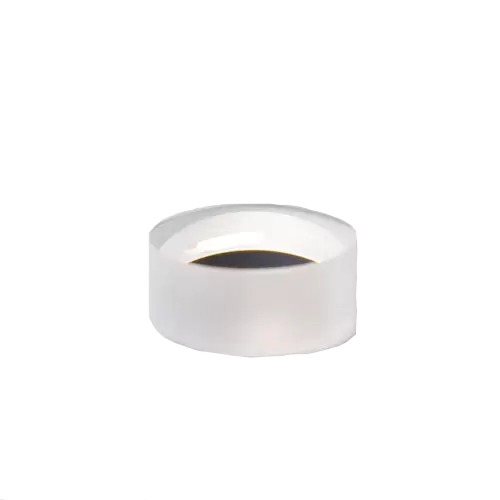
For optical engineers and procurement teams, choosing a plano concave lens is rarely just a matter of selecting a diameter. A lens may need to produce a specific negative focal length, control beam divergence, compensate spherical aberration, or work reliably at a particular wavelength.
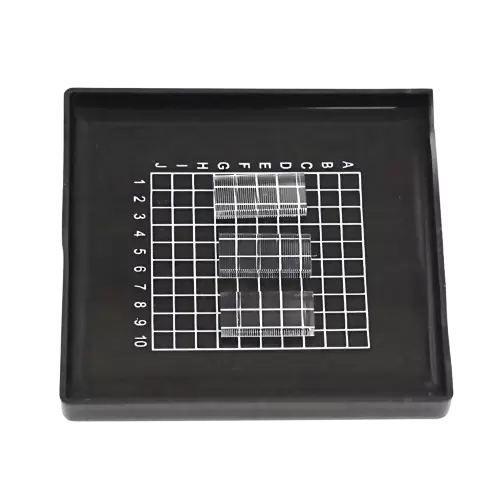
Traditional single lenses remain effective for many optical systems, but their physical size and limited integration become constraints when an optical module needs multiple focusing, imaging, or beam-control functions within a small area.
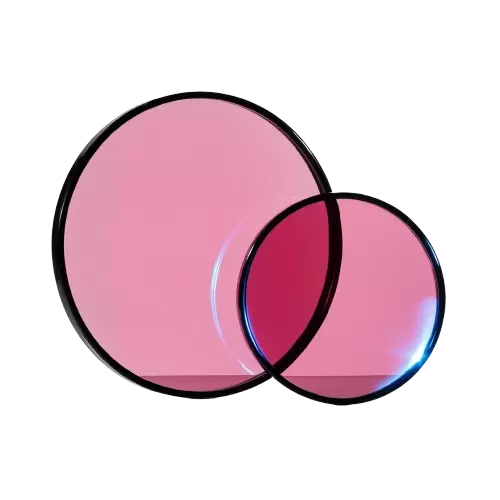
In precision optical systems, selecting the correct wavelength is often more important than simply collecting more light. Conventional optical filters may struggle with limited spectral selectivity, unstable center wavelength control, insufficient out-of-band blocking, and unwanted stray light interference.