

 en
en
 English
 繁体中文
繁体中文 Japanese
 Korean
 Russian
 German
News
Deepen Optoelectronic Resources, Lead Technological Breakthroughs


Deepen Optoelectronic Resources, Lead Technological Breakthroughs
In industrial machine vision, lens selection directly affects whether a camera can produce images that are stable enough for measurement, inspection, and recognition. A consumer-grade lens or an unsuitable zoom lens may introduce changes in field of view, focus, magnification, or distortion when the focal setting changes. These variations can complicate calibration and reduce measurement consistency during continuous operation.
A fixed focal length lens is designed around a specific optical configuration rather than continuously changing focal length. When the focal length, sensor format, working distance, and required field of view are correctly matched, the lens can provide a repeatable imaging geometry for automated inspection, precision measurement, robot vision, and object recognition.
For industrial buyers, however, selecting a fixed focal lens should not start with price alone. Focal length, sensor size, resolution, distortion, aperture, working distance, optical coating, mechanical interface, and customization requirements all influence both imaging performance and the final Fixed Focal Lens Price.
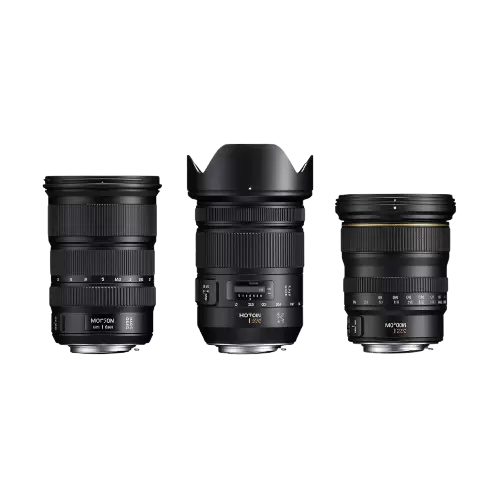
A fixed focal length lens is optimized for one defined focal length. This makes it possible to design the optical system around a particular range of working distances, sensor formats, image circles, and field-of-view requirements.
For example, an inspection camera may need to cover a 100 mm-wide component from a fixed installation distance. Instead of relying on a zoom mechanism to adjust the image, an appropriate fixed focal length can be selected based on the camera sensor and required FOV. Once installed and calibrated, the optical geometry remains consistent.
This is particularly useful in automated inspection lines where cameras repeatedly inspect components in similar positions.
The key point is that fixed focal length does not mean the lens can only be used at one physical distance. Different fixed focal lengths are available for different working distances and target sizes. A shorter focal length generally provides a wider field of view, while a longer focal length provides a narrower field of view when the camera position and sensor are otherwise comparable.
This relationship allows machine vision engineers to select a lens according to the actual inspection geometry rather than treating focal length as an isolated specification.
The most important parameters should be evaluated as a connected optical system.
Focal length determines the angular coverage of the lens, while sensor size determines how much of the projected image is captured by the camera.
A useful simplified relationship is:
FOV ≈ Sensor Dimension × Working Distance / Focal Length
This is not a complete optical design equation, but it illustrates the selection logic. For the same sensor and working distance, increasing focal length generally reduces the field of view. Reducing focal length generally increases coverage.
Consider a factory automation application where a camera must inspect a relatively large component within a restricted mounting position. A shorter focal length may be required to capture the complete target. In a precision measurement application where the object is smaller and the camera is installed farther away, a longer focal length may provide a more appropriate image scale.
Therefore, the correct question is not simply "Which focal length is better?" It is:
What focal length produces the required FOV at the available working distance while providing sufficient resolution and acceptable distortion for the selected sensor?
Working distance is especially important in automated equipment because the available installation space is often predetermined.
A lens selected without considering working distance may force the camera to be repositioned, change the required field of view, or make lighting integration more difficult.
For robot vision and automated inspection, the lens should therefore be evaluated together with the camera position, object dimensions, lighting arrangement, and mechanical mounting structure.
High-resolution cameras do not automatically produce high-resolution inspection results.
The lens must resolve sufficient spatial detail for the camera sensor. If the optical resolution is inadequate, increasing the camera pixel count may provide limited practical improvement because the lens becomes the bottleneck in the imaging chain.
This is particularly important for precision measurement, electronic component inspection, dimensional verification, and fine surface inspection.
A proper evaluation should therefore consider:
Sensor resolution
Pixel size
Lens optical resolution
Target feature size
Required measurement accuracy
Working distance
Illumination conditions
The objective is to match the optical resolution of the lens with the actual capability of the camera rather than selecting a high-megapixel camera and assuming the complete system will automatically deliver higher detail.
Distortion becomes more important when the lens is used for dimensional inspection.
Barrel or pincushion distortion can change the apparent position of features across the image. For object recognition, a certain amount of distortion may be acceptable depending on the application. For precision measurement, however, distortion control becomes much more critical because image geometry directly affects measurement results and calibration.
This is why a lens intended for precision measurement should be evaluated differently from one used for general object detection.
Aperture affects both light transmission and depth of field. A wider aperture allows more light to reach the sensor but generally reduces depth of field. A smaller aperture can increase the range of object positions that remain acceptably focused, although it also reduces the amount of light reaching the sensor.
For automated inspection, depth of field matters when the target surface is not perfectly flat or when component height varies during production.
For example, a surface inspection system examining parts with different heights may require sufficient depth of field to keep relevant features within acceptable focus. In contrast, a precision measurement system with a controlled object position may place greater emphasis on resolution and distortion than on a large depth-of-field range.
The correct aperture is therefore determined by the interaction between lighting, exposure, required depth of field, sensor performance, and optical resolution.
Different industrial applications place different priorities on optical parameters.
Factory automation often requires repeatable imaging geometry and compatibility with fixed camera mounting positions. A correctly selected fixed focal lens can simplify calibration and maintain consistent magnification throughout repetitive inspection cycles.
Automated inspection typically requires a balance between resolution, FOV, distortion, and depth of field. The lens must capture the required inspection area while maintaining sufficient detail for defect detection.
Precision measurement places greater emphasis on distortion, resolution, geometric consistency, and camera matching. A lens with a wide FOV may not be appropriate if it sacrifices the image scale or distortion performance required for dimensional evaluation.
Robot vision may require a combination of working distance, FOV, depth of field, and mechanical compatibility because the camera and lens may be mounted on a moving robotic system.
Object recognition can place more emphasis on sufficient image coverage and stable contrast than on extremely low distortion, depending on the recognition algorithm and target characteristics.
These differences demonstrate why there is no universal "best" fixed focal length lens. The appropriate specification depends on the optical and mechanical conditions of the machine vision system.
Fixed Focal Lens Price can vary significantly between products that appear similar from the outside. The main reason is that industrial lenses are not priced according to focal length alone.
A lens designed to cover a larger sensor requires a sufficiently large image circle and an optical design capable of maintaining performance across that image area. Supporting a larger sensor format can therefore increase optical complexity and manufacturing requirements.
Higher optical resolution and tighter distortion requirements generally require more precise optical design, component manufacturing, assembly, and inspection.
For high-resolution inspection systems, paying for a lens with suitable optical performance can be more meaningful than simply selecting the lowest-cost lens. If the lens cannot fully utilize the camera sensor, part of the camera's resolution capability may remain unused.
A wider aperture, specialized working distance, or unusual FOV requirement may require additional optical optimization. These specifications can affect both the lens design and its manufacturing cost.
Common interfaces may simplify integration, while customized mechanical dimensions, mounting structures, thread configurations, or environmental requirements can increase development and manufacturing costs.
Optical glass selection, coating requirements, spectral range, and customized optical configurations can also affect pricing. A standard production lens and a lens designed around a specific camera, FOV, working distance, or inspection target should not be expected to have the same cost structure.
For procurement teams, the more useful comparison is therefore not simply:
Lens A costs less than Lens B.
Instead, evaluate:
Lens + Camera Compatibility + Lighting + Mounting + Calibration + Required Optical Performance
This provides a more realistic view of the total machine vision system cost.
ECOPTIK provides industrial fixed-focus lenses and customized optical solutions for machine vision applications where imaging geometry, resolution, distortion, and camera compatibility need to be considered together.
With 15 years of experience in optical component fabrication technology, ECOPTIK manufactures precision optics including dome lenses, spherical lenses, micro-optical components, cylindrical mirrors, filters, prisms, and windows. Available materials include glass from Schott, CDGM, and Corning, as well as Sapphire, CaF₂, MgF₂, Fused Silica, Si, ZnSe, and ZnS. The company also provides lens assembly services.
For optical verification and product reporting, ECOPTIK uses equipment including ZYGO laser interferometers, ZEISS CMM Spectrum, and Agilent Cary 7000 UMS.
For machine vision customers, this manufacturing and testing capability supports a more customized approach to fixed-focus lens development. Instead of selecting a lens only by focal length or catalog price, the optical configuration can be considered around the target application, including sensor size, FOV, working distance, resolution, distortion, aperture, and mechanical integration.
Choosing a fixed focal length lens is ultimately an exercise in matching optical parameters to the actual machine vision task.
Start with the target size and required FOV, then determine the available working distance and sensor size. From there, select an appropriate focal length and verify whether the lens resolution can match the camera sensor. Next, evaluate distortion, aperture, depth of field, mechanical mount, and lighting conditions according to the inspection objective.
For procurement, the same principle applies to Fixed Focal Lens Price. A lower initial lens price may not represent a lower system cost if the lens creates resolution limitations, calibration difficulties, excessive distortion, or camera compatibility problems.
For automated inspection, precision measurement, robot vision, and factory automation, the most practical fixed focal lens is the one whose optical design matches the complete imaging system—not simply the one with the lowest purchase price.

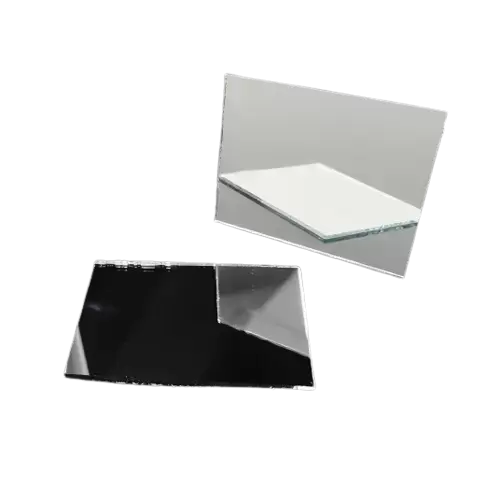
In precision optical systems, mirror selection is often determined by factors that are invisible during normal operation but directly affect system accuracy. A mirror may appear perfectly reflective to the eye, yet its internal structure can introduce optical errors when used in laser alignment, imaging equipment, or scientific instruments.
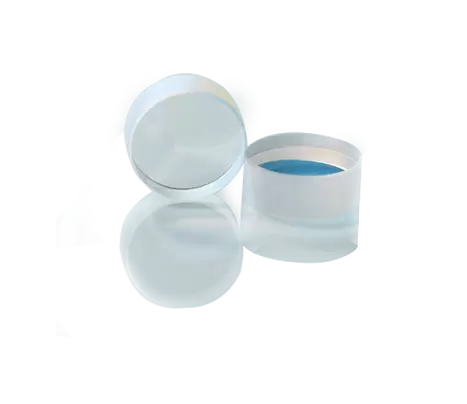
For optical engineers and procurement teams, choosing a plano convex lens is rarely just a matter of selecting a diameter and focal length. A lens that appears simple can produce very different results depending on its material, curvature, surface accuracy, center deviation, coating, and installation direction.