

 en
en
 English
 繁体中文
繁体中文 Japanese
 Korean
 Russian
 German
News
Deepen Optoelectronic Resources, Lead Technological Breakthroughs

Deepen Optoelectronic Resources, Lead Technological Breakthroughs
In high-performance optical systems, the mirror is not simply a component that redirects light. Its reflection efficiency, thermal behavior, and wavelength compatibility can directly influence the stability and output performance of the entire system. Traditional metal mirrors, such as aluminum or silver mirrors, are widely used because of their broad spectral response, but they may not provide sufficient reflectivity or low absorption characteristics for demanding laser applications.
When laser power increases, even a small amount of optical absorption can generate heat accumulation, causing thermal distortion, alignment changes, and gradual performance degradation. In addition, standard optical mirrors cannot always be optimized for specific wavelengths, which limits their efficiency in precision photonics systems.
A Dielectric Mirror, also known as a Bragg Mirror, solves these challenges through a carefully engineered multilayer dielectric coating structure. By controlling the thickness and material combination of each thin-film layer, engineers can design mirrors with extremely high reflectivity at targeted wavelengths, including 532nm, 1064nm, and 1550nm laser systems.
For laser equipment manufacturers, optical engineers, and precision instrument developers, understanding Dielectric Mirror Uses and the factors influencing Dielectric Mirror Price is essential when selecting components for stable and efficient optical designs.
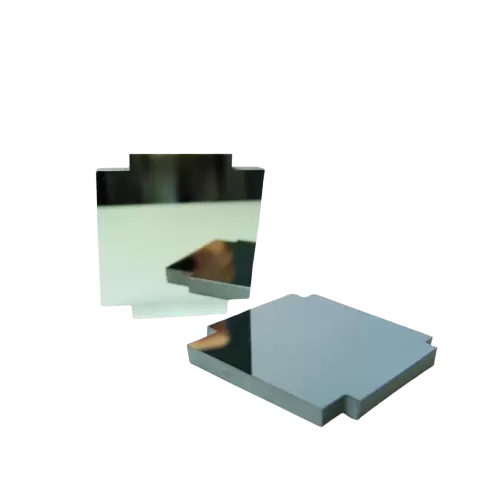
The core advantage of a dielectric mirror comes from its multilayer thin-film structure. Unlike metal mirrors that rely mainly on free-electron reflection, dielectric mirrors use interference effects between alternating layers of materials with different refractive indexes.
Each layer is precisely controlled according to:
Refractive index
Film thickness
Number of coating layers
Target operating wavelength
When the optical thickness of each layer is properly designed, reflected light from multiple interfaces combines constructively, significantly increasing reflection at the desired wavelength.
This design capability allows dielectric mirrors to achieve reflectivity above 99.9% at specific wavelengths, while maintaining absorption loss below 0.01% in optimized configurations.
For example:
532nm laser systems: Commonly used in green laser applications requiring efficient beam delivery and stable optical alignment.
1064nm laser systems: Widely used in industrial laser processing, including cutting, welding, and marking.
1550nm optical systems: Frequently applied in fiber lasers, communication systems, and infrared applications.
In high-power laser environments, reducing absorption is critical. A mirror with higher absorption converts more laser energy into heat, which may affect coating durability and optical alignment. A dielectric mirror with extremely low absorption helps maintain stable performance during continuous operation.
This makes dielectric mirrors especially valuable in applications where beam quality and energy efficiency directly affect production results.
A common question among engineers is:
“What are the uses of dielectric mirrors?”
The answer depends on the optical requirements, but dielectric mirrors are widely used wherever precise wavelength control, high reflectivity, and low optical loss are required.
Industrial laser systems require optical components that can handle high energy density without significant performance loss.
In laser cutting and welding equipment, dielectric mirrors are used for:
Beam steering
Optical path adjustment
Laser energy transmission
Their high laser damage threshold allows them to withstand intense laser power while maintaining stable reflection performance.
Compared with conventional metal mirrors, dielectric mirrors reduce thermal effects caused by absorption, helping improve:
Processing consistency
Beam positioning stability
Equipment operating lifetime
In optical systems where laser direction must be controlled accurately, mirror performance directly affects beam stability.
Dielectric mirrors provide:
High wavelength-specific reflectivity
Low scattering loss
Stable optical performance
They are commonly integrated into:
Laser scanning systems
Optical alignment equipment
Photonics research platforms
Scientific optical systems often require precise control of specific wavelengths. Dielectric mirrors can be designed for narrowband or broadband operation by adjusting coating parameters.
Applications include:
Spectroscopy systems
Precision measurement instruments
Research optical platforms
Imaging systems
Their ability to maintain consistent optical performance makes them suitable for environments where measurement accuracy depends on stable light transmission.
The difference between dielectric mirrors and metal mirrors mainly comes from their reflection mechanism.
Metal mirrors provide relatively broad wavelength coverage, but their reflectivity is often limited and their absorption is higher.
Dielectric mirrors offer:
| Performance Factor | Dielectric Mirror | Metal Mirror |
|---|---|---|
| Reflectivity | Can exceed 99.9% at designed wavelengths | Usually lower |
| Absorption | Less than 0.01% in optimized designs | Higher |
| Wavelength Optimization | Highly customizable | Limited |
| High Power Laser Compatibility | Excellent with suitable coating design | Depends on material |
However, dielectric mirrors also require careful optical design because their performance is wavelength-dependent. They are not simply “better” for every application; engineers must match coating design with laser wavelength, incidence angle, and polarization requirements.
Selecting the correct dielectric mirror requires evaluating several technical specifications.
The operating wavelength is the first consideration.
Dielectric coatings can be customized for:
UV wavelengths
Visible wavelengths
Infrared wavelengths
By adjusting coating materials and thickness, manufacturers can create mirrors for narrowband applications or wider spectral ranges.
Polarization sensitivity should also be considered. Under non-normal incidence conditions, S-polarized and P-polarized light may experience different reflectivity values. For precision optical systems, this difference must be included during design.
The substrate affects thermal stability, mechanical performance, and optical reliability.
Common substrate options include:
Fused Silica
Provides low thermal expansion and excellent stability, making it suitable for high-power laser applications.
Silica
Used in various optical systems requiring reliable dielectric coating performance.
BK7 Glass
Offers a practical balance between optical performance and cost, especially for visible wavelength applications.
ECOPTIK provides dielectric mirrors in different configurations:
Flat
Sphere
Cylinder
Customized shapes
Available dimensions range from 2mm to 100mm, with clear aperture greater than 90% of the dimension.
Surface specifications include:
Scratch-Dig: 40/20, 20/10
Surface irregularity: λ/2 to λ/10 @632.8nm
Thickness: 1mm to 20mm
These parameters influence beam quality, scattering performance, and alignment stability in precision optical systems.
When customers search for “How much does a dielectric mirror cost?”, the answer depends on multiple technical requirements rather than size alone.
Key factors affecting dielectric mirror price include:
A coating designed for 99.9% reflectivity requires more precise layer control and manufacturing processes compared with standard reflective coatings.
Special wavelength ranges, such as UV or infrared applications, may require customized coating designs and additional testing.
Material selection, mirror diameter, thickness, and surface specifications all influence manufacturing difficulty and cost.
Customized shapes, polarization control, high damage threshold requirements, and strict surface tolerances may increase production complexity.
Although a high-performance dielectric mirror may have a higher initial cost, its lower energy loss, improved thermal stability, and longer operating life can reduce overall system maintenance costs.
As “Innovative and Enterprising Your Optical Customization Partner,” ECOPTIK has been researching optical component fabrication technology for 15 years. The company specializes in precision optical components including dome optics, spherical lenses, micro-optical components, cylindrical mirrors, filters, prisms, and windows.
ECOPTIK supports dielectric mirror customization using optical materials from suppliers such as Schott, CDGM, and Corning, as well as advanced materials including Sapphire, CaF₂, MgF₂, Fused Silica, Silicon, ZnSe, and ZnS.
Beyond optical coating and component manufacturing, ECOPTIK provides lens assembly services and professional testing capabilities. The company utilizes ZYGO laser interferometers, ZEISS CMM Spectrum, and Agilent Cary 7000 UMS equipment to evaluate optical performance and provide detailed product reports.
This manufacturing capability allows ECOPTIK to support customized dielectric mirror requirements involving different wavelengths, substrates, structures, and performance specifications.
A dielectric mirror should be selected according to the complete optical system requirement rather than only the purchase price. Reflectivity, absorption loss, laser damage threshold, wavelength compatibility, polarization behavior, substrate material, and surface quality all influence final system performance.
For high-power laser equipment, precision measurement systems, and advanced optical platforms, a properly designed dielectric mirror can improve energy efficiency, reduce thermal impact, and maintain reliable operation over long service periods. By matching coating design and optical specifications with application requirements, engineers can achieve more stable and efficient optical systems.
A conventional spherical lens can provide the required optical power, but its simple geometry does not always provide sufficient aberration control in a precision optical system. As aperture increases or the lens is used away from the optical axis, spherical aberration, coma, and degradation toward the edge of the image can become more difficult to manage.
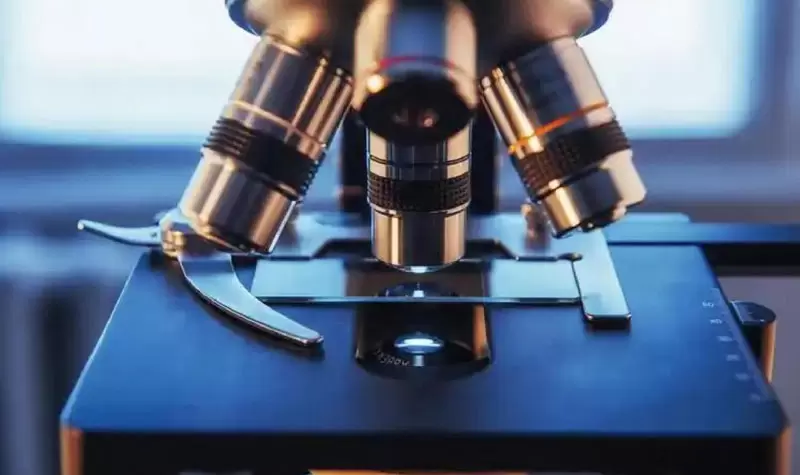
A microscope is a precision measuring instrument that allows students to observe extremely small organisms and study their microbial morphology. The main body of the microscope is composed of optical and mechanical parts, among which the optical part is the most important. The optical part of a microscope mainly consists of an objective lens and an eyepiece. By combining the two, a good observation image is formed.
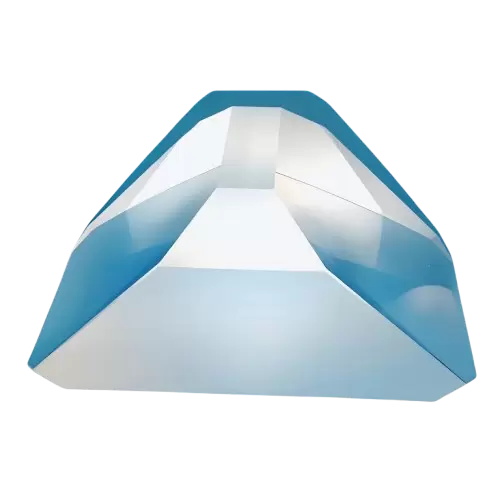
Traditional prism systems have played an important role in binoculars, telescopes, and observation instruments for decades. Among them, Porro prism designs remain widely used because of their mature structure, reliable optical performance, and relatively simple manufacturing process.