

 en
en
 English
 繁体中文
繁体中文 Japanese
 Korean
 Russian
 German
News
Deepen Optoelectronic Resources, Lead Technological Breakthroughs
Deepen Optoelectronic Resources, Lead Technological Breakthroughs
A collimator lens is a critical optical component when a laser system needs a controlled, stable beam for subsequent delivery, focusing, beam shaping, or processing. In demanding applications, a conventional lens may not provide sufficient collimation accuracy, transmission, or wavefront control. Optical losses can reduce usable laser energy, while wavefront distortion can affect beam quality downstream. Under high-energy laser operation, the optical component must also withstand the actual laser conditions without unacceptable damage or performance degradation.
For laser equipment manufacturers, optical system integrators, laser processing companies, research institutions, and industrial laser buyers, selecting a collimator lens therefore involves more than comparing focal length or price. The relevant decision includes transmittance, collimation precision, wavefront distortion, clear aperture, wavelength compatibility, optical surface quality, coating performance, and laser damage threshold. These parameters determine whether a lens can work reliably within the complete optical system.
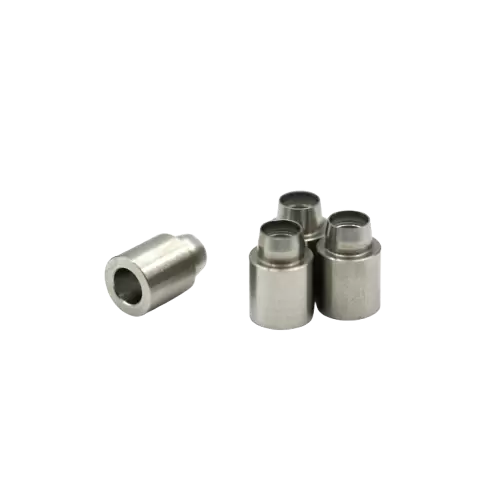
The basic purpose of a collimator lens is to transform a diverging beam into a more stable, approximately collimated beam. The quality of this transformation affects what happens later in the optical path.
High transmittance is important because every optical interface introduces the possibility of energy loss. For a laser system where available optical power is already an important design consideration, unnecessary transmission loss can reduce the energy delivered to the next optical element or workpiece. The actual transmission requirement depends on the laser wavelength and coating design, so buyers should request relevant transmission data rather than relying only on general product descriptions.
Precision collimation is equally important. If the emerging beam retains excessive divergence or does not maintain the intended beam geometry, subsequent focusing and beam delivery stages may become more difficult to control. This can affect the consistency of the focal spot and the performance of downstream optical components.
Wavefront distortion is another factor that should not be treated as a secondary specification. A collimated beam with poor wavefront quality may introduce aberrations into subsequent focusing or beam-shaping stages. In precision laser applications, the optical component therefore needs to preserve the beam characteristics required by the rest of the system.
This is why selecting a suitable collimator lens should begin with the laser source and the required beam condition rather than with price alone. Engineers should consider the laser wavelength, initial beam diameter, divergence, required output beam size, focal length, clear aperture, and the optical performance required after collimation.
When engineers ask how to choose a collimator lens, the first step is to define the operating conditions of the laser system.
Wavelength compatibility is fundamental because optical transmission and coating behavior depend on the operating wavelength. The required clear aperture should also be considered in relation to the beam diameter. An aperture that is too small for the intended beam can introduce unwanted clipping and compromise the usable beam profile.
Focal length is another important design variable because it affects the relationship between the incoming divergent beam and the resulting collimated beam. However, focal length should not be evaluated independently. The lens must be considered together with beam diameter, divergence, required beam size, and the geometry of the complete optical path.
For high-power applications, the question “what makes a good collimator lens?” also requires an analysis of laser intensity at the optical surface. Laser damage threshold is not simply a matter of the laser's total output power. The relevant conditions include wavelength, continuous-wave or pulsed operation, beam diameter, power density, and the actual optical configuration.
For example, two laser systems with the same nominal power can impose very different conditions on an optical surface if their beam diameters, operating modes, or power densities differ. Consequently, a damage-threshold specification should always be interpreted together with its test conditions.
ECOPTIK provides collimation lenses designed around high transmittance, precision collimation, low wavefront distortion, and adaptability to laser systems up to 20 kW. The 20 kW capability should not be interpreted as universal compatibility with every 20 kW laser source. Actual suitability needs to be confirmed against the specific wavelength, beam parameters, continuous or pulsed operation, power density, and applicable testing conditions.
This distinction is particularly important for high-power laser processing, where optical damage can interrupt production, affect beam quality, and increase component replacement requirements. A suitable collimator should therefore be evaluated as part of the complete laser optical system rather than as an isolated component.
Collimator Lens price can vary significantly because optical components with different performance requirements can require substantially different manufacturing and testing processes.
Optical material is one factor. Different materials have different optical characteristics and may be selected according to the intended application and wavelength requirements. ECOPTIK works with glass materials sourced from Schott, CDGM, and Corning, as well as materials including Sapphire, CaF₂, MgF₂, Fused Silica, Si, ZnSe, and ZnS. However, the appropriate material for a specific collimator should be determined from the actual optical design rather than assumed from the material list alone.
Coating design is another major cost factor. An AR coating needs to correspond to the intended wavelength and performance requirements. Transmission, coating performance, laser exposure conditions, and the required operating range all influence the specification.
Manufacturing precision also contributes to price. Requirements for surface quality, wavefront accuracy, dimensional control, and collimation performance can increase processing and inspection requirements. For applications where low wavefront distortion is important, the cost comparison should therefore include the actual wavefront specification and inspection method rather than simply comparing the price of visually similar lenses.
Customization can further affect the final quotation. A standard optical component and a customized component requiring specific optical performance, assembly, coating, or inspection documentation should not be treated as equivalent products.
For industrial buyers, the more useful approach is to compare total optical value rather than unit price alone. A lens with higher transmission, better wavefront control, appropriate damage resistance, and verified optical performance may contribute to more stable system operation and reduce the risk of premature replacement.
Before placing an order, professional buyers should provide the manufacturer with the key operating conditions of the laser system and request corresponding technical documentation.
At minimum, the discussion should cover:
Laser wavelength and operating conditions
Beam diameter and divergence
Required beam size after collimation
Focal length and clear aperture requirements
Transmission data
Wavefront performance data
Optical surface quality information
AR coating specifications
Laser damage threshold data and test conditions
Inspection and test reports
Customization and lens assembly requirements
ECOPTIK has been researching optical component fabrication technology for 15 years and manufactures precision optical components including dome lenses, spherical lenses, micro-optical components, cylindrical mirrors, filters, prisms, and windows. The company also provides lens assembly services.
For quality verification, ECOPTIK uses equipment including ZYGO laser interferometers, ZEISS CMM Spectrum, and Agilent Cary 7000 UMS for testing and product reporting. These capabilities allow optical performance and dimensional characteristics to be evaluated with appropriate measurement equipment rather than relying only on visual inspection.
For buyers comparing the Best collimator lens, the key question is therefore not simply which lens has the lowest price. The more useful question is whether the optical component provides the required combination of collimation precision, transmission, wavefront control, coating performance, and laser compatibility for the intended system.
A practical procurement decision should connect the laser source to the optical requirements: Laser Source + Wavelength + Beam Diameter + Divergence + Focal Length + Clear Aperture + Transmittance + Wavefront Distortion + AR Coating + Laser Damage Threshold + Power Density. Evaluating these factors together provides a more reliable basis for selecting a collimator lens and understanding its actual cost within a high-performance laser system.
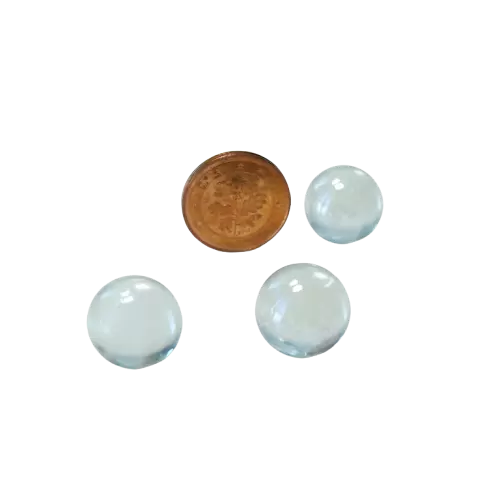
In compact optical systems, conventional multi-element lens assemblies can introduce unnecessary complexity. More components mean more mechanical interfaces, tighter alignment requirements, greater installation space, and potentially higher assembly costs. These limitations become more noticeable when the optical path must fit into a small package or when light needs to be coupled efficiently over a short working distance.
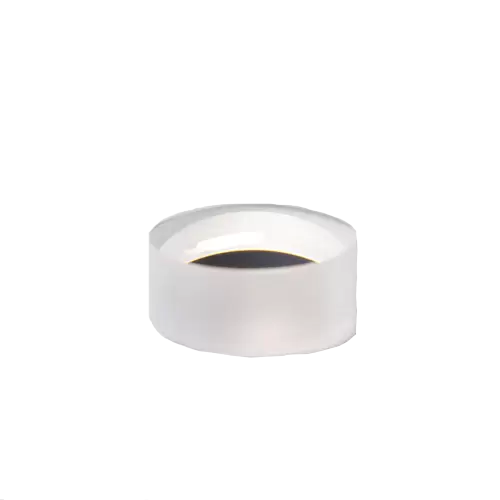
In precision optical engineering, understanding Plano concave lens uses requires moving beyond basic ray divergence concepts into system-level wavefront control.
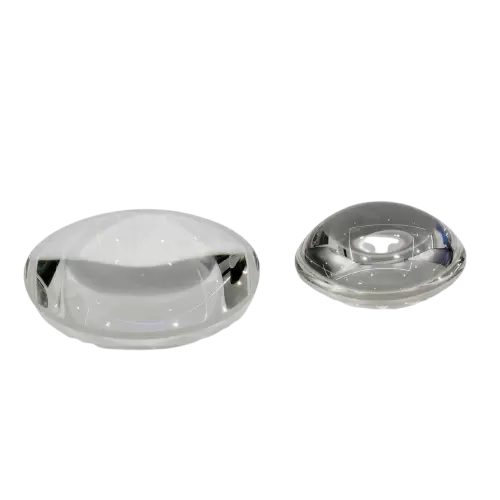
In modern precision optics manufacturing, the performance of a spherical lens is no longer determined solely by its material or nominal curvature, but by the surface precision achieved during the polishing stage.