

 en
en
 English
 繁体中文
繁体中文 Japanese
 Korean
 Russian
 German
News
Deepen Optoelectronic Resources, Lead Technological Breakthroughs


Deepen Optoelectronic Resources, Lead Technological Breakthroughs
In compact optical systems, conventional multi-element lens assemblies can introduce unnecessary complexity. More components mean more mechanical interfaces, tighter alignment requirements, greater installation space, and potentially higher assembly costs. These limitations become more noticeable when the optical path must fit into a small package or when light needs to be coupled efficiently over a short working distance.
An optical spherical lens, commonly referred to as a ball lens, offers a different approach. Its solid spherical geometry provides strong optical symmetry, a short focal length, and the ability to achieve a relatively high numerical aperture in a compact form. Because its optical characteristics are essentially rotationally symmetric, a ball lens does not have the same directional orientation concerns associated with many conventional asymmetric optical components. This makes it useful for fiber coupling, laser systems, detectors, sensors, and other micro-optical applications where space and alignment are important design considerations.
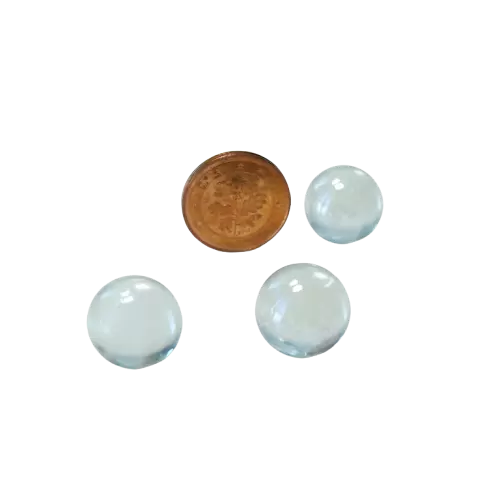
The operating principle of a ball lens is based primarily on refraction. When light passes from air into a transparent spherical material with a different refractive index, its direction changes at the curved surface. As the rays continue through the sphere and exit the opposite surface, the two refracting interfaces redirect the light toward a focal region.
Two parameters have a direct influence on this behavior: lens diameter (D) and refractive index (n). For a simplified ball-lens relationship, focal length can be approximated as:
f ≈ D / [4(n−1)]
For effective focal length calculations under commonly used ball-lens approximations, the refractive-index-dependent relationship may also be expressed as:
EFL ≈ nD / [4(n−1)]
These relationships illustrate an important point for optical designers: changing the ball diameter or material changes the resulting optical geometry. A larger diameter does not simply mean a proportionally longer focal length, while a higher refractive index can provide stronger optical power within the same physical diameter.
The distinction between EFL and BFL is also important. EFL describes the effective focal length of the optical element, while BFL refers to the distance from a defined physical reference surface of the ball lens to the focal region. Therefore, EFL and BFL should not be treated as interchangeable values when designing a coupling or imaging assembly.
The spherical geometry allows a ball lens to bend light strongly within a very small physical volume. This is one reason ball lenses are attractive when a system needs strong focusing without the mechanical length of a conventional lens assembly.
Numerical aperture is particularly important in fiber and detector applications because it relates to the angular acceptance or light-gathering capability of an optical system. A ball lens can provide a relatively high NA at a short working distance, making it useful where the available optical path is limited.
However, high NA should not automatically be interpreted as a smaller final spot. When a large portion of the spherical aperture is illuminated, spherical aberration can become increasingly significant. The relationship between input beam diameter, ball diameter, and D/d ratio therefore needs to be considered. If the incident beam uses too much of the available spherical aperture, marginal rays may not converge at exactly the same position as paraxial rays, increasing the actual focal spot.
For this reason, optical designers should evaluate NA together with beam diameter, working distance, wavelength, material refractive index, and spherical aberration rather than selecting a ball lens based only on its diameter or nominal NA.
The practical uses of optical spherical lenses are closely related to their compact geometry and strong focusing capability. Common applications include fiber coupling, laser-to-fiber coupling, fiber-to-fiber coupling, detector coupling, LED coupling, optical sensing, compact imaging, and micro-optical assemblies.
Fiber coupling is one of the most common applications. A ball lens can focus light into a small region, allowing it to interface with a fiber or another miniature optical component within a compact package.
For laser-to-fiber coupling, selection should begin with the laser beam characteristics rather than the lens diameter alone. The designer needs to consider beam diameter, wavelength, divergence, required working distance, and the acceptance characteristics of the target fiber.
Fiber NA is especially important. The focusing system must produce an angular distribution compatible with the fiber's acceptance cone. A ball lens with a nominally high NA may not provide an optimal coupling result if the focused beam characteristics do not match the fiber.
For fiber-to-fiber coupling, the optical design also needs to account for the mode or emitting area, numerical aperture, alignment tolerance, and physical spacing between the fibers. The ball lens diameter and refractive index influence the focal geometry, while the mechanical design determines how accurately the fibers can be positioned relative to the focal region.
Photodetectors and optical sensors often benefit from compact focusing elements because the active sensing area may be small while the available installation space is restricted.
A ball lens can concentrate incoming radiation onto a detector while maintaining a relatively simple mechanical structure. In optical sensing systems, however, wavelength and material transmission must be considered together. A material suitable for one spectral range may not provide the required transmission characteristics in another.
The same principle applies to LED coupling. The relevant source size, emission pattern, wavelength, lens diameter, and required coupling distance should be evaluated together instead of assuming that a larger lens will automatically collect more useful light.
The strong symmetry of a ball lens makes it attractive for miniature imaging and micro-optical assemblies. Its rotationally symmetric geometry simplifies orientation and can reduce certain mechanical alignment concerns.
Nevertheless, ball lenses are not universal replacements for conventional imaging optics. When an application requires demanding imaging quality, wide field control, low distortion, or strict aberration correction, spherical aberration and other optical limitations may require additional optical elements or a different lens architecture.
The right question is therefore not simply “What are optical spherical lenses used for?” but rather “Does the ball lens geometry provide the required optical performance within the available package?”
A practical selection process should connect application requirements with measurable optical parameters:
Application → Wavelength → Material → Refractive Index → Lens Diameter → Input Beam Diameter → EFL → BFL → NA → Spherical Aberration → Working Distance → Surface Quality → Dimensional Tolerance
For fiber coupling, compare the optical system's NA with the fiber NA. For laser applications, evaluate beam diameter and wavelength before selecting the lens diameter. For detector coupling, consider the detector active area and required working distance. For compact imaging, examine spherical aberration and the required image quality rather than focusing exclusively on short focal length.
The mechanical package is equally important. Although the spherical shape is inherently symmetric, the lens still needs a suitable mounting method and controlled positioning relative to the optical axis and focal region.
The price of an optical spherical lens cannot be determined reliably from diameter alone. Two ball lenses with similar physical dimensions can have substantially different manufacturing requirements because their materials, tolerances, surface specifications, coatings, and inspection requirements may differ.
Optical material is one of the first factors. Different materials have different refractive-index characteristics, transmission ranges, processing requirements, and availability. The selected material must correspond to the application's wavelength and optical performance requirements.
Refractive index also affects optical design. Because refractive index influences focal behavior, changing material can change the required lens geometry and resulting EFL or BFL.
Lens diameter and dimensional tolerance affect manufacturing difficulty, particularly when small components require tight dimensional control. A simple spherical shape does not mean that every spherical surface is inexpensive to produce when the final component must meet demanding dimensional specifications.
Surface quality and surface accuracy are equally important. Applications involving laser coupling, precision imaging, or sensitive detection may require controlled optical surfaces rather than merely a visually acceptable polished sphere.
Coating requirements can further affect cost. The wavelength range, transmission target, coating design, and inspection requirements all influence the manufacturing process. Customized specifications generally require more engineering and quality-control work than standardized components.
Production volume also matters. Prototype or low-volume orders may involve setup, inspection, and customization costs that are distributed differently from those of repeat production. Therefore, procurement teams should evaluate price together with tolerance, consistency, optical performance, and batch requirements instead of comparing unit prices in isolation.
Before placing an order, professional buyers should request technical documentation that allows the lens to be evaluated against the actual optical system. Depending on the application, this may include:
Material specification and refractive-index data
EFL and BFL information
Lens diameter and dimensional tolerance
Surface quality and surface accuracy
Transmission or coating specifications
Applicable wavelength range
Sphericity or related geometric specifications
Inspection and measurement reports
Production consistency for repeated orders
ECOPTIK approaches spherical lens manufacturing as part of a broader optical customization process. With 15 years of experience in optical component fabrication, ECOPTIK manufactures precision optics including spherical lenses, dome optics, micro-optical components, cylindrical mirrors, filters, prisms, and windows. Its material options include optical glass sourced from Schott, CDGM, and Corning, as well as Sapphire, CaF₂, MgF₂, Fused Silica, Si, ZnSe, and ZnS, depending on application requirements.
ECOPTIK also provides lens assembly services and uses ZYGO laser interferometers, ZEISS CMM Spectrum, and Agilent Cary 7000 UMS for optical and dimensional testing and product reporting. For buyers evaluating customized ball lenses, this type of measurement capability is relevant because the final decision should be based on documented specifications and inspection data rather than general claims about optical quality.
Optical spherical lens uses extend well beyond simple light focusing. Their value comes from the combination of spherical geometry, short focal length, high numerical aperture potential, rotational symmetry, compact size, and relatively simple mechanical integration.
At the same time, the lowest Optical spherical lens price is not necessarily the most relevant purchasing benchmark. Material, refractive index, EFL, BFL, NA, input beam diameter, spherical aberration, wavelength, surface quality, dimensional tolerance, coating, and inspection requirements all affect whether a ball lens will perform correctly in the intended system.
For optical equipment manufacturers and precision optics buyers, the practical approach is to define the application and wavelength first, establish the required optical geometry, then evaluate material, diameter, NA, focal characteristics, aberration control, manufacturing tolerance, and inspection documentation. This connects the purchase price directly with the optical performance and production requirements that determine the actual value of the component.
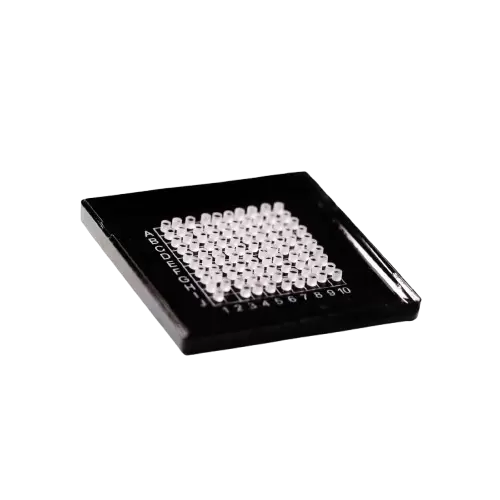
A compact optical system often has to solve a problem that a conventional spherical lens does not handle efficiently: controlling light in one direction while keeping the optical package small. In endoscopes, medical imaging modules, machine vision assemblies, and other precision instruments, a spherical lens may provide general imaging performance but cannot always deliver the required line-focusing behavior within a restricted optical path.
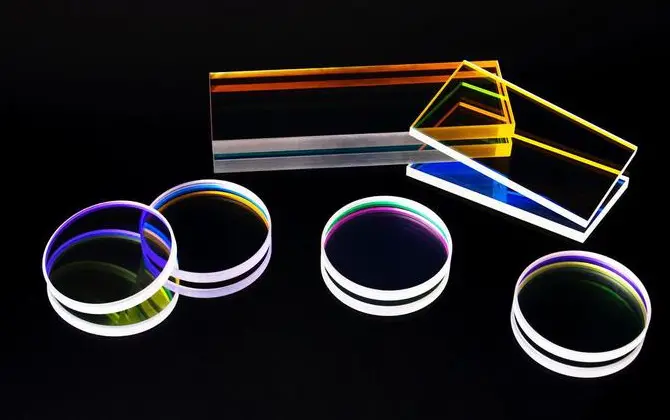
In the world of precision optics, thin-film coatings are what transform a simple piece of glass into a functional optical component—whether it's an anti-reflection coating that maximizes light transmission, a dielectric mirror that reflects specific wavelengths, or a filter that precisely separates spectral bands . The performance of these coatings directly determines whether an optical system succeeds or fails. But how do manufacturers verify coating quality without risking damage to expensive
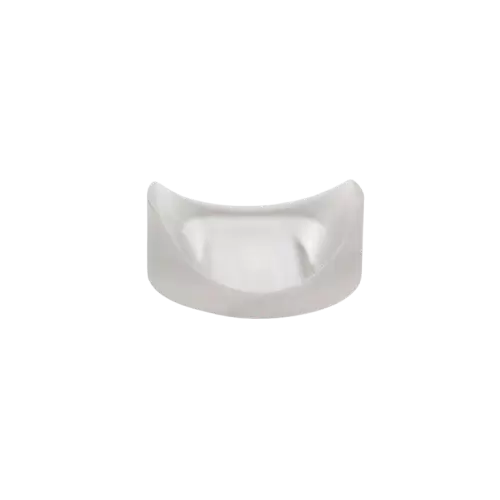
In many laser and imaging systems, controlling light in only one direction is a critical requirement. However, conventional cylindrical lenses can create challenges during integration, especially when optical alignment, positioning accuracy, and long-term stability are important.