

 en
en
 English
 繁体中文
繁体中文 Japanese
 Korean
 Russian
 German
News
Deepen Optoelectronic Resources, Lead Technological Breakthroughs


Deepen Optoelectronic Resources, Lead Technological Breakthroughs
In laser equipment, imaging systems, optical instruments and precision detection equipment, an optical window is not simply a transparent protective plate. It sits directly in the optical path, so its surfaces can influence reflection, beam deviation, wavefront quality and the amount of light reaching the next optical element. At the same time, the window may need to protect internal lenses, sensors, detectors and other precision optics from dust, moisture and external particles.
This makes the specification of an AR coated optical window more important than the basic glass material alone. For buyers comparing Ar coated optical window price or Ar coated optical window cost, the relevant question is not simply how much a window costs per piece. The more useful comparison is how substrate material, thickness, parallelism, surface quality, clear aperture, coating design and inspection requirements combine to achieve the required optical performance.
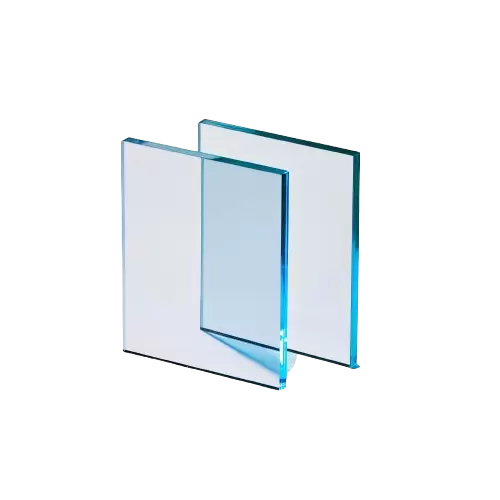
A precision optical window has two polished surfaces that must remain closely parallel. If the two surfaces are not sufficiently parallel, light passing through the window can experience an angular shift. In an imaging system, this may appear as an unwanted change in the optical path or contribute to image registration errors. In systems with multiple reflections, non-ideal parallelism can also contribute to ghosting.
This is particularly relevant when the window is installed in front of a sensitive detector, camera, sensor or laser optical path. The window is intended to protect the internal components without becoming a significant source of optical error.
For this reason, parallelism should be evaluated together with window thickness, diameter and mounting conditions. A buyer specifying only the material and external dimensions has not fully defined the optical requirement.
The same principle applies to surface flatness. The polished surfaces need sufficient geometric accuracy to prevent the window from introducing unnecessary wavefront distortion. A window can therefore have a suitable appearance and adequate mechanical dimensions while still being unsuitable for an optical system that is sensitive to transmitted wavefront quality.
Surface quality affects how the polished surface interacts with transmitted and reflected light. Surface imperfections can increase scattering, which becomes more significant in systems where weak signals, image contrast or controlled laser transmission matter.
Transmitted wavefront error provides another important way to evaluate the optical influence of the complete window. Instead of considering the surface in isolation, it addresses how the window affects the wavefront after light has passed through it.
This distinction is important for machine vision, precision imaging, laser systems and optical inspection equipment. When the window itself introduces noticeable wavefront distortion, downstream optics may have to compensate for an error that did not originate elsewhere in the system.
The practical specification should therefore consider:
Surface flatness
Parallelism
Surface quality
Transmitted wavefront error
Clear aperture
Window thickness
Substrate material
These parameters work together rather than independently.
An AR coated optical window combines two functions: mechanical protection and optical transmission control.
The window provides a physical barrier between sensitive internal optics and the external environment. It can help isolate lenses, sensors, detectors and other precision optical components from dust, moisture and airborne or flying particles.
At the same time, the optical surfaces can reflect part of the incident light. An anti-reflection coating is designed to reduce this surface reflection within its intended wavelength range, allowing more useful light to pass through the optical system.
This is why simply asking whether a window has an AR coating is not enough.
An AR coated optical window is a precision optical window with an anti-reflection coating designed for a specified optical operating range. The coating must be considered together with the system's wavelength, angle of incidence, substrate material and transmission requirements.
A coating designed for one wavelength range should not automatically be assumed to provide the same performance across another range.
Start with the actual optical system rather than the coating name. The buyer should establish the operating wavelength, incidence conditions, required transmission, acceptable reflection level and system aperture.
The substrate material and window thickness should then be selected according to the mechanical and optical requirements of the application. Surface flatness, parallelism, surface quality and transmitted wavefront requirements should be specified when the window is part of a precision imaging or laser path.
Clear aperture is also important because the usable optical area may be smaller than the physical diameter of the window.
An appropriate AR coating can reduce surface reflection within its designed wavelength range, increasing the proportion of incident light transmitted through the window. The actual result depends on the coating design, wavelength range, substrate and application conditions.
For laser systems, imaging equipment and detector assemblies, the coating therefore needs to be matched to the real operating wavelength rather than selected simply because the product is described as “AR coated.”
The Ar coated optical window cost can vary significantly because the window is a manufactured optical component rather than a standard piece of transparent material.
The substrate is one of the first cost factors. Different optical materials have different material costs and processing requirements. ECOPTIK works with glass materials from Schott, CDGM and Corning, as well as materials including Sapphire, CaF₂, MgF₂, Fused Silica, Si, ZnSe and ZnS. The appropriate material depends on the optical and application requirements rather than price alone.
Window diameter and thickness also influence manufacturing requirements. Larger dimensions can require more demanding handling, polishing and inspection. Thickness affects both mechanical characteristics and the optical behavior of the transmitted wavefront, so it should be considered as part of the complete design.
Higher precision requirements generally mean more controlled fabrication and inspection.
For example, a specification involving tight parallelism and surface flatness requires greater control during grinding and polishing. If the application also requires controlled transmitted wavefront performance, the manufacturing and inspection process must verify the optical result rather than relying only on dimensional inspection.
Surface quality creates another cost variable. A buyer requiring controlled scattering and clean optical surfaces may need tighter finishing and inspection requirements than an application where the window has a primarily mechanical protective function.
The same applies to clear aperture. If most of the physical window must remain optically usable, the usable area and inspection requirements need to be considered during manufacturing.
AR coating cost is influenced by the required wavelength range and coating performance.
A coating specification should identify the actual operating wavelength or wavelength range instead of simply stating “AR coating.” The coating may need to support the wavelength used by a laser source, imaging system, sensor or detector.
The buyer should therefore compare coating requirements using measurable information such as:
Designed wavelength or wavelength range
Reflectance or transmittance data
Incidence conditions
Coating performance requirements
Durability requirements
Inspection documentation
A broader or more demanding coating specification can involve additional design, deposition and testing requirements. Consequently, two windows with identical diameter and thickness may have different prices because their coating specifications are different.
When comparing Ar coated optical window price, purchasing teams should avoid evaluating quotations by unit price alone.
A meaningful quotation comparison should include the complete specification:
Substrate material + diameter + thickness + dimensional tolerance + clear aperture + AR coating band + reflectance/transmittance + surface flatness + parallelism + surface quality + transmitted wavefront error + inspection documentation
For example, a lower-priced window may have the same external dimensions as a higher-priced option but different requirements for parallelism, surface quality, coating performance or testing. These differences can make the two products unsuitable for direct price comparison.
Production volume also affects the final quotation. Prototype quantities, small batches and recurring production orders can have different unit economics because setup, coating and inspection activities are distributed differently across the production quantity.
Custom dimensions or special coating requirements can also increase the manufacturing workload. The appropriate way to establish the final price is therefore to provide the optical and mechanical specification and obtain a quotation based on the actual production requirements.
For precision applications, purchasing teams should request technical documentation that allows the window to be evaluated as an optical component.
Depending on the application, useful documentation can include:
AR coating curves
Reflectance or transmittance data
Surface quality information
Surface flatness
Parallelism
Transmitted wavefront error
Dimensional inspection results
Coating inspection documentation
These documents make it easier for optical engineers and purchasing teams to determine whether the quoted product satisfies the intended system requirements.
ECOPTIK has been researching optical component fabrication technology for 15 years and manufactures precision optics including windows, filters, prisms, spherical lenses, dome optics, micro-optical components and cylindrical mirrors. The company also provides lens assembly services.
For inspection and product reporting, ECOPTIK uses ZYGO laser interferometers, ZEISS CMM Spectrum and Agilent Cary 7000 UMS. These capabilities support dimensional and optical verification when the application requires documented product performance.
Even a precisely manufactured optical window can behave differently after installation if excessive mechanical stress is introduced.
A mounting system that applies uneven pressure can affect the window's optical behavior and potentially influence transmitted wavefront performance. For this reason, installation should be considered together with the window specification.
This is particularly relevant when a window is placed directly in front of a sensitive imaging sensor, detector or laser beam path. The design objective is not merely to hold the window securely, but to provide mechanical protection without unnecessarily compromising the optical path.
For laser equipment manufacturers, optical instrument companies, imaging and inspection equipment manufacturers, system integrators and precision optical buyers, the selection process can be structured around the actual application:
Application → Wavelength → Substrate Material → Diameter → Thickness → Clear Aperture → AR Coating → Reflectance/Transmittance → Surface Flatness → Parallelism → Surface Quality → Transmitted Wavefront Error → Inspection Requirements → Production Volume
This approach also provides a more reliable basis for evaluating Ar coated optical window price and Ar coated optical window cost.
The objective is not to find the lowest-priced transparent window. It is to identify a window whose mechanical protection, AR coating and optical precision are appropriate for the system, while ensuring that the quoted manufacturing and inspection requirements match the required performance.
For custom optical windows, the final cost should always be determined from the actual material, dimensions, tolerances, coating requirements, optical specifications, quantity and documentation requirements provided to the manufacturer.
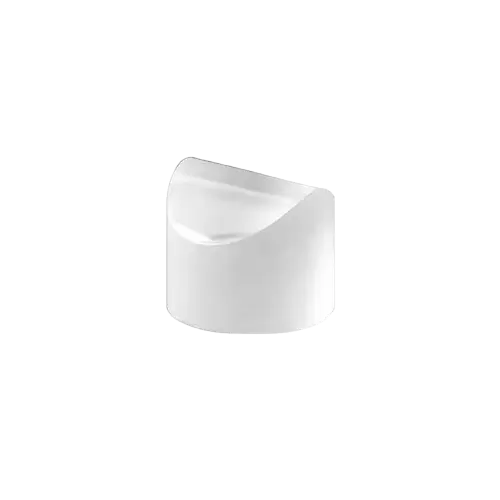
In industrial laser metrology systems, laser line generation is not a visual aid but a geometric measurement reference that directly defines system-level accuracy boundaries.
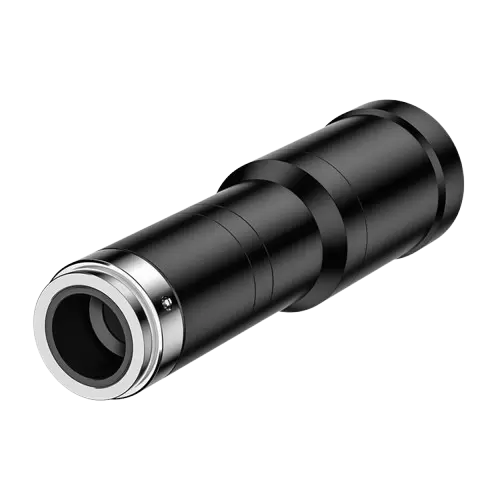
In precision machine vision, the lens can become a limiting factor even when the camera sensor and image-processing software are capable of resolving small dimensional differences. A conventional lens changes its apparent magnification as the object moves closer to or farther from the lens.
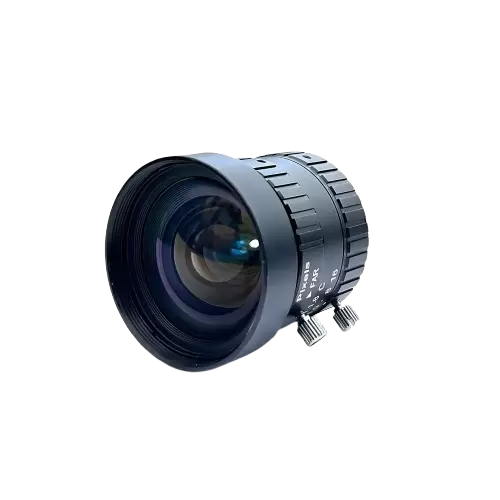
For industrial imaging, a lens designed for visible light cannot automatically deliver the same performance in the ultraviolet range. As wavelength decreases, optical materials that work well in the visible spectrum can introduce stronger absorption, reduced transmission, chromatic errors, and image degradation.