

 en
en
 English
 繁体中文
繁体中文 Japanese
 Korean
 Russian
 German
News
Deepen Optoelectronic Resources, Lead Technological Breakthroughs


Deepen Optoelectronic Resources, Lead Technological Breakthroughs
In professional imaging systems, particularly cinema optics, machine vision imaging modules, and optical research setups, controlling image geometry is not a secondary concern—it is the foundation of system performance. When engineers evaluate anamorphic prism lenses, the focus is not simply on whether an image is compressed horizontally, but on whether that compression remains geometrically stable across the entire field of view and throughout dynamic focusing conditions.
Conventional cylindrical or digital correction methods often fail to maintain consistent optical behavior when system parameters change. This is where prism-based anamorphic systems become essential.
A properly engineered anamorphic prism pair does not simply reshape an image—it defines how optical space is redistributed along one axis while preserving resolution integrity in the orthogonal direction.
Stable horizontal compression without compromising vertical resolution integrity
In anamorphic imaging systems, the goal is to compress the horizontal field of view while maintaining vertical sharpness. However, many optical systems introduce unintended vertical stretching or edge distortion when compression ratios are not precisely controlled. A high-precision prism pair ensures that horizontal squeeze is applied uniformly across the entire image plane, preserving vertical resolution consistency even at the outer edges of the sensor. This directly improves post-processing de-squeeze accuracy and reduces computational correction dependency.
Optical consistency across varying focal lengths and sensor sizes
Modern imaging systems often integrate multiple sensor formats and variable focal length configurations. Without tightly controlled prism geometry, squeeze ratio drift can occur when optical alignment shifts slightly under different configurations. A precision-designed anamorphic prism system maintains consistent optical behavior across these variations, ensuring predictable imaging output regardless of system scaling.
Reduced post-production correction workload in cinematic workflows
In professional cinema production, inconsistent anamorphic compression introduces distortions that must be corrected in post-processing. These corrections not only increase workload but can also degrade image fidelity. Stable prism-based compression reduces reliance on digital correction pipelines, preserving native optical integrity.
This is why high-end optical designers prioritize prism accuracy over nominal compression specifications.
An anamorphic prism pair functions based on controlled angular refraction differences between two precisely aligned optical elements. Unlike single-element systems, the paired structure enables directional optical manipulation while maintaining system-level symmetry.
At the core of this mechanism is differential refraction along orthogonal axes.
Directional beam manipulation through geometric asymmetry
Each prism in the pair introduces a controlled angular deviation. When aligned correctly, the combined system creates a differential magnification effect: one axis is expanded or compressed while the perpendicular axis remains unaffected. This selective optical transformation is what enables anamorphic imaging behavior.
Squeeze ratio defined by prism angle and refractive index coupling
The compression ratio (commonly 1.33x, 1.5x, or 2x in cinematic systems) is not arbitrary. It is directly determined by the prism apex angles, refractive index of the glass material, and the relative alignment between the two prisms. Even microscopic deviations in angle tolerance can result in measurable squeeze ratio drift, which affects final image geometry after de-squeeze processing.
Preservation of wavefront continuity across the optical axis
Unlike digital compression methods, prism-based anamorphic systems maintain continuous wavefront propagation. This reduces aliasing artifacts and preserves fine spatial detail, especially in high-resolution imaging systems.
The engineering challenge lies in maintaining this behavior consistently across manufacturing tolerances and real-world operating conditions.
Many system integrators initially focus on compression ratio as a static specification. However, in real-world applications, stability of that ratio is significantly more important than its nominal value.
Inconsistent squeeze ratios create geometric drift in post-processing
If compression varies across the image field or changes with focal adjustment, de-squeeze algorithms must compensate dynamically. This introduces complexity and increases the risk of subtle geometric artifacts, particularly in wide-format cinematic projection systems.
Edge region distortion directly impacts professional image quality
In anamorphic optics, edge performance is often more critical than central resolution. Any deviation in prism alignment or refractive behavior tends to manifest first at the frame edges, where stretching or compression inconsistency becomes visually apparent during motion sequences.
Sensor alignment sensitivity increases with higher compression ratios
Systems targeting 2x anamorphic compression require significantly tighter optical tolerances compared to 1.33x or 1.5x configurations. Small mechanical misalignments are amplified by the optical geometry, making precision manufacturing essential.
This is why prism pair engineering must prioritize repeatability and alignment stability over theoretical optical performance.
One of the most critical advancements in modern anamorphic optical engineering is the Precision Matched Prism Pair Alignment structure.
This approach ensures that both prisms in the system are not treated as independent optical components, but as a calibrated optical unit.
Matched angular tolerances eliminate cumulative distortion
In conventional manufacturing approaches, each prism may meet specification individually, but their combined behavior introduces cumulative angular deviation. Precision matching ensures that both prisms are fabricated and assembled within a controlled angular relationship, minimizing compounded optical errors that would otherwise affect squeeze ratio consistency.
Controlled inter-prism spacing stabilizes optical path geometry
The spacing between prism elements directly affects how light rays propagate through the system. Variations in spacing can introduce subtle scaling inconsistencies across different field regions. A controlled assembly structure maintains fixed spatial relationships, ensuring stable optical behavior under vibration or thermal expansion conditions.
Reduced edge stretching in high dynamic light environments
In cinematic applications involving rapidly changing light conditions or off-axis illumination, poorly aligned prism systems often exhibit edge stretching or localized distortion. Precision matched alignment reduces these effects by maintaining consistent ray distribution across the entire optical field.
This structure is especially important in wide-format imaging systems where consistency across the full frame is mandatory.
A frequent engineering question is:
How to select the correct anamorphic prism lenses compression ratio?
The answer depends on system geometry, sensor size, and intended imaging output.
Minimal optical distortion and high image stability
Lower prism angles produce subtle anamorphic effects while maintaining strong geometric stability. These configurations are often used in systems where slight horizontal widening is sufficient without aggressive squeeze requirements.
Suitable for sensor-limited imaging environments
When sensor resolution or optical path constraints limit system flexibility, lower compression ratios provide a safer design margin.
Balanced squeeze ratio control and image fidelity
Mid-range prism angles provide a practical balance between compression strength and optical stability. These systems are widely used in professional imaging setups where consistent anamorphic behavior is required without extreme distortion risk.
Most commonly used in industrial cinematic optics
Many production systems adopt this configuration due to its predictable performance under variable focusing conditions.
Strong anamorphic effect with increased design sensitivity
Higher prism angles produce stronger horizontal compression, enabling wider cinematic framing. However, this also increases sensitivity to alignment errors and manufacturing tolerances.
Requires strict optical calibration
Even minor angular deviations can significantly impact squeeze ratio consistency and edge geometry, making precision manufacturing essential.
Material choice plays a fundamental role in prism system performance.
The refractive index directly defines how light is bent through each prism surface, and even small variations can influence squeeze ratio stability.
At ECOPTIK, optical materials are selected from high-grade sources including Schott, CDGM, Corning, Sapphire, CaF₂, MgF₂, Fused Silica, Silicon, ZnSe, and ZnS.
High refractive index materials enable stronger compression control
Materials like N-SF11 provide higher refractive index values, allowing more compact prism designs while maintaining desired optical behavior.
Low dispersion materials reduce color separation effects
In high-end imaging systems, chromatic dispersion must be tightly controlled to prevent color fringing, particularly at image edges. Low dispersion materials help maintain spectral consistency across the full optical path.
Thermal stability ensures consistent imaging performance
Environmental temperature variations can alter refractive index behavior. Materials with stable thermal characteristics maintain consistent optical performance in varying operating environments.
Surface quality is one of the most influential manufacturing variables in anamorphic prism performance.
Surface flatness determines wavefront distortion levels
Deviations beyond λ/8 at 632.8 nm can introduce measurable wavefront errors, affecting sharpness and geometric accuracy in imaging systems.
Scratch and dig specifications influence stray light behavior
Surface imperfections can scatter light unpredictably, reducing contrast and introducing artifacts in high-resolution imaging systems.
Manufacturing precision affects long-term consistency
Tight dimensional tolerances (+0.0, -0.2 mm) ensure repeatable optical alignment across production batches, which is critical for multi-unit system integration.
These factors directly determine whether an optical system performs reliably under professional imaging conditions.
Search queries such as “Anamorphic prism pair price” often assume pricing is primarily material-based. In reality, cost is driven by engineering complexity.
Prism angle tolerance precision
Tighter angular tolerances significantly increase fabrication difficulty and inspection requirements, directly affecting production cost.
Matched pair alignment calibration
Precision matched systems require additional assembly verification steps to ensure both prisms function as a calibrated optical unit rather than independent components.
Material refractive index selection
High-index or specialty optical materials increase raw material cost and processing complexity.
Coating uniformity and spectral performance
MgF₂ coatings or advanced AR coatings must be applied with strict thickness control to ensure uniform transmission behavior.
Batch-to-batch consistency control
Large-scale production requires strict process control to ensure identical squeeze ratio behavior across units, increasing QA and metrology overhead.
Understanding these factors allows engineering teams to evaluate cost from a system-performance perspective rather than a unit-price perspective.
One of the most challenging aspects of anamorphic optical design is maintaining image integrity under dynamic conditions.
Off-axis illumination sensitivity
When light enters the system at non-ideal angles, poorly designed prism systems may introduce localized distortion or compression variation.
Focus shift-induced squeeze variation
Changes in focal position can subtly alter ray geometry within the prism system. Precision designs minimize this effect to maintain consistent imaging output.
Motion-based optical instability
In cinematic or high-speed imaging systems, vibration and motion can affect alignment stability. A rigid prism pair structure helps preserve optical consistency.
With 15 years of experience in precision optical manufacturing, ECOPTIK specializes in high-performance optical components for demanding applications.
The company provides:
Precision prisms, cylindrical optics, filters, and optical windows
Manufactured using advanced fabrication systems designed for high-precision optical applications.
Lens assembly and custom optical engineering solutions
Supporting system-level integration for imaging, measurement, and industrial optical platforms.
Advanced metrology verification systems
Including ZYGO laser interferometers, ZEISS CMM Spectrum systems, and Agilent Cary 7000 UMS for comprehensive optical validation and performance reporting.
This infrastructure ensures that each anamorphic prism system meets strict performance requirements for professional imaging environments.
Anamorphic prism lenses and anamorphic prism pair systems are not simply optical compression tools—they are precision-engineered components that define the geometric integrity of modern imaging systems.
Their performance is governed by prism angle accuracy, refractive index control, surface quality, coating consistency, and most importantly, precision matched alignment between paired elements.
Understanding these parameters allows engineers and procurement teams to evaluate not just image compression capability, but the stability, repeatability, and system-level reliability required for professional cinematic, machine vision, and optical research applications.

Selecting the right bandpass filter is not simply a matter of choosing a component that allows certain signals to pass. In optical systems, wireless communication equipment, and precision measurement devices, filter performance directly affects signal quality, detection accuracy, and system reliability.
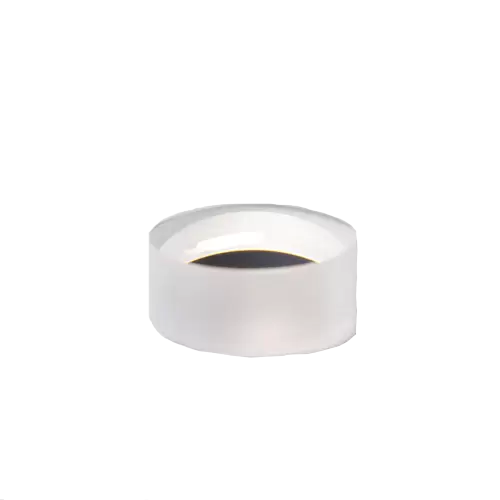
In precision optical engineering, understanding Plano concave lens uses requires moving beyond basic ray divergence concepts into system-level wavefront control.
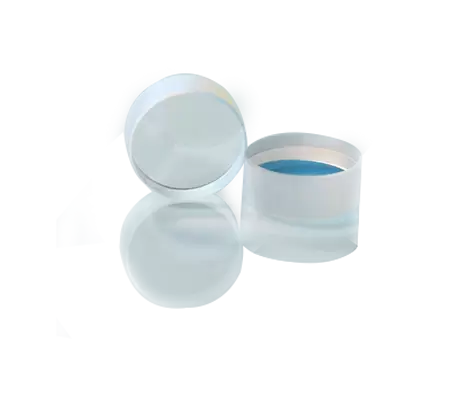
Spherical lens coating directly affects how efficiently an optical system transmits light, controls reflections, and maintains image quality over time. An uncoated lens can lose a meaningful portion of incident light through surface reflections, while an unsuitable or poorly controlled coating may introduce stray light, inconsistent transmission, surface defects, or premature coating failure.