

 en
en
 English
 繁体中文
繁体中文 Japanese
 Korean
 Russian
 German
News
Deepen Optoelectronic Resources, Lead Technological Breakthroughs


Deepen Optoelectronic Resources, Lead Technological Breakthroughs
In many laser and imaging systems, controlling light in only one direction is a critical requirement. However, conventional cylindrical lenses can create challenges during integration, especially when optical alignment, positioning accuracy, and long-term stability are important. Small deviations in lens centering, surface accuracy, or mechanical positioning may change the output beam profile and affect the consistency of the entire optical system.
For applications such as laser line generation, optical inspection, and precision measurement, a standard cylindrical lens may not always provide the mechanical compatibility and alignment control required by modern equipment designs.
This is why more optical engineers are considering Round Cylinder Lens Replacement solutions. By combining the one-dimensional beam shaping capability of cylindrical optics with a circular mechanical structure, round cylinder lenses provide a more adaptable approach for systems that require controlled beam expansion, compression, and shaping while maintaining easier optical integration.
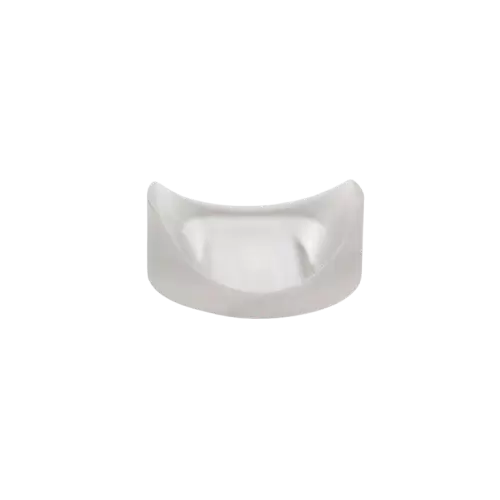
A round cylinder lens is a cylindrical optical component with a circular physical shape. Its optical function remains the same as a traditional cylindrical lens: it focuses or expands light along one axis while leaving the perpendicular direction largely unaffected.
This unique optical behavior makes cylindrical lenses different from spherical lenses. A spherical lens changes the curvature of light in two dimensions, while a cylindrical lens provides independent control over a single optical axis. This characteristic is especially valuable when engineers need to transform a laser spot into a line, correct beam asymmetry, or adjust beam dimensions in one direction.
For laser line generation systems, a round cylinder lens can expand a narrow laser beam along one axis to create a controlled line profile. In beam compression applications, it reduces beam width in a specific direction without significantly affecting the other axis. For beam expansion systems, it increases the size of the beam profile while maintaining directional control.
The circular shape provides additional mechanical advantages during system assembly. Compared with irregular-shaped cylindrical optics, the round structure allows easier mounting inside standard optical holders, lens barrels, and positioning systems. The symmetrical geometry also helps engineers define the optical center more efficiently, reducing alignment difficulties during installation and replacement.
For equipment manufacturers, this means a replacement lens can be integrated into an existing optical structure with fewer mechanical modifications while maintaining the required optical axis relationship.
ECOPTIK develops customized optical components for these demanding applications. As an optical customization partner with 15 years of experience in optical component fabrication technology, ECOPTIK manufactures precision optics including cylindrical mirrors, spherical lenses, micro-optical components, filters, prisms, windows, and other customized optical elements.
With materials sourced from Schott, CDGM, Corning, as well as sapphire, CaF₂, MgF₂, fused silica, silicon, ZnSe, and ZnS, ECOPTIK provides optical solutions based on different wavelength ranges, environmental conditions, and system requirements. The company also offers lens assembly services and supports optical testing with ZYGO laser interferometers, ZEISS CMM Spectrum, and Agilent Cary 7000 UMS to provide detailed product reports.
The question “What are Round Cylindrical Lenses used for?” is closely related to their ability to control light distribution in a single direction. Their value is not simply determined by magnification or focusing ability, but by how accurately they manage asymmetric light requirements in complex optical systems.
In laser processing equipment, a focused laser spot is not always the ideal output format. Many applications require a uniform laser line to cover a wider processing area or maintain consistent energy distribution.
Round cylinder lenses help convert a collimated laser beam into a line-shaped output. The cylindrical surface controls beam expansion along one axis, making them suitable for laser marking, cutting, inspection, and industrial processing systems.
Machine vision systems often rely on structured lighting to detect surface features, dimensions, and defects. A round cylinder lens can generate a narrow and consistent illumination line, improving image contrast and measurement repeatability.
In these systems, optical alignment is essential. Excessive center deviation or surface errors can shift the projected light position and affect inspection accuracy.
Projection systems and research instruments may require precise control of beam distribution. Round cylindrical lenses allow designers to modify beam shape without replacing the entire optical structure.
For scientific equipment, where repeatability and calibration stability are important, the choice of substrate, surface quality, and centering accuracy directly affects measurement reliability.
Choosing a replacement cylindrical lens requires more than matching the outside diameter. Optical engineers need to consider material characteristics, dimensional accuracy, surface performance, and coating requirements.
ECOPTIK supports multiple substrate options including optical glass, fused silica, and sapphire.
Optical glass provides balanced optical performance for general visible wavelength applications. Fused silica is preferred for systems requiring low thermal expansion, UV compatibility, and improved stability under temperature changes. Sapphire offers excellent mechanical strength and durability for applications exposed to demanding environments.
The correct substrate selection helps maintain optical performance when the system operates under different wavelengths, power levels, or thermal conditions.
ECOPTIK round cylinder lenses support:
Diameter range: 2mm~100mm
Length range: 2mm~200mm
Dimension tolerance: ±0.05mm~±0.1mm
These dimensional specifications allow manufacturers to replace existing optical components while maintaining compatibility with mechanical structures.
Surface quality influences scattering and optical clarity. ECOPTIK provides surface quality options including:
60/40;
40/20;
20/10.
For precision optical systems, surface accuracy determines how accurately the lens maintains the designed wavefront.
Available surface accuracy:
λ/2;
λ/4;
λ/10 @632.8nm or 532nm.
Higher surface accuracy reduces optical distortion and improves beam consistency in applications requiring precise shaping.
The effective optical area is another important factor. ECOPTIK round cylinder lenses provide a clear aperture greater than 85% of the diameter, ensuring sufficient usable optical area for system design.
Centering accuracy is available from:
<3 arc min;
down to 30 arc sec.
Low centering deviation helps reduce beam displacement caused by optical axis offset, which is especially important in multi-element laser systems.
Coating requirements depend on wavelength range and operating environment. ECOPTIK provides customized coating solutions according to customer specifications, including anti-reflection coatings designed to improve transmission efficiency and maintain stable optical performance.
A suitable round cylinder lens is not defined only by its ability to reshape light. In precision optical systems, the interaction between optical design, mechanical structure, material stability, and manufacturing accuracy determines the final performance.
From laser line generation and beam shaping to machine vision and scientific instruments, Round Cylinder Lens Replacement provides a practical solution for upgrading existing optical systems without redesigning the entire assembly.
With customized substrate options, precise machining capabilities, controlled surface accuracy, and professional optical testing, ECOPTIK helps engineers develop cylindrical lens solutions that maintain accurate one-axis beam control, reliable alignment, and stable performance in demanding optical environments.
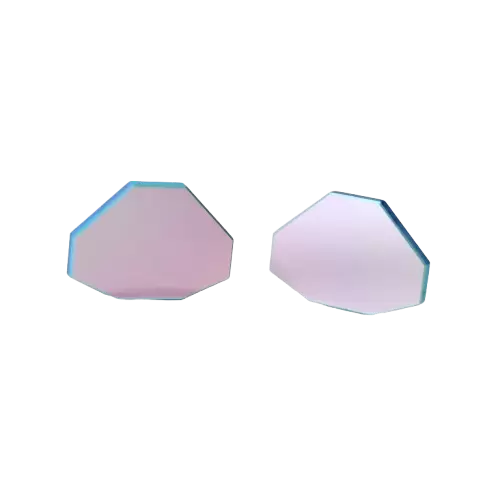
Modern laser processing systems are expected to achieve higher throughput while maintaining consistent positioning accuracy. However, many traditional laser scanning solutions face limitations when operating at high speeds.
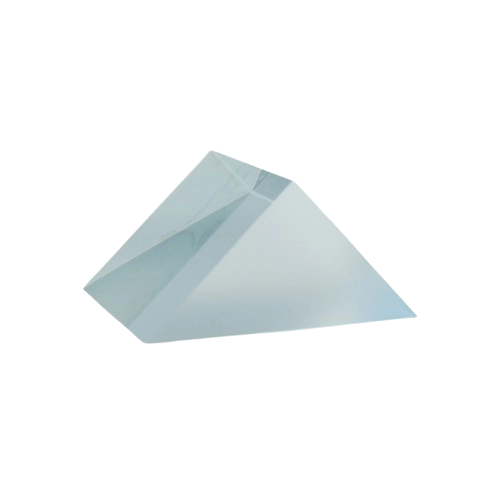
In modern optical engineering systems, especially in laser instrumentation, medical imaging, and industrial vision inspection, the role of a prism is no longer limited to simple beam deviation. For optical system designers and integrators working with precision optical prism lenses, the real challenge lies in maintaining sub-micron optical path stability, angular deviation accuracy, and multi-wavelength transmission consistency under complex system conditions.
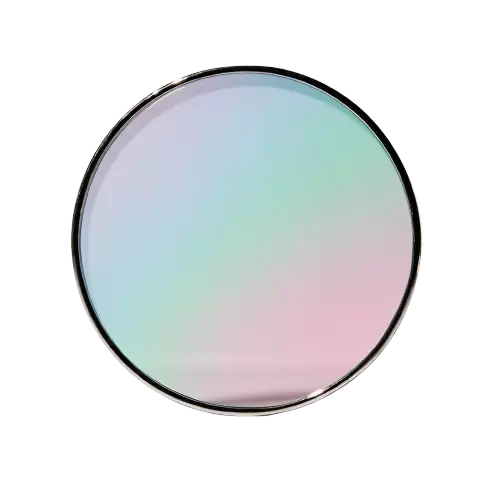
In complex optical environments, selecting useful light from unwanted wavelengths is a critical challenge. Traditional optical filters may fail to provide sufficient blocking outside the target band, accurate cut-on wavelength control, or stable transmission performance over long-term operation.