

 en
en
 English
 繁体中文
繁体中文 Japanese
 Korean
 Russian
 German
News
Deepen Optoelectronic Resources, Lead Technological Breakthroughs


Deepen Optoelectronic Resources, Lead Technological Breakthroughs
A conventional singlet lens can be sufficient for simple focusing or collimation, but its limitations become more apparent when an optical system must work across multiple wavelengths. Because different wavelengths are refracted by different amounts, blue, green, and red light may form their focal points at different axial positions. The resulting chromatic focal shift can increase spot size, reduce contrast, and introduce color fringes or blurred details.
For fluorescence microscopy, optical inspection, image relay, and spectroscopy, these effects can directly influence measurement and imaging accuracy. This is where an Achromatic Cemented Lens becomes useful. By combining optical crown glass and flint glass with different dispersion characteristics, an achromatic design brings selected wavelengths closer to a common focus. The cemented two-element construction can also help control spherical aberration, producing smaller spot sizes than comparable singlet lenses under appropriate system conditions.
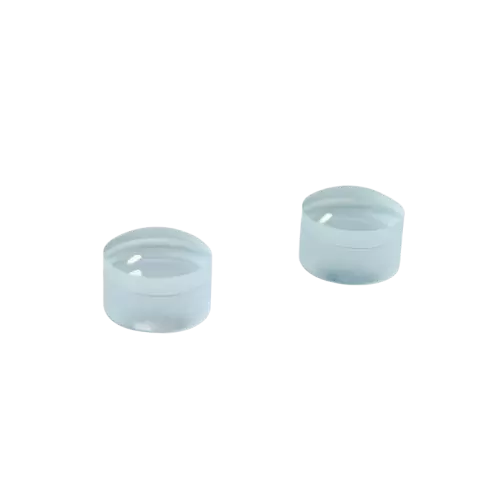
The optical principle behind an achromatic lens is not simply adding a second piece of glass. The two elements must be selected and designed as an optical pair. Crown glass generally has lower dispersion, while flint glass has higher dispersion. By combining their refractive and dispersive properties, the optical designer can compensate for part of the chromatic dispersion introduced by each individual element.
This answers the practical question: What is the purpose of an achromatic lens?
Its primary purpose is to reduce chromatic aberration so that different wavelengths produce more consistent focusing and imaging. In a properly designed system, this reduces axial color and helps maintain a smaller, more controlled focal spot across the intended spectral range.
The second benefit is improved control of spherical aberration. A singlet may require compromises between focal length, aperture, and aberration correction. With two optical elements, the optical power can be distributed between different glass types and surfaces. This gives the designer more degrees of freedom to control both chromatic and monochromatic aberrations.
The cemented structure also matters mechanically. Instead of leaving two optical elements separated by an air gap, the elements are optically joined into one assembly. This can reduce the number of air-glass interfaces and provide a compact optical unit, although the appropriate construction ultimately depends on wavelength, power level, environmental conditions, and system requirements.
For precision applications, the optical design must be supported by equally precise manufacturing. ECOPTIK produces Achromatic Cemented Lenses with diameters from 6 mm to 200 mm and focal lengths from 50 mm to 2000 mm. Surface accuracy can be specified from λ/2 to λ/10 at 632.8 nm or 532 nm, while surface quality options include 60/40, 40/20, and 20/10.
These specifications are not merely catalog figures. Higher surface accuracy can be important when wavefront quality and image fidelity are critical. A 20/10 surface-quality requirement, for example, provides tighter control of surface defects than a 60/40 specification and may be appropriate for demanding imaging or laser-related systems. The correct specification should still be determined by the optical budget rather than selecting the highest grade by default.
The terminology can cause confusion because “doublet” describes a two-element optical structure, while “achromatic” describes an optical correction objective. Therefore, an achromatic cemented lens can itself be an achromatic doublet.
A doublet may consist of two separate lens elements arranged with an air space, or the two elements may be cemented together. If the two elements use complementary optical glasses and are designed to reduce chromatic aberration, the assembly can be described as an achromatic doublet.
This makes the more useful engineering comparison:
Achromatic cemented lens vs. singlet: the cemented achromatic design uses two glass elements to provide substantially greater freedom for chromatic correction and aberration management.
Cemented achromatic doublet vs. air-spaced doublet: both can provide chromatic correction, but their mechanical structure, optical surfaces, environmental requirements, and available correction flexibility differ.
A cemented design can be attractive when compactness, reduced air-glass interfaces, and integration simplicity are important. An air-spaced design may provide additional degrees of freedom for aberration correction or greater flexibility in specialized systems. Neither construction is universally superior; the appropriate choice depends on the wavelength range, numerical aperture, image requirements, power level, and mechanical environment.
For engineers asking “Why use an achromatic lens instead of a singlet?”, the answer is primarily about optical performance. If the system operates over a meaningful wavelength range and image quality is limited by chromatic focal shift, a singlet may force the designer to accept compromises. An achromatic design can bring selected wavelengths into closer focus and therefore improve image consistency.
Fluorescence microscopy often requires optical components to handle excitation and emission wavelengths that are separated spectrally. Poor chromatic correction can cause different wavelengths to focus at different positions, affecting registration and image sharpness.
An achromatic cemented lens can help maintain more consistent focusing across the designed wavelength range. For microscopy manufacturers, the relevant specification is therefore not simply focal length. Glass selection, coating bandwidth, surface accuracy, clear aperture, and center deviation all need to match the complete optical path.
In image relay systems, small amounts of chromatic focal shift can become visible as reduced edge sharpness or color-dependent image displacement. Machine vision systems can be even more sensitive when dimensional measurements depend on consistent image contrast and feature boundaries.
A lens with a controlled focal length and low center deviation can help maintain alignment with the rest of the optical train. ECOPTIK supports center deviation specifications from less than 3 arc min to 30 arc sec, allowing tighter alignment requirements to be addressed for precision optical assemblies.
Spectroscopic systems may intentionally work across a relatively broad wavelength range. In these systems, chromatic behavior is part of the optical design rather than an incidental issue. An achromatic lens can be selected when the application requires improved focusing consistency across a defined spectral band.
However, achromatization does not mean that all wavelengths become perfectly coincident at one focus. Engineers should evaluate the actual operating wavelength range and the residual chromatic aberration specified by the optical design.
Selecting an achromatic lens should begin with the optical system rather than the lens catalog.
Glass combination determines much of the chromatic correction. Crown and flint glasses must be selected according to refractive index, Abbe number, wavelength range, and the required optical power distribution. ECOPTIK can work with optical materials from suppliers including Schott, CDGM, and Corning, as well as materials such as fused silica, sapphire, CaF₂, MgF₂, silicon, ZnSe, and ZnS for broader optical customization requirements.
Diameter and clear aperture determine how much of the optical beam can pass through the component. ECOPTIK provides diameters from 6 mm to 200 mm with a clear aperture greater than 85% of the diameter. A larger lens does not automatically produce better imaging; the usable aperture must correspond to the beam size and system numerical aperture.
Focal length directly affects magnification, convergence angle, working distance, and system geometry. The available range of 50–2000 mm covers compact imaging components as well as longer-focal-length optical configurations. Focal length tolerance must be considered alongside the system's sensitivity to focus position.
Surface quality and surface accuracy influence scattering and wavefront quality. Specifications ranging from 60/40 to 20/10 and λ/2 to λ/10 allow the component to be matched to different performance levels instead of applying one specification to every application.
Center deviation is especially important when the lens must remain accurately aligned with the optical axis. A lens with excellent surface quality can still compromise system performance if its optical axis is not sufficiently controlled relative to the mechanical reference.
Coating should be selected according to the actual operating wavelength, angle of incidence, polarization requirements, and environmental conditions. A coating designed for one spectral region should not automatically be treated as suitable for another.
For optical procurement teams, the manufacturer should be evaluated on more than the quoted unit price. A reliable supplier should be able to demonstrate control over material selection, lens fabrication, cementing, coating, dimensional tolerances, optical testing, and batch consistency.
ECOPTIK has 15 years of experience in optical component fabrication and provides customized optical components and lens assembly services. Its manufacturing scope includes spherical lenses, dome optics, micro-optical components, cylindrical mirrors, filters, prisms, windows, and other precision optics.
For quality verification, ECOPTIK uses equipment including ZYGO laser interferometers, ZEISS CMM Spectrum, and Agilent Cary 7000 UMS for optical and dimensional testing and product reporting. This testing capability is particularly relevant when procurement specifications include surface accuracy, dimensional tolerances, center deviation, or transmission-related requirements.
Ultimately, the best Achromatic Cemented Lens is not necessarily the one with the tightest specification or highest price. It is the component whose glass combination, focal length, aperture, surface quality, wavefront accuracy, alignment tolerance, coating, and mechanical configuration are properly matched to the optical system. For engineers and procurement teams, evaluating these factors together provides a more reliable route to consistent imaging performance than comparing individual lens specifications in isolation.
Conclusion: An Achromatic Cemented Lens provides a practical way to improve chromatic focus consistency while supporting better control of spherical aberration and spot size than a comparable singlet in many optical designs. Understanding the relationship between an achromatic lens and a doublet is equally important: “doublet” refers to the two-element structure, while “achromatic” identifies the intended chromatic correction. For microscopy, inspection, image relay, and spectroscopy, the final selection should be based on wavelength range, glass combination, focal length, aperture, surface quality, wavefront accuracy, alignment, coating, and the actual performance requirements of the complete optical system.

In professional optical imaging systems, the question of Is 1.55 or 1.33 anamorphic better is not a subjective aesthetic debate but a deterministic optical engineering trade-off governed by squeeze factor design, field coverage efficiency, sensor compatibility, and distortion control behavior across the image plane.
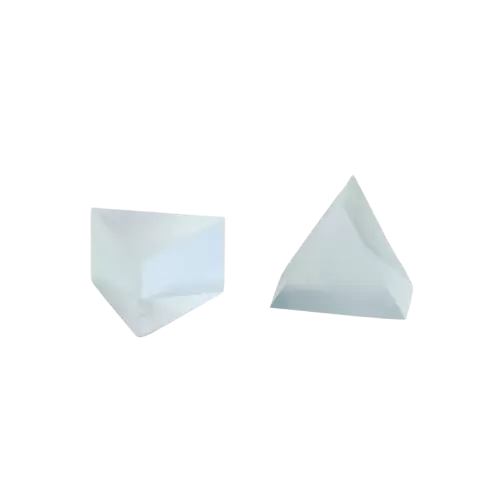
In modern optical engineering, every component inserted into a light path influences system performance, alignment tolerance, energy efficiency, and long-term stability.
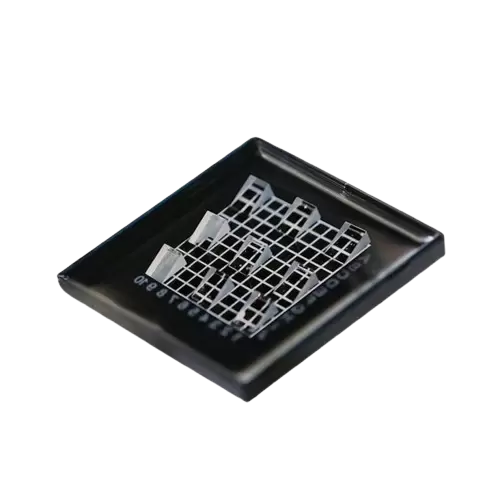
Standard optical prisms are not always practical when an optical path has to fit inside a few millimeters. In endoscopes, laser modules, fiber-coupling assemblies, and compact industrial instruments, a conventional prism can consume too much space, introduce unwanted optical path length, or simply lack the angular precision required by the system.