

 en
en
 English
 繁体中文
繁体中文 Japanese
 Korean
 Russian
 German
News
Deepen Optoelectronic Resources, Lead Technological Breakthroughs


Deepen Optoelectronic Resources, Lead Technological Breakthroughs
A conventional spherical lens can provide the required optical power, but its simple geometry does not always provide sufficient aberration control in a precision optical system. As aperture increases or the lens is used away from the optical axis, spherical aberration, coma, and degradation toward the edge of the image can become more difficult to manage. Adding apertures or additional corrective elements may compensate for some of these effects, but it can also increase system size, optical surfaces, alignment requirements, and design complexity.
This is where meniscus lenses become useful. A meniscus lens has one concave surface and one convex surface, with both optical surfaces curving in the same direction. Depending on the relative curvature and orientation, it can provide positive or negative optical power while distributing refraction between two curved surfaces. Its main value is not simply forming an image by itself, but helping the complete optical system control aberrations and maintain better image fidelity.
For optical engineers and B2B buyers, understanding the different meniscus lens types and their intended uses is therefore more important than selecting a lens based only on diameter or focal length.
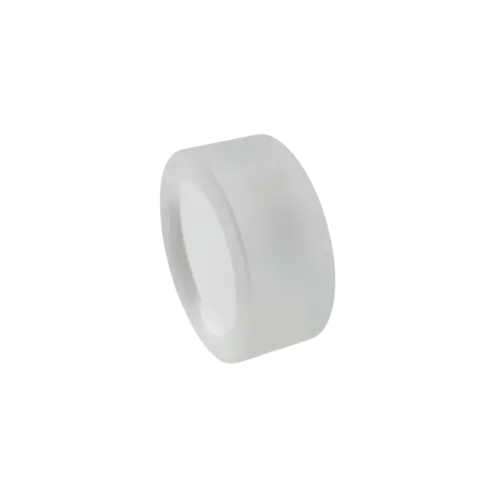
The two primary meniscus lens types are positive meniscus lenses and negative meniscus lenses.
A Positive Meniscus Lens has net positive optical power and therefore a positive focal length. It is typically used when the optical design requires converging power while maintaining better control of spherical aberration than a simple positive spherical element may provide. Depending on the curvature ratio and its position in the system, a positive meniscus lens can contribute to a more controlled convergence of marginal and paraxial rays.
A Negative Meniscus Lens has net negative optical power and a negative focal length. It is used when the system requires diverging optical power or when a negative element is needed to modify the overall optical behavior without introducing excessive aberration.
The distinction is therefore not simply that one lens is “convex” and the other is “concave.” Both have a convex surface and a concave surface. The difference comes from the relative curvature of those surfaces and the resulting net optical power.
Focal length is one of the most important selection parameters. A shorter focal length produces stronger optical power and generally causes a larger change in ray direction. Longer focal lengths provide weaker optical power and may be more appropriate when the meniscus element is primarily being used to refine system aberration behavior rather than introduce a large change in convergence.
ECOPTIK provides meniscus lenses with focal lengths from -50 mm to -2000 mm, with positive and negative focal-length configurations available according to system requirements. In an actual optical design, focal length should always be evaluated together with aperture, lens spacing, object distance, image distance, and the position of the system stop.
The performance of a meniscus lens depends strongly on the relationship between its two surface curvatures. Two lenses can have similar focal lengths but produce different aberration behavior because their surface radii and center thicknesses are different.
A properly selected curvature combination can distribute refraction between the two surfaces rather than forcing one spherical surface to perform most of the optical work. This is one reason meniscus geometry can be valuable in systems where spherical aberration needs to be reduced without adding a completely separate correction group.
Diameter is equally important. ECOPTIK can manufacture meniscus lenses from 2 mm to 300 mm in diameter. A larger diameter may be required for systems with a large beam, wide field, or high numerical aperture, but increasing aperture also places greater demands on surface accuracy, centering, edge quality, and coating uniformity.
Material selection should follow the working wavelength and environmental requirements rather than simply material availability.
Optical glass is suitable for many visible and near-infrared imaging and optical assemblies, with material selection depending on refractive index, dispersion, transmission range, and the required optical design.
Fused silica is often considered when ultraviolet transmission, low absorption, thermal stability, or demanding laser applications are important. It can be particularly useful in systems exposed to significant optical power or temperature variation.
Sapphire offers high hardness and strong environmental durability, making it useful where mechanical robustness, wear resistance, or demanding environmental conditions are part of the specification.
ECOPTIK works with optical materials from suppliers including Schott, CDGM, and Corning, as well as fused silica, sapphire, CaF₂, MgF₂, silicon, ZnSe, and ZnS for different optical requirements.
The practical uses of meniscus lenses extend across imaging, laser, projection, and precision optical assemblies.
In an imaging system, a meniscus lens can be positioned within a lens group to reduce spherical aberration and improve the balance of aberrations across the field. It may be used as part of an objective, relay system, camera lens, microscope assembly, or other precision imaging configuration. The exact effect depends on lens orientation, stop location, neighboring elements, and the required field of view.
In laser systems, a meniscus element can be used to modify beam convergence or divergence while maintaining control over spherical wavefront distortion. This can be important in beam-conditioning assemblies and other systems where the quality of the transmitted wavefront affects downstream performance.
For telescopes and astronomical optical systems, meniscus elements can contribute to compact aberration-correction groups. Their usefulness comes from combining optical power with a geometry that can reduce certain aberration contributions without relying entirely on highly curved individual surfaces.
In projection systems, where image quality must remain acceptable over a defined field, a meniscus lens can form part of the correction strategy for maintaining image sharpness and controlling off-axis performance.
They can also be incorporated into beam-shaping assemblies and precision optical components, where the objective is not simply to focus light but to obtain a predictable wavefront and controlled ray distribution.
One important engineering point is that a meniscus lens should not be described as a universal coma-correction element. Coma is influenced by lens shape, field angle, aperture stop position, and the rest of the optical prescription. A suitable meniscus geometry can reduce the coma contribution of a particular element or help balance system coma, but the final result must be evaluated at the complete-system level.
Selecting the correct meniscus lens requires more than matching a nominal focal length.
The first consideration is optical power. Determine whether the system requires positive or negative power and how much the lens should contribute to the overall focal length.
Next, define the working wavelength. Refractive index and dispersion vary with wavelength, so material selection directly affects focal length, chromatic behavior, and system optimization.
The diameter and clear aperture must then be checked against the actual beam or imaging field. ECOPTIK specifies a clear aperture greater than 85% of the lens diameter, helping ensure that the usable optical area is appropriate for the intended design.
Manufacturing tolerances become increasingly important in high-performance systems. ECOPTIK offers diameter tolerances of ±0.05 mm for diameters up to 50 mm and ±0.1 mm for larger diameters. Center thickness can range from 2 mm to 20 mm, depending on the design.
Surface quality is available at 60/40, 40/20, and 20/10 levels. These specifications describe allowable surface imperfections such as scratches and digs. A 20/10 specification is generally more demanding than 60/40 and may be required where scattering and surface defects have a greater impact on system performance.
Surface accuracy can reach λ/2 to λ/10 at 632.8 nm or 532 nm. This parameter is directly related to how closely the manufactured optical surface follows its designed shape. In wavefront-sensitive imaging or laser applications, tighter surface accuracy can help reduce unwanted wavefront error.
Center deviation is another critical specification. ECOPTIK can control center deviation from 3 arc min to 30 arc sec, depending on the configuration. Poor centering can introduce optical axis errors, prism effects, or alignment problems, particularly when several precision elements are combined in one assembly.
Coating should also be selected according to the actual application. The working wavelength, required transmission or reflection performance, incidence angle, laser power, environmental exposure, and substrate material should all be considered when defining the coating specification.
For a custom meniscus lens, an optical supplier should receive more than a requested diameter and focal length. Useful design information includes material, wavelength range, positive or negative optical power, focal length, diameter, center thickness, surface radius requirements, surface quality, surface accuracy, clear aperture, center deviation, coating requirements, and applicable environmental conditions.
ECOPTIK has been researching optical component fabrication technology for 15 years and manufactures precision optics including spherical lenses, dome optics, micro-optical components, cylindrical mirrors, filters, prisms, and windows. Its manufacturing capability also includes customized meniscus lenses and lens assembly services.
For quality verification, ECOPTIK uses equipment including ZYGO laser interferometers, ZEISS CMM Spectrum, and Agilent Cary 7000 UMS, supporting dimensional, surface, and optical-performance verification as well as product reporting.
For overseas B2B procurement, this capability matters because a suitable meniscus lens is not defined only by whether one prototype meets the drawing. For production applications, the supplier must also demonstrate repeatable material quality, focal-length control, surface performance, centering accuracy, coating capability, and the ability to maintain specifications across batches.
The best meniscus lens is therefore the one that fits the complete optical prescription, not simply the one with the closest nominal diameter or focal length. By evaluating positive or negative optical power, curvature, material, wavelength, aperture, surface accuracy, center deviation, coating, and the system's specific aberration requirements together, engineers can use meniscus lenses more effectively to improve imaging performance while maintaining practical system dimensions and manufacturing requirements.
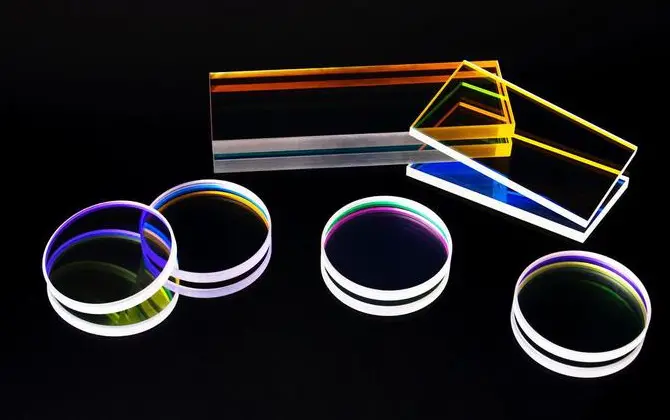
In the world of precision optics, thin-film coatings are what transform a simple piece of glass into a functional optical component—whether it's an anti-reflection coating that maximizes light transmission, a dielectric mirror that reflects specific wavelengths, or a filter that precisely separates spectral bands . The performance of these coatings directly determines whether an optical system succeeds or fails. But how do manufacturers verify coating quality without risking damage to expensive
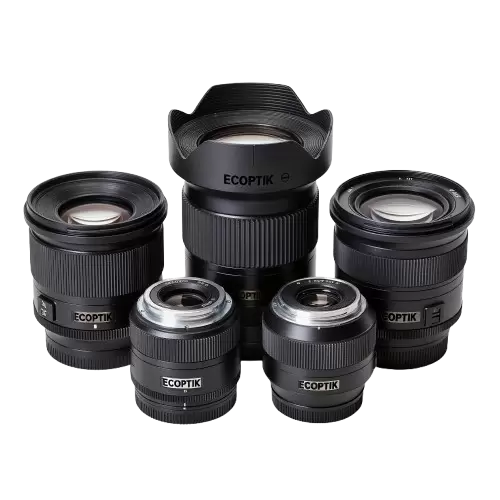
Standard optical lenses are designed around common imaging conditions, but many industrial and scientific systems operate within much tighter optical and mechanical constraints.
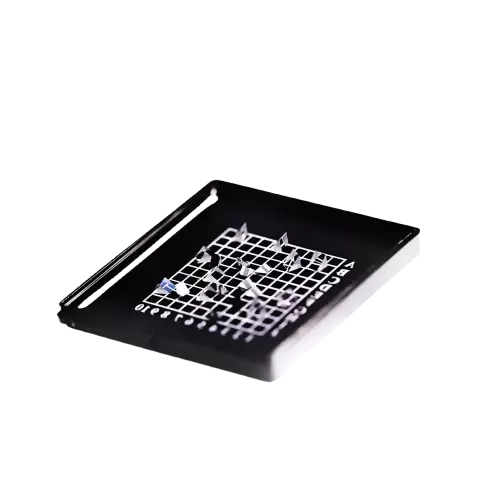
In modern precision optics and targeting systems, the Micro prism scope has become a critical component in compact sighting architectures where rapid target acquisition, low-light imaging stability, and optical alignment precision directly determine system performance.