

 en
en
 English
 繁体中文
繁体中文 Japanese
 Korean
 Russian
 German
News
Deepen Optoelectronic Resources, Lead Technological Breakthroughs


Deepen Optoelectronic Resources, Lead Technological Breakthroughs
In high-precision optical systems, excessive light intensity can become a serious performance issue rather than an advantage. When strong illumination enters a camera sensor, detector, or optical component without proper control, it may cause image overexposure, detector saturation, inaccurate measurements, or even permanent damage to sensitive elements.
Many conventional light reduction components cannot meet the requirements of advanced optical equipment because they lack accurate optical density control, stable transmission performance, and consistent attenuation characteristics. A small variation in transmitted light can affect measurement repeatability in industrial inspection systems, laser testing equipment, and scientific instruments.
A professional Neutral Density Filter provides a controlled solution by reducing optical intensity while maintaining the original spectral characteristics of the light. By precisely absorbing or reflecting a portion of incoming radiation, ND filters help optical systems manage light energy more effectively without changing the color balance or spectral distribution of the source.
ECOPTIK has been researching optical component fabrication technology for 15 years and provides customized optical solutions for demanding applications. As an optical customization partner, ECOPTIK manufactures precision optical components including filters, spherical lenses, dome optics, cylindrical mirrors, prisms, windows, and micro-optical components. With advanced inspection equipment such as ZYGO laser interferometers, ZEISS CMM Spectrum, and Agilent Cary 7000 UMS, ECOPTIK supports customers with reliable optical testing and detailed product reports.
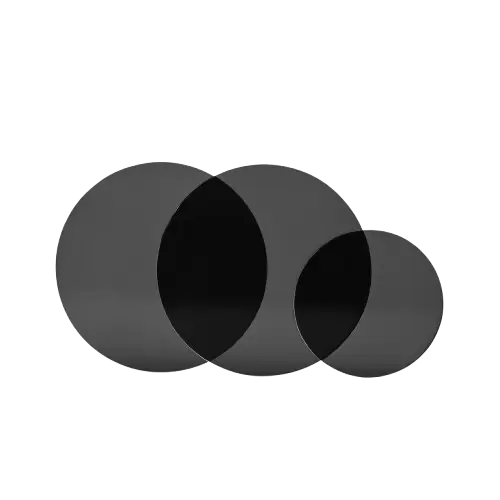
The main Neutral density filter effect is controlled reduction of light intensity without significantly affecting the spectral characteristics of the transmitted light.
Unlike ordinary blocking components that simply reduce illumination, a neutral density optical filter is designed to provide predictable attenuation across its operating wavelength range. It works mainly through two mechanisms:
Absorptive neutral density filters use optical materials that absorb part of the incoming light energy while allowing a controlled amount of light to pass through.
Reflective neutral density filters use optical coatings to reflect a portion of incident light and reduce the amount reaching the sensor or detector.
This controlled attenuation is especially important in systems where the detector must operate within a specific dynamic range. For example, in a machine vision system, excessive illumination can cause bright areas to lose details and reduce inspection accuracy. By integrating an ND filter into the optical path, engineers can maintain suitable exposure conditions and improve image consistency.
In laser applications, the role of a neutral density filter is even more critical. High-intensity laser beams can exceed the safe operating range of detectors and optical sensors. A properly selected optical density filter reduces incoming energy before it reaches sensitive components, helping prevent damage while maintaining measurement reliability.
When selecting a Neutral Density Filter, optical density is one of the most important parameters because it determines how much light energy is transmitted through the filter.
Different density levels provide different attenuation effects:
Lower optical density values are suitable for applications requiring moderate light reduction, such as camera exposure adjustment and optical testing.
Medium density filters are commonly used in industrial imaging systems where stable illumination control is required.
Higher density filters are designed for stronger light environments, including laser measurement and high-intensity optical experiments.
The purpose is not simply to reduce brightness but to achieve accurate and repeatable light management. A high-quality ND filter allows engineers to optimize detector performance, extend measurement range, and maintain consistent optical conditions.
ECOPTIK provides neutral optical density filters designed for imaging and laser applications where reliable attenuation is required. The filters absorb or reflect untransmitted light to evenly reduce transmission within the required optical range, helping customers achieve stable system performance.
For precision optical applications, the performance of a neutral density filter depends on more than the density value. Material quality, dimensional accuracy, surface flatness, and transmission consistency all influence the final system performance.
ECOPTIK’s Neutral Density Filter specifications include:
Material: BK7 optical glass
Diameter tolerance: +0.0/-0.1mm
Thickness tolerance: ±0.1mm
Parallelism: <3 arc min
Flatness: λ~λ/10
Clear aperture: >90%
Density tolerance: ±2%
BK7 optical glass is widely used in precision optical systems because of its stable optical properties and excellent manufacturing compatibility. It provides a reliable substrate for applications requiring consistent transmission performance and mechanical accuracy.
Density tolerance is another critical factor. With a tolerance of ±2%, the filter provides more predictable light attenuation compared with low-quality alternatives where density variations may create differences between components. This is especially important for equipment manufacturers that require repeatable performance across multiple devices.
A clear aperture greater than 90% ensures that most of the optical surface remains usable for light transmission, which is beneficial for imaging systems with strict optical path requirements.
The flatness specification of λ~λ/10 helps minimize wavefront distortion. In applications such as microscopy, optical testing, and precision imaging, surface flatness directly affects image quality and measurement accuracy.
When users search “What is the effect of neutral density filter”, they are often looking for whether reducing light intensity will negatively affect image performance.
The answer depends on the quality and design of the filter.
A well-designed ND filter does not simply make an image darker. It provides controlled light reduction that allows cameras and optical sensors to operate under optimized conditions.
In industrial imaging, excessive light can cause sensor saturation and reduce the ability to distinguish small differences in brightness. An ND filter helps maintain exposure within the sensor’s effective range, allowing cameras to capture more accurate image information.
In photography and advanced imaging systems, ND filters allow longer exposure times or wider aperture settings while preventing excessive brightness. The key difference is that professional optical ND filters maintain consistent attenuation rather than introducing unpredictable optical changes.
For scientific instruments and optical measurement systems, stable transmission characteristics are essential because even small variations in light intensity can influence experimental results.
For industrial buyers, choosing an ND filter supplier should involve more than comparing product prices. A reliable manufacturer must have the ability to control optical materials, precision machining, coating processes, and production consistency.
Important supplier capabilities include:
Optical material selection based on application requirements.
Precision manufacturing for accurate dimensions and surface quality.
Stable optical processing to maintain consistent density performance.
Customization capability for different sizes, densities, and system configurations.
Reliable batch production for equipment manufacturers.
ECOPTIK provides optical customization services for customers requiring precision filters and optical components. The company works with various optical materials from suppliers including Schott, CDGM, and Corning, as well as specialized materials such as Sapphire, CaF₂, MgF₂, Fused Silica, Si, ZnSe, and ZnS.
Beyond filter manufacturing, ECOPTIK also offers lens assembly services and supports customers with professional optical testing capabilities. This integrated approach helps ensure that optical components meet the requirements of complex imaging systems, laser applications, and scientific instruments.
A Neutral Density Filter is an essential optical component for systems that require accurate and stable light control. Its value is not limited to reducing brightness; it helps protect sensors, prevent optical damage, improve exposure management, and maintain measurement reliability.
Through controlled optical attenuation, precise density performance, high clear aperture, and excellent surface flatness, professional ND filters provide the stability required for industrial imaging, laser systems, photography equipment, and optical testing instruments.
For engineers and manufacturers developing precision optical systems, selecting a reliable optical density filter solution ensures that light intensity remains controlled, predictable, and suitable for long-term operation. ECOPTIK provides customized Neutral Density Filter solutions designed to meet the demanding requirements of modern optical applications.
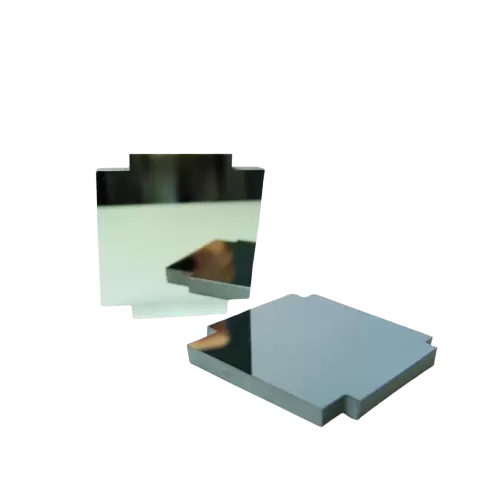
In high-performance optical systems, the mirror is not simply a component that redirects light. Its reflection efficiency, thermal behavior, and wavelength compatibility can directly influence the stability and output performance of the entire system.
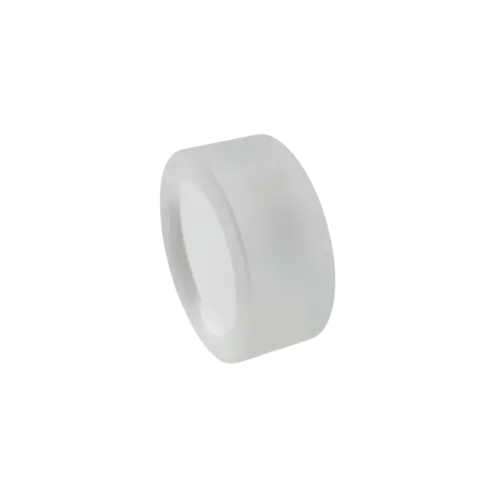
A conventional spherical lens can provide the required optical power, but its simple geometry does not always provide sufficient aberration control in a precision optical system. As aperture increases or the lens is used away from the optical axis, spherical aberration, coma, and degradation toward the edge of the image can become more difficult to manage.
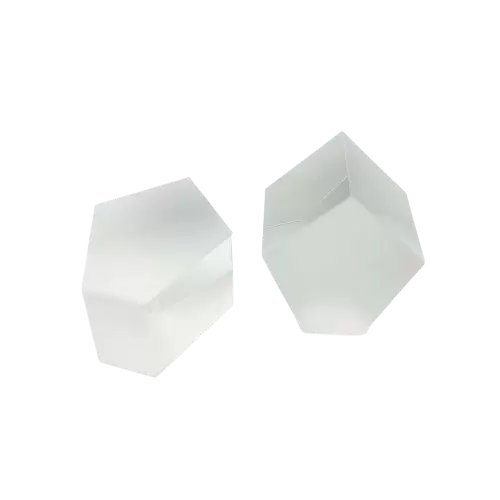
In advanced optical engineering, the search for optical prism construction solutions and high-precision Beam Splitter Penta Prism components is no longer centered on whether a prism can deflect light. That capability is assumed.