

 en
en
 English
 繁体中文
繁体中文 Japanese
 Korean
 Russian
 German
News
Deepen Optoelectronic Resources, Lead Technological Breakthroughs


Deepen Optoelectronic Resources, Lead Technological Breakthroughs
Laser systems used in industrial automation, precision measurement, semiconductor manufacturing, machine vision, and optical alignment increasingly require more than simply generating a laser beam. Modern applications demand highly uniform energy distribution, repeatable optical performance, and exceptional long-term stability to ensure measurement accuracy and manufacturing consistency.
For these applications, beam shaping becomes one of the most critical stages in the optical system. A Gaussian laser beam with concentrated central energy cannot directly satisfy line illumination requirements because it produces significant brightness variation along the projected line. This non-uniform intensity leads to inconsistent imaging, unstable edge detection, uneven laser processing, and reduced measurement accuracy.
This challenge is precisely where Powell prism lenses demonstrate their engineering value.
Unlike conventional cylindrical lenses that simply expand a beam geometrically, a Powell prism redistributes optical energy through a specially designed aspheric profile, transforming a Gaussian beam into a highly uniform laser line with consistent intensity from the center to both edges. The result is significantly improved optical efficiency for industrial beam shaping applications.
At the same time, engineers and procurement specialists frequently ask another practical question: What determines Powell prism price? The answer extends far beyond lens dimensions and involves optical design complexity, manufacturing precision, coating technology, material selection, surface quality, and beam-matching requirements.
This article explains the engineering principles behind Powell prism technology, compares it with traditional beam-shaping optics, analyzes application-specific selection strategies, and discusses the key factors that influence pricing from an industrial manufacturing perspective.
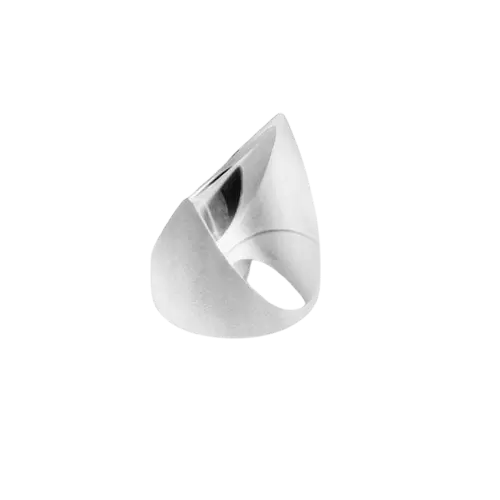
Most laser diodes naturally emit Gaussian beams, meaning optical energy is concentrated near the center while gradually decreasing toward the edges.
Although acceptable for point illumination, this distribution creates significant problems when a straight laser line is required.
Several engineering challenges commonly emerge.
Non-uniform intensity causes measurement uncertainty across the illuminated field because machine vision algorithms receive inconsistent contrast levels from one side of the image to the other. Edge extraction, dimensional analysis, and contour reconstruction become increasingly sensitive to illumination variation, reducing repeatability during high-speed inspection.
Laser processing quality deteriorates when energy density changes continuously along the projected line. During laser welding, engraving, marking, or cutting, localized energy concentration produces inconsistent thermal input, leading to variations in penetration depth, processing width, and overall manufacturing quality across the workpiece.
Three-dimensional scanning systems depend heavily on consistent laser brightness because surface reconstruction algorithms assume stable reflected intensity. Uneven illumination introduces point cloud noise, decreases measurement confidence, and reduces reconstruction accuracy for complex geometries or reflective materials.
The engineering principle behind a Powell prism differs fundamentally from that of a cylindrical lens.
A cylindrical lens merely spreads a beam in one direction while largely preserving the Gaussian energy profile. Consequently, the center remains significantly brighter than the edges.
A Powell prism, however, intentionally redistributes optical energy through a carefully calculated aspheric optical surface.
Rather than simply expanding the beam, the prism continuously redirects different portions of the incoming Gaussian distribution so that energy becomes nearly uniform across the entire projected line.
This optical mechanism is often referred to as linear energy homogenization.
Several optical advantages result from this design.
The non-spherical optical profile continuously redistributes central beam energy toward the outer regions of the projected line, significantly reducing the brightness peak that typically characterizes Gaussian illumination. This enables remarkably consistent irradiance from edge to edge, supporting measurement systems that depend on predictable illumination conditions.
The engineered beam shaping process minimizes edge energy attenuation, allowing the projected laser line to maintain comparable brightness across its full width rather than fading progressively toward both ends. Improved edge uniformity directly benefits applications where accurate contour detection depends on stable illumination throughout the complete field of view.
Because optical energy is redistributed instead of merely expanded, system efficiency remains high while producing cleaner and more stable line profiles under different operating conditions. This makes Powell prism lenses particularly suitable for industrial environments where both optical performance and operational consistency are equally important.
One of the most common design decisions in beam shaping involves choosing between a Powell prism and a cylindrical lens.
Although both components generate laser lines, their optical behavior differs significantly.
A cylindrical lens preserves the Gaussian intensity profile, producing a laser line with excessive brightness in the center and substantial intensity loss toward the edges. This distribution often requires software compensation that cannot fully eliminate measurement inconsistencies.
A Powell prism actively redistributes beam energy through its engineered aspheric geometry, generating a substantially flatter intensity profile that improves both measurement repeatability and laser processing consistency across the complete illuminated area.
Machine vision systems equipped with Powell prism lenses typically achieve more stable grayscale distribution because illumination remains consistent over the entire inspection width. Uniform lighting simplifies threshold selection, enhances edge recognition, and improves algorithm robustness during continuous production.
Laser manufacturing systems benefit from homogeneous energy delivery because material interaction remains more uniform along the laser line. Stable energy distribution reduces localized overheating while improving process repeatability in welding, marking, cutting, and additive manufacturing applications.
Selecting a Powell prism requires evaluating far more than fan angle alone.
Professional optical engineers typically optimize multiple parameters simultaneously.
Available fan angles commonly include 3°, 5°, 10°, 15°, 20°, 30°, 45°, 53°, 60°, 70°, 75°, 85°, 90°, 96°, 100°, 110°, and 120°.
Fan angle directly determines the projected line length and local energy density. Smaller divergence angles concentrate optical power over shorter distances, making them suitable for high-power industrial processing, while wider angles provide broader coverage for machine vision, logistics automation, and large-area scanning applications. Proper angle selection ensures that illumination geometry matches the system's field-of-view requirements without sacrificing beam uniformity.
Beam diameter, beam quality (M²), wavelength, divergence, and polarization collectively influence final projection quality. A Powell prism optimized for one laser source may not achieve ideal line uniformity when paired with a different beam profile, making source matching an essential part of optical system design rather than an optional adjustment.
Typical surface specifications include 60/40, 40/20, and 20/10 scratch-dig standards.
Higher surface quality reduces scattering losses and suppresses unwanted stray light that can degrade image contrast or introduce measurement noise. Precision polishing becomes increasingly important for scientific instrumentation, semiconductor inspection, and high-resolution imaging systems where even minor scattering may influence analytical accuracy.
Typical manufacturing tolerances range from less than 3 arc minutes to 30 arc seconds.
Angular precision directly affects projected line position and repeatability. Tight angular tolerances ensure predictable optical alignment throughout assembly while minimizing calibration effort during system integration, particularly in automated production equipment requiring micron-level positioning accuracy.
Uniform laser lines improve energy consistency throughout the processing area.
Because irradiance remains nearly constant across the projected line, weld penetration, thermal distribution, and cutting quality become more repeatable, reducing process variation and minimizing the occurrence of localized overheating or insufficient material fusion during continuous production.
Industrial cameras require stable lighting to perform reliable inspections.
Powell prism lenses generate highly uniform structured illumination that improves grayscale consistency, allowing image-processing algorithms to identify edges, detect defects, and perform dimensional measurements with greater reliability even at high conveyor speeds or under varying surface reflectivity conditions.
Accurate point cloud generation depends on stable laser projection.
Uniform line intensity significantly reduces reconstruction artifacts because reflected optical signals remain more consistent across the scanning width. Higher illumination stability enhances profile extraction accuracy, enabling more reliable dimensional measurements for complex industrial components and precision assemblies.
Inspection equipment often analyzes microscopic dimensional variations.
Stable beam shaping minimizes systematic measurement errors introduced by illumination non-uniformity, allowing optical metrology systems to maintain higher repeatability across extended operating periods while improving confidence in automated quality-control processes.
Laser coupling systems require predictable beam behavior.
The controlled optical output generated by a Powell prism supports more stable alignment procedures and improves optical coupling efficiency, particularly in applications where beam positioning accuracy directly influences signal transmission quality or system calibration.
Many buyers assume that Powell prism price is determined primarily by size.
In reality, pricing reflects manufacturing complexity, optical precision, and customization requirements.
Several engineering variables significantly influence production cost.
The complexity of the aspheric energy redistribution profile has a direct impact on manufacturing difficulty because tighter optical tolerances require advanced fabrication techniques, precision polishing, and more extensive metrology verification to achieve the intended beam homogenization performance.
Material selection affects both optical performance and production cost. Standard BK7 glass provides an economical solution for many visible-light applications, while fused silica offers superior thermal stability, lower absorption, and improved resistance to high-power laser exposure, making it preferable for demanding industrial laser systems.
Customized fan angles, beam widths, and dimensional requirements generally require dedicated manufacturing processes rather than standard production workflows. Specialized tooling, process optimization, and additional inspection increase production complexity, particularly for low-volume engineering projects or prototype development.
Surface quality specifications substantially influence manufacturing time because achieving 20/10 scratch-dig quality requires significantly more polishing, inspection, and process control than standard commercial optical finishes. Applications involving semiconductor manufacturing, scientific instrumentation, or precision metrology frequently justify this higher investment through improved system performance.
Optical coatings designed for specific laser wavelengths improve transmission efficiency while reducing reflection losses. Broadband, anti-reflection, or high-power laser coatings involve additional deposition processes and quality verification, contributing to overall component cost while enhancing long-term optical reliability.
Professional Powell prism manufacturers typically support a broad range of customization capabilities.
Representative specifications include:
Optical materials including BK7 and fused silica provide flexibility for balancing transmission efficiency, thermal stability, environmental durability, and laser power compatibility according to application-specific requirements.
Diameters ranging from Φ0.8 mm to Φ15 mm, together with customized dimensions, support compact optical modules as well as larger industrial beam-shaping assemblies requiring specialized mechanical integration.
Beam widths of 3 mm, 4 mm, 5 mm, or customized values allow designers to optimize projected laser geometry for machine vision, industrial processing, and precision inspection systems.
Clear apertures greater than 90%, precision bevel control below 0.2 mm × 45°, and customer-specific optical coatings contribute to stable transmission efficiency while supporting long-term optical reliability across demanding industrial environments.
Even an outstanding optical design depends on manufacturing precision to achieve its theoretical performance.
As an innovative optical customization partner, ECOPTIK has spent more than fifteen years advancing precision optical fabrication technologies for demanding industrial and scientific applications.
Its manufacturing portfolio includes dome lenses, spherical lenses, micro-optical components, cylindrical mirrors, filters, prisms, windows, and complete optical assembly services. This broad production capability allows customers to integrate Powell prism solutions into complex optical systems while maintaining compatibility across multiple precision components.
ECOPTIK processes premium optical materials sourced from Schott, CDGM, Corning, Sapphire, CaF₂, MgF₂, Fused Silica, Silicon, ZnSe, and ZnS, enabling engineers to optimize optical performance according to wavelength range, environmental conditions, laser power, and application requirements.
Quality assurance is supported by advanced metrology systems including ZYGO laser interferometers, ZEISS CMM Spectrum, and Agilent Cary 7000 UMS, allowing comprehensive verification of optical geometry, dimensional accuracy, and performance characteristics before shipment. Detailed testing reports provide customers with measurable confidence that every Powell prism satisfies demanding engineering specifications.
Choosing the right Powell prism requires balancing optical performance, manufacturing precision, system compatibility, and lifecycle cost rather than focusing solely on initial component pricing.
Experienced engineers generally evaluate several key factors before finalizing specifications.
Match the prism design to the laser source by considering wavelength, beam diameter, divergence, beam quality factor, and power density together, because optimal line uniformity depends on the interaction between the incoming beam characteristics and the prism's engineered energy redistribution profile rather than either component individually.
Select the fan angle according to the required field of view, working distance, and target energy density so that the projected laser line delivers sufficient illumination without compromising edge uniformity or processing consistency across the application area.
Determine appropriate surface quality and angular tolerance based on the required measurement precision. High-end metrology, semiconductor inspection, and scientific imaging systems often justify tighter tolerances because improved optical accuracy directly translates into greater measurement repeatability and reduced calibration effort.
Evaluate the manufacturer's customization capability, metrology infrastructure, optical material expertise, and quality management system alongside Powell prism price, since long-term optical stability and production consistency typically generate greater value than selecting the lowest initial component cost.
High-performance Powell prism lenses have become essential optical components for modern laser systems because they solve one of the most significant limitations of Gaussian beam projection—non-uniform line intensity.
Through their unique linear energy homogenization mechanism, Powell prisms deliver superior edge brightness, consistent irradiance, and improved beam stability compared with conventional cylindrical lenses. These advantages directly enhance machine vision accuracy, laser processing consistency, 3D scanning precision, and optical metrology performance.
When evaluating Powell prism price, engineers should look beyond basic dimensions and instead consider optical design complexity, beam-matching requirements, material selection, surface quality, coating technology, manufacturing precision, and quality verification capabilities. For demanding industrial applications, these engineering factors ultimately determine both system performance and long-term operational value.
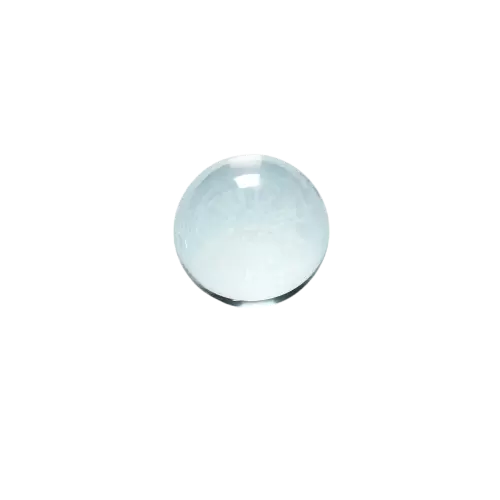
Traditional multi-element optical assemblies are not always the best solution when an optical system needs to become smaller. Multiple lenses introduce more components to align, defined optical-axis orientations, additional mechanical spacing, and greater assembly complexity.
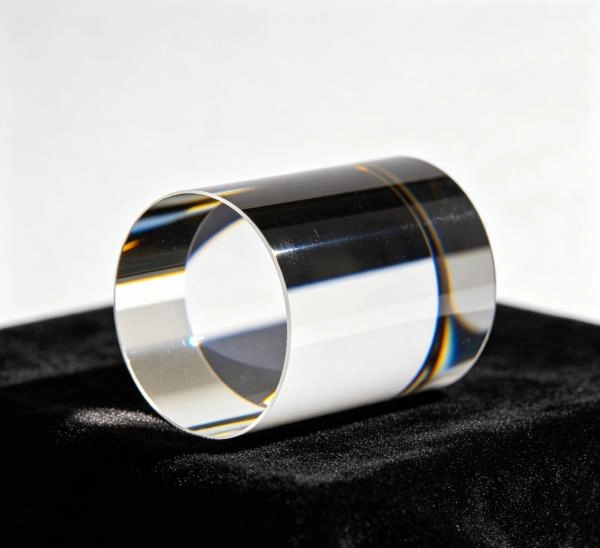
Cylindrical lenses stand as indispensable components in modern optical systems, powering critical applications ranging from laser beam shaping and anamorphic imaging to light-sheet microscopy and laser radar systems.
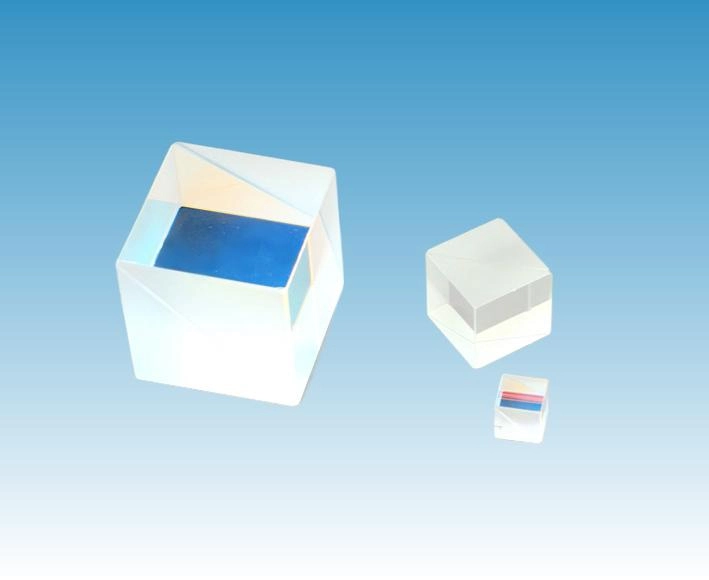
The cubic spectroscopic prism is an optical component with special geometric shape and optical properties, which is usually used for spectral analysis, refraction or changing the direction of light propagation.