

 en
 English
 繁体中文
 Japanese
 Korean
 Russian
 German
News
Deepen Optoelectronic Resources, Lead Technological Breakthroughs


Deepen Optoelectronic Resources, Lead Technological Breakthroughs
Selecting a glass optical window involves more than comparing supplier quotations. A window made from the wrong material may transmit the required wavelength poorly, while inadequate surface flatness or parallelism can introduce wavefront distortion, beam deviation, or unwanted reflections. Special dimensions, tight tolerances, and antireflection coatings can also increase manufacturing costs.
For optical equipment manufacturers, laser system engineers, and procurement managers, understanding the relationship between specifications and price is essential. A glass optical window must transmit the required wavelength while separating environments and protecting internal optical components from dust, moisture, pressure, or other operating conditions. Its material, geometry, surface quality, and coating must therefore match the application.
When evaluating glass optical window price and glass optical window cost, buyers should consider the complete specification rather than the unit price alone. The objective is to obtain the optical performance and service reliability required by the system without paying for tolerances or treatments that provide no practical benefit.
Glass optical windows are used in laser systems, imaging instruments, optical sensors, inspection equipment, and industrial protective assemblies. Depending on the design, a window may serve as a transparent protective barrier, an optical interface, or a component through which a defined wavelength range must pass with minimal distortion and reflection.
Material selection is one of the first decisions affecting both performance and cost. N-BK7 optical glass and fused silica are common choices, but they are not interchangeable in every application.
N-BK7 optical glass is widely used in visible and near-infrared optical systems. It can be suitable for imaging assemblies, inspection instruments, and general-purpose optical windows where its transmission range and thermal properties meet the design requirements. Its relatively low cost compared with some specialized optical materials can make it attractive for applications that do not require enhanced thermal performance.
Fused silica is often selected for ultraviolet applications and systems exposed to substantial temperature changes or demanding thermal conditions. Compared with typical optical glasses such as N-BK7, fused silica has a lower coefficient of thermal expansion, helping it maintain dimensional stability when temperature changes. Its suitability still depends on the specific grade, wavelength, surface finish, and operating environment.
Other materials may be necessary when the application extends beyond the capabilities of conventional optical glass. Sapphire, calcium fluoride (CaF₂), magnesium fluoride (MgF₂), and infrared-transmitting materials such as zinc selenide (ZnSe) serve different spectral and environmental requirements. Their costs should not be compared directly without considering wavelength range, mechanical properties, processing difficulty, and the required optical performance.
The best material is the one that satisfies the system's operating requirements. Choosing a more expensive material without a corresponding performance need can increase procurement costs unnecessarily.
Material alone does not determine whether a window will perform correctly. Buyers should also evaluate several geometric and optical specifications.
Diameter and thickness: These dimensions determine whether the window fits the assembly and meets mechanical requirements. Larger or thicker parts may require more material, additional machining, and longer processing time. Thickness also affects optical path length and can influence wavefront performance.
Surface flatness: Flatness describes how closely a surface conforms to its specified reference plane. Insufficient flatness can alter the transmitted wavefront, affecting precision imaging, interferometry, or laser beam quality.
Parallelism: This specification controls the angular relationship between the two optical surfaces. A wedge between surfaces may cause beam deviation, which can be significant in alignment-sensitive optical systems.
Surface quality: Scratches, digs, and other surface imperfections can increase scattering or affect image quality. The appropriate acceptance grade depends on the application, illuminated area, wavelength, and system sensitivity.
Thickness tolerance: Variation in thickness can affect assembly fit, optical path length, and consistency between components.
Antireflection coating: An AR coating can reduce surface reflections over its specified wavelength range and angle of incidence. Its design must match the operating wavelength, incidence angle, polarization requirements where relevant, and environmental conditions.
These specifications should be evaluated together. A window with excellent surface quality may still be unsuitable if its material is incompatible with the working wavelength or its parallelism causes unacceptable beam displacement.
The glass optical window price reflects the combined cost of material, fabrication, inspection, coating, and production requirements. Two windows with similar external dimensions can receive substantially different quotations because their technical specifications and manufacturing routes differ.
Raw material selection establishes part of the cost. Standard optical glass is often economical for common visible-light applications, while specialized materials may cost more because of their properties, availability, or processing requirements.
Diameter and thickness also affect material consumption and manufacturing effort. A larger window generally requires a larger starting blank, while a thicker component may involve additional grinding, polishing, and handling. Material yield matters as well: a demanding geometry or strict defect criteria may reduce the proportion of blanks that meet acceptance requirements.
However, size alone cannot determine price. Material grade, finished dimensions, production yield, and required inspection must be considered together.
Tight tolerances usually increase manufacturing costs because they may require additional process control, repeated measurements, more finishing operations, and stricter rejection criteria.
For example, a protective window used primarily to isolate industrial equipment may not need the same flatness or surface quality as a window installed in a high-resolution imaging path. Specifying unnecessarily tight tolerances can increase costs without improving the finished system's performance.
Buyers should define requirements based on the optical design. If the window is part of a collimated laser path or a precision imaging assembly, transmitted wavefront quality, parallelism, and surface defects may be critical. If it serves mainly as an environmental barrier, mechanical fit, material compatibility, and adequate transmission may be more important.
Antireflection coatings add cost through coating design, deposition, process control, and inspection. The actual cost depends on factors such as the wavelength range, angle of incidence, coating durability requirements, substrate material, and production quantity.
An AR coating may be worthwhile when reflection losses affect system throughput, image contrast, or measurement accuracy. It is not automatically necessary for every application. Buyers should compare the expected benefit against the additional cost and confirm that the coating is suitable for the operating environment.
Coating specifications should identify the intended wavelength range and incidence conditions rather than simply requesting a high-transmission coating. Performance at one wavelength or angle should not be assumed to apply across an entire spectral band.
Standard optical windows can be more economical when their available dimensions, material, and tolerances already satisfy the design. Existing manufacturing processes may reduce setup requirements and simplify inspection.
Custom windows may require dedicated tooling, nonstandard dimensions, special edge treatments, tighter tolerances, or additional documentation. These requirements can increase setup time, process complexity, and inspection costs. Nevertheless, customization can prevent expensive assembly changes or performance compromises when standard parts are unsuitable.
Order quantity also matters. Larger orders may distribute setup costs across more units and improve production efficiency, although savings depend on the manufacturing route and material availability. Urgent delivery, individual inspection reports, and special packaging may add further costs.
Why do windows with similar dimensions have different prices?
The quoted parts may use different materials, thickness tolerances, surface quality grades, flatness requirements, coatings, or inspection procedures. Compare complete technical specifications and acceptance criteria before deciding which quotation offers better value.
Does a higher flatness grade always justify the additional cost?
No. Higher flatness can benefit precision imaging and sensitive laser applications, but its value depends on the optical design and allowable wavefront error. The required specification should come from the system's performance budget.
Is an antireflection coating worth the extra investment?
It can be when reflection losses materially affect throughput or measurement performance. The decision should consider the number of optical surfaces, operating wavelength, incidence angle, and coating durability requirements. For less demanding protective applications, an uncoated window may be sufficient.
Accurate quotations start with complete technical information. Procurement teams should provide the following details whenever possible:
Material type and grade
Window diameter or length and width
Center thickness and thickness tolerance
Operating wavelength or spectral range
Surface quality and flatness requirements
Parallelism or wedge requirements
Coating type, wavelength range, and incidence conditions
Operating temperature, pressure, and environmental exposure
Required quantity, delivery schedule, and inspection documentation
Drawings should identify critical dimensions and distinguish mandatory requirements from preferences. If the application is sensitive to transmitted wavefront error, that requirement should be stated explicitly rather than relying on surface flatness alone.
Supplier evaluation is equally important. Buyers should review material traceability, precision grinding and polishing capabilities, coating process control, dimensional inspection methods, and the supplier's ability to provide reports against agreed specifications. Relevant metrology may include interferometric surface or wavefront measurements and dimensional inspection, depending on the component's requirements.
A supplier's equipment list is useful, but the key question is whether its inspection methods can verify the actual acceptance criteria for the part. Buyers should also confirm how nonconforming products are handled, whether specifications can be maintained across repeat orders, and whether the supplier can support design changes or custom production.
When comparing quotations, ensure that all suppliers are pricing the same material grade, dimensions, tolerances, coating requirements, inspection scope, and delivery terms. A lower initial price may not represent better value if the component requires additional sorting, causes assembly problems, or fails to meet optical performance requirements.
ECOPTIK, with 15 years of experience researching optical component fabrication technology, provides precision optical components for customized optical applications. Its product range includes domes, spherical lenses, micro-optical components, cylindrical mirrors, filters, prisms, and optical windows.
Material options include optical glass sourced from SCHOTT, CDGM, and Corning, as well as sapphire, CaF₂, MgF₂, fused silica, silicon, ZnSe, and ZnS. The appropriate material depends on the working wavelength, thermal environment, mechanical requirements, and optical design.
For inspection and verification, ECOPTIK has ZYGO laser interferometers, a ZEISS CMM Spectrum coordinate measuring machine, and an Agilent Cary 7000 UMS for optical measurements. The company also offers lens assembly services, supporting customers who need optical components and assembly assistance.
When requesting a glass optical window price from ECOPTIK, buyers can provide their drawings, wavelength requirements, dimensional tolerances, surface specifications, coating needs, and expected order quantity. This information helps establish a technically appropriate quotation and clarifies which manufacturing and inspection requirements drive the cost.
Glass optical window price and glass optical window cost depend on more than material and dimensions. Wavelength compatibility, thermal behavior, surface quality, flatness, parallelism, coating requirements, fabrication complexity, and inspection standards all influence the final quotation and the component's performance.
The most cost-effective choice is not necessarily the cheapest window or the one with the tightest available tolerances. It is the component whose verified specifications meet the optical system's actual requirements without unnecessary processing or coating expenses.
By defining the operating conditions clearly, comparing suppliers against equivalent specifications, and confirming inspection requirements before production, optical engineers and procurement teams can control purchasing costs while maintaining image quality, transmission performance, and long-term system reliability.
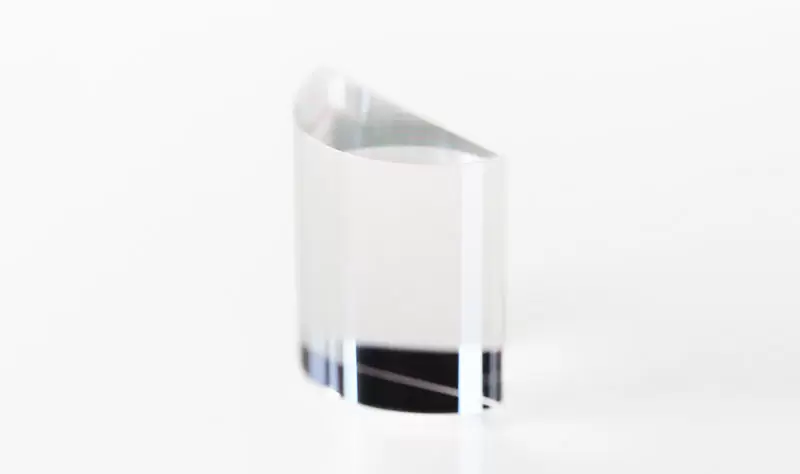
Cylindrical mirror is a special optical component, and its working principle and application scenarios are significantly different from traditional spherical mirrors.
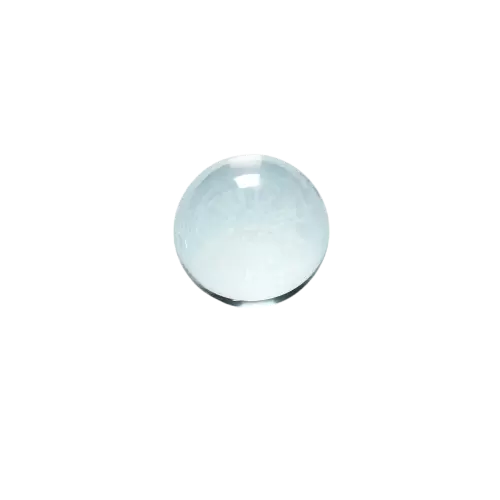
Selecting a precision ball lens involves more than choosing a diameter or comparing supplier quotations. In fiber-optic coupling, laser systems, optical sensors, and miniature imaging devices, small differences in refractive index, dimensional tolerance, sphericity, and surface quality can affect alignment, focusing, and assembly consistency.
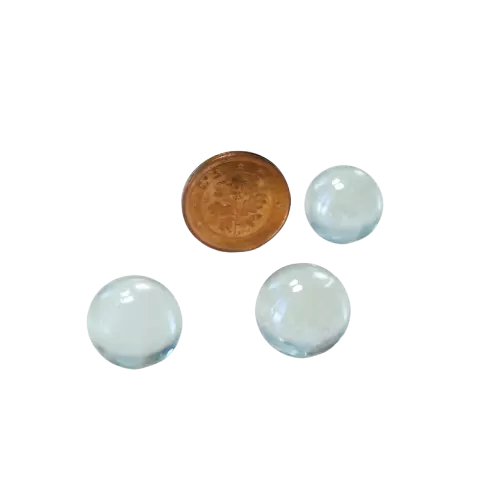
In compact optical systems, conventional multi-element lens assemblies can introduce unnecessary complexity. More components mean more mechanical interfaces, tighter alignment requirements, greater installation space, and potentially higher assembly costs. These limitations become more noticeable when the optical path must fit into a small package or when light needs to be coupled efficiently over a short working distance.