

 en
 English
 繁体中文
 Japanese
 Korean
 Russian
 German
News
Deepen Optoelectronic Resources, Lead Technological Breakthroughs


Deepen Optoelectronic Resources, Lead Technological Breakthroughs
Selecting a precision ball lens involves more than choosing a diameter or comparing supplier quotations. In fiber-optic coupling, laser systems, optical sensors, and miniature imaging devices, small differences in refractive index, dimensional tolerance, sphericity, and surface quality can affect alignment, focusing, and assembly consistency. A lens that works well in one optical design may not deliver the same results in another.
For optical engineers and purchasing teams, finding the Best precision ball lens means matching the component to the operating wavelength, numerical aperture (NA), working distance, and mechanical interface. Understanding these requirements also helps buyers evaluate Precision ball lens price more accurately, distinguishing essential precision requirements from specifications that may add cost without improving the final system.
A ball lens is a solid spherical optical component that refracts light at its curved surfaces. Because its geometry is rotationally symmetric, it can collect, focus, or couple light without the directional orientation requirements associated with some conventional lens geometries. Its compact form makes it particularly useful where optical space is limited.
When light passes between air and glass, its propagation direction changes according to the refractive indices of the two media and the angle of incidence. A ball lens uses this refraction to concentrate light or transfer it between optical components.
For a homogeneous spherical lens operating in air under a paraxial approximation, its effective focal length (EFL) can be estimated using:
EFL ≈ nD / [4(n − 1)]
Here, n is the material's refractive index at the operating wavelength, and D is the ball diameter. The back focal length is a different quantity and, under the same approximation, is:
BFL ≈ D(2 − n) / [4(n − 1)]
These relationships provide an initial estimate, not a substitute for optical design. Refractive index varies with wavelength, while the actual working distance depends on the lens geometry, surrounding media, beam characteristics, and the reference plane used in the optical layout.
Numerical aperture describes the light-collection capability of an optical system. Ball lenses can provide a relatively high NA and short focal length in a compact package, making them useful for coupling light from a laser diode into a fiber or collecting light from a small emitter. However, the achievable coupling efficiency also depends on fiber core size, source divergence, alignment, and the lens's actual optical properties.
Material selection should begin with the operating wavelength and required optical performance, followed by mechanical, thermal, and environmental considerations.
H-K9L (CDGM): A common optical glass option for visible-light applications, subject to confirmation of its transmission range and refractive index at the intended wavelength.
JGS1 and JGS2: Fused-silica grades commonly considered for applications requiring suitable ultraviolet or broadband optical transmission. The appropriate grade depends on the wavelength range and material specification.
Sapphire: Offers high hardness and durability, making it worth evaluating for demanding environments. Its optical behavior, transmission range, and crystal orientation requirements must be considered.
Ruby: A crystalline material whose suitability depends on the required spectral properties and application.
High-borosilicate glass: May be suitable where glass properties, thermal behavior, and optical requirements align with the system design.
Silicon: Particularly relevant to infrared optical systems within its usable transmission range; it is not a universal choice for visible-light applications.
Material names alone are insufficient for final selection. Buyers should confirm the specific grade, refractive index at the working wavelength, transmission data, and any applicable material limitations.
Typical applications include fiber-optic communication, laser coupling, optical sensing, endoscopic imaging, and miniature optical assemblies. Fiber coupling places particular emphasis on focal position and alignment. Laser systems may require attention to beam quality and optical damage limits, while sensing and imaging applications may impose additional requirements on wavelength response and stray-light control.
The best specification is the one that meets the optical design and assembly requirements with an appropriate manufacturing margin. ECOPTIK offers ball lens diameters from 0.5 mm to 80 mm, with material and precision options subject to the specific design and manufacturing confirmation.
Diameter affects focal length, packaging, mounting, and the lens's relationship with the incident beam. A larger lens is not automatically better: the correct diameter depends on the required optical geometry, available space, and mechanical interface.
The supplied product specifications indicate a general diameter tolerance of approximately ±0.1 mm, with a best achievable level of ±0.005 mm. These figures represent different precision levels and should not be treated as interchangeable standard capabilities for every material or diameter.
For a prototype or a less demanding optical assembly, a general tolerance may be sufficient if the design accommodates dimensional variation. In a miniature fiber-coupling module, a tighter tolerance may be necessary to maintain a repeatable mounting position or reduce assembly variation.
Buyers should confirm the achievable tolerance for the requested diameter, material, quantity, and manufacturing process rather than assuming the tightest figure applies to every configuration.
Sphericity describes how closely the manufactured surface conforms to an ideal sphere. Deviations can affect how consistently the lens refracts light and may contribute to optical errors in precision systems.
ECOPTIK's supplied specification lists sphericity levels of 0.01 mm (10 µm), 0.005 mm (5 µm), and 0.001 mm (1 µm). These values represent substantially different levels of geometric control. The appropriate choice depends on the optical design's sensitivity to surface-form error and the required assembly performance.
Center tolerance is another consideration. The supplied range is ±0.03 mm to ±0.05 mm, but buyers should confirm exactly how this parameter is defined on the supplier's drawing and inspection report. For applications with tight alignment requirements, an unclear tolerance definition can make supplier quotations difficult to compare.
Surface quality is commonly specified using scratch-and-dig classifications. Under commonly used conventions, a lower pair of numbers indicates a more demanding surface-quality grade.
| Surface quality | General selection direction |
|---|---|
| 60/40 | Applications with less demanding surface-defect requirements |
| 40/20 | General precision optical assemblies |
| 20/10 | More demanding optical systems where surface defects require tighter control |
| 10/5 | High-specification applications requiring stricter surface-defect limits |
These are indicative selection directions, not universal application rules. Surface quality alone does not determine optical performance. Surface figure, transmission, coating properties, contamination, and the optical system's sensitivity must also be considered.
A high-grade surface may be justified for a demanding laser or imaging assembly, but specifying 10/5 automatically for every ball lens can increase cost without necessarily delivering a measurable system-level benefit. The drawing and applicable inspection standard should define the required acceptance criteria.
An uncoated ball lens may be suitable for some designs, while others require an antireflection coating to reduce reflection losses at specific wavelengths. Coating selection should account for the operating wavelength or wavelength band, incidence angles, environmental conditions, and compatibility with the substrate.
For broadband or multiwavelength applications, buyers should explain the complete spectral requirement rather than request a coating based on a single nominal wavelength. Coating availability and performance must be confirmed for the selected material and geometry.
Precision ball lens price is influenced by several interacting factors. Two lenses with identical nominal diameters can have significantly different manufacturing requirements and quotations.
Material cost depends on the substrate grade, availability, material quality requirements, and processing characteristics. Specialized crystalline materials may involve different sourcing and fabrication considerations from conventional optical glass.
Diameter also affects the amount of material required and the manufacturing process. However, price does not necessarily increase in a simple linear relationship with diameter. Small lenses can be challenging because dimensional control, handling, inspection, and defect detection become more demanding.
Tighter diameter tolerance, improved sphericity, and higher surface-quality grades may require additional process control and inspection. The price difference therefore reflects not only the component itself but also the effort required to manufacture and verify it against the specified acceptance criteria.
Standard ball lenses can be a practical choice when an existing material, diameter, and tolerance meet the optical design. They may reduce development time and avoid unnecessary customization.
Custom ball lenses are worth considering when the project requires a particular diameter, specialized material, tighter geometric tolerances, a defined surface-quality grade, or a specific coating. Customization may involve additional engineering review, process development, inspection, and qualification.
The decision should be based on the total project requirement rather than the assumption that custom products are always superior. A standard component that meets the design specification may offer better procurement efficiency, while a custom component can be justified when standard options cannot satisfy the application.
A practical procurement process starts with the optical design and works backward to the manufacturing specification.
First, define the operating wavelength, beam characteristics, focal position, working distance, and required NA. Next, identify the necessary material and calculate an initial diameter and focal-length range. Then establish the dimensional tolerance, sphericity, surface quality, centering requirements, and coating specification based on the design's sensitivity.
Finally, request quotations using the same technical specification and inspection criteria. Comparing quotations for products with different tolerances or acceptance standards can produce misleading cost conclusions.
ECOPTIK has 15 years of experience in optical component fabrication and manufactures products including spherical lenses, domes, micro-optical components, cylindrical mirrors, filters, prisms, and windows. Its material offerings include glass sourced from Schott, CDGM, and Corning, as well as sapphire, CaF₂, MgF₂, fused silica, silicon, ZnSe, and ZnS. The company also provides lens assembly services.
Its inspection equipment includes ZYGO laser interferometers, a ZEISS CMM Spectrum, and an Agilent Cary 7000 UMS. Buyers can discuss the applicable inspection methods and product reports when evaluating a quotation. The availability of a particular test or report should be confirmed for the specific product and order.
Use the material's refractive index at the operating wavelength and the ball diameter to estimate the effective focal length. For a ball lens in air under a paraxial approximation, EFL ≈ nD / [4(n − 1)]. Calculate the back focal length separately when the required working distance is measured from the lens surface. Confirm the final design with the actual optical configuration.
No. The required precision depends on system sensitivity, alignment tolerance, optical performance targets, and assembly repeatability. A tighter tolerance is worthwhile when it addresses a defined design constraint; otherwise, it may increase procurement cost without a corresponding improvement in system performance.
Material grade, sphericity, diameter tolerance, surface quality, coating, inspection requirements, customization, and order quantity can all affect the quotation. Nominal diameter alone is not enough to establish whether two products are technically equivalent.
Provide the substrate material, diameter, diameter tolerance, sphericity requirement, center tolerance, surface-quality grade, operating wavelength, coating requirements, intended application, required inspection documentation, and estimated order quantity. A drawing or optical specification is particularly helpful for customized components.
Choosing the right ball lens requires a coordinated assessment of optical performance, material properties, dimensional accuracy, and manufacturing cost. The Best precision ball lens is not necessarily the product with the tightest tolerances or the highest surface-quality grade; it is the component that meets the actual optical and mechanical requirements reliably.
When comparing Precision ball lens price, buyers should evaluate equivalent specifications, confirm the supplier's achievable tolerances, and request relevant inspection documentation. By defining the wavelength, diameter, focal requirements, NA, working distance, and acceptance criteria before ordering, optical engineers and procurement teams can make better-informed decisions and avoid paying for precision that their applications do not require.
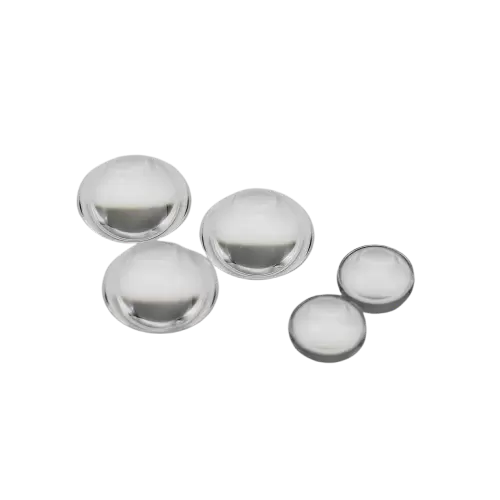
In many optical systems, the limitation is no longer the optical design itself but the ability to manufacture the lens surface with enough accuracy. Laser systems, semiconductor inspection equipment, aerospace optics, and high-resolution imaging platforms increasingly require aspherical lenses with tighter tolerances, lower scattering, and better wavefront control.
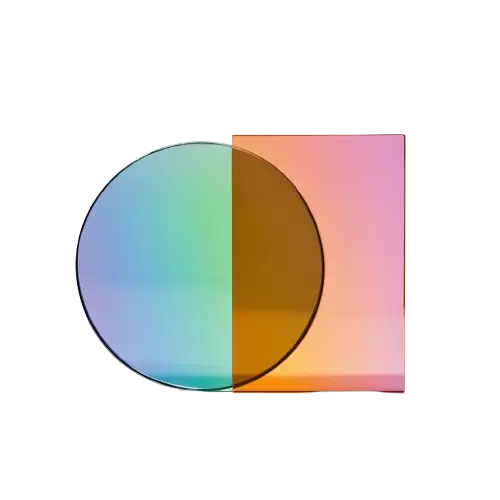
In high-performance optical systems, controlling color is not simply about blocking unwanted light. Engineers working on LED lighting, laser equipment, projection systems, and imaging platforms need precise wavelength management, high transmission efficiency, and stable spectral performance over long operating periods.
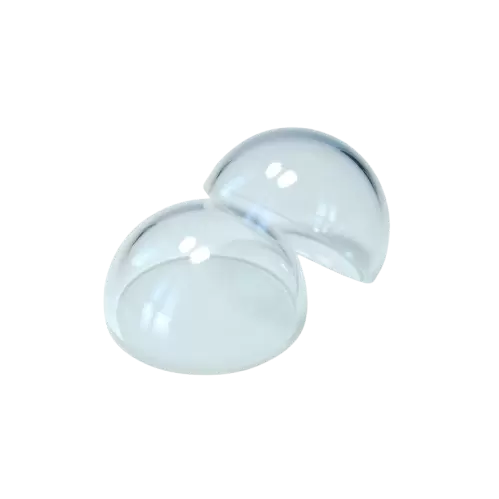
In modern large-scale architectural and industrial infrastructure projects, the evaluation of a super hemisphere dome is no longer driven by geometric appearance or architectural aesthetics.