

 en
 English
 繁体中文
 Japanese
 Korean
 Russian
 German
News
Deepen Optoelectronic Resources, Lead Technological Breakthroughs


Deepen Optoelectronic Resources, Lead Technological Breakthroughs
Optical glass spherical lenses are used in imaging systems, laser equipment, optical measurement instruments, and scientific devices where controlled refraction and predictable optical performance are essential. However, a lens that appears suitable based on its diameter and focal length may still produce unsatisfactory results if its surface figure, material properties, coating, or dimensional tolerances do not match the optical design.
For engineers searching for Optical glass spherical lens for sale, the challenge is to identify a component that meets the system's optical requirements and can be integrated reliably. For purchasing teams comparing Optical glass spherical lens price, the key is understanding which specifications drive cost and which are critical to performance.
The right purchasing decision starts with the optical design, not the unit price. Material selection, lens geometry, manufacturing requirements, inspection methods, and order quantity all need to be considered together.
A spherical lens uses one or more surfaces with spherical curvature to refract light. Its geometry determines how it changes the direction of incident rays.
Double-convex lenses have two outward-curved surfaces and generally converge light. They can be suitable for imaging and focusing applications, depending on the conjugate distances and optical design.
Plano-convex lenses have one flat surface and one convex surface. They are often considered for focusing approximately collimated light, with orientation selected to manage spherical aberration.
Positive meniscus lenses combine convex and concave surfaces while retaining positive optical power. They can help manage aberrations in appropriately designed optical systems.
Double-concave lenses have two inward-curved surfaces and generally diverge light.
Plano-concave lenses combine a flat surface with a concave surface and are commonly used for beam divergence or other negative-power functions.
These categories are not interchangeable. The best choice depends on the required optical power, object and image distances, aperture, and aberration budget. For demanding imaging systems, a lens that provides the required focal length may still be unsuitable if its spherical aberration or other optical errors exceed the system's tolerance.
Lens diameter determines the available clear aperture and affects how much of the incident beam can pass through the component. The mechanical diameter and specified clear aperture should be checked separately, particularly when the optical system uses a wide beam or operates near the lens edge.
Center thickness influences the lens's physical dimensions, optical path, and compatibility with its mounting structure. Edge thickness also matters for curved lenses, especially when mechanical retention or alignment is sensitive to the available contact area.
The curvature radius of each surface contributes to the lens's optical power. Combined with the refractive index and lens thickness, the surface curvatures determine effective focal length. Incorrect curvature specifications can therefore affect focusing, image position, and compatibility with the rest of the optical train.
Focal length defines the relationship between a lens and its focusing behavior under specified conditions. Engineers should confirm whether the design requires effective focal length, back focal length, or another focal-distance reference. These values are not necessarily identical, particularly for lenses with appreciable thickness.
The refractive index describes how strongly a material refracts light at a specified wavelength. It affects the relationship between surface curvature and optical power. Because refractive index varies with wavelength, a lens designed for one spectral band may not provide the expected performance in another.
The Abbe number characterizes material dispersion using a defined wavelength convention. It helps engineers evaluate chromatic effects when a system operates across multiple wavelengths. For broadband imaging, color-sensitive measurement, or multiwavelength optical systems, both refractive index and dispersion deserve attention.
Surface figure describes how closely an optical surface conforms to its intended shape. Surface errors can introduce wavefront distortion, alter focusing behavior, and reduce image quality. The required tolerance depends on the wavelength, numerical aperture, beam quality requirements, and overall system error budget.
Surface roughness concerns finer-scale surface texture. Excessive roughness can increase scatter and reduce the amount of light collected by the intended optical path. Surface figure and roughness are different properties, so meeting one requirement does not automatically establish compliance with the other.
Coating selection should follow the working wavelength and incidence conditions. Antireflection coatings can reduce unwanted surface reflections within their specified operating range. Other coating designs may be required for particular spectral or laser applications. Buyers should verify the specified wavelength range, angle of incidence, polarization conditions where relevant, and required performance rather than assuming all coated lenses offer the same transmission.
The price of a spherical lens reflects its material, geometry, manufacturing requirements, inspection scope, and production quantity. Two lenses with similar external dimensions may have substantially different costs if their optical specifications differ.
Different optical glasses have different refractive indices, dispersion characteristics, transmission behavior, and manufacturing considerations. Material selection must account for the operating wavelength and environmental conditions as well as the optical prescription.
ECOPTIK works with glass materials from Schott, CDGM, and Corning, along with materials such as sapphire, CaF₂, MgF₂, fused silica, silicon, ZnSe, and ZnS. These materials are not interchangeable, and their suitability depends on the spectral range and application. Buyers should confirm the exact material grade and relevant optical data before comparing quotations.
Larger diameters, unusual curvature radii, specific center-thickness requirements, and demanding dimensional tolerances can increase manufacturing difficulty. The relationship between these requirements matters: a compact lens with steep curvature and tight tolerances may present different production challenges from a larger lens with a more conventional geometry.
Focal-length tolerances can also affect cost because they may require tighter control of material properties and surface geometry, along with additional verification. Buyers should specify only the tolerances needed by the optical design, rather than paying for unnecessarily restrictive requirements.
Tighter surface-figure requirements, lower roughness limits, stricter surface-defect criteria, and specialized coatings may require additional processing or quality-control work.
Inspection requirements also influence the quotation. A supplier may offer basic dimensional inspection, while another quotation may include interferometric surface testing, additional optical measurements, or documented inspection results. The two prices are not directly comparable unless their inspection scope and acceptance criteria are aligned.
Standard spherical lenses can be more economical when their available material, diameter, focal length, tolerances, and coating match the application. Existing production specifications may reduce engineering work and avoid the setup requirements associated with a new design.
Custom lenses provide greater control over geometry, material, coatings, and mechanical integration. However, they may require prescription review, process development, dedicated tooling or fixtures, and additional verification. Delivery time depends on material availability, manufacturing complexity, inspection requirements, and order quantity.
For repeat production, buyers should also consider batch consistency and the supplier's ability to maintain the agreed specifications across subsequent orders. A lower initial unit price may not represent the best overall purchasing value if the product requires extra alignment, creates assembly difficulties, or fails to meet the system's optical requirements.
Before placing an order, purchasing teams should compare the technical details of each quotation against a common specification sheet.
The following information is particularly important:
Optical prescription: Lens type, diameter, center thickness, curvature radii, and required focal length, including applicable tolerances.
Material: Exact glass grade, refractive index at the relevant wavelength, dispersion data where necessary, and material traceability requirements.
Surface requirements: Surface figure, roughness, surface quality, and clear aperture, with the applicable measurement or acceptance criteria.
Coating specification: Required spectral range, incidence conditions, and coating performance criteria.
Inspection documents: Dimensional records, optical test results, material information, and product reports appropriate to the purchase specification.
Mechanical compatibility: Mounting dimensions, edge geometry, alignment requirements, and installation space.
Production requirements: Order quantity, batch identification, packaging, delivery schedule, and repeat-order expectations.
The working wavelength deserves particular attention. A lens intended for visible-light imaging may not be appropriate for ultraviolet or infrared operation. Material transmission, refractive index, coating design, and environmental compatibility must be checked for the actual operating band.
Engineers should also document the incident beam conditions, including whether the light is collimated or converging, the beam diameter, and the required numerical aperture where applicable. These details help the manufacturer assess whether the proposed lens geometry fits the intended optical path.
Precision spherical lens manufacturing typically involves material selection, cutting or generating the required geometry, grinding, polishing, optional coating, and final inspection. The exact process depends on the material, dimensions, surface prescription, and required tolerances.
Grinding and polishing establish the surface geometry and finish. Process control is important because variations in curvature, thickness, surface figure, or roughness can affect optical performance and mechanical fit. Coating, when required, introduces additional specification and verification requirements.
Final inspection should be aligned with the purchase specification. Dimensional measurements confirm mechanical compatibility, while suitable optical testing evaluates the characteristics relevant to the application. No single instrument verifies every property, so the inspection plan should identify which measurement method supports each acceptance criterion.
ECOPTIK has spent 15 years researching optical component fabrication technology. Its product range includes dome lenses, spherical lenses, micro-optical components, cylindrical mirrors, filters, prisms, and windows. The company offers lens assembly services and has ZYGO laser interferometers, a ZEISS CMM Spectrum, and an Agilent Cary 7000 UMS for testing and providing product reports.
For buyers evaluating a manufacturer, these capabilities are useful starting points for discussing inspection requirements. The next step is to confirm which instruments and test methods apply to the specific lens, what information the final report contains, and whether the proposed inspection criteria match the project's requirements.
A supplier should also be able to clarify material options, customization feasibility, production lead time, batch identification, and repeat-order controls. For high-volume applications, agreeing on a reference specification and consistent acceptance criteria before production can reduce ambiguity between batches.
A useful quotation request should contain enough information for the supplier to evaluate the lens accurately. At minimum, provide the target focal length, lens geometry, diameter, center thickness, material preference, working wavelength, surface requirements, coating needs, quantity, and expected delivery schedule.
Where possible, include the optical drawing or prescription and state the intended application. A laser beam delivery system, a machine-vision camera, and a scientific measurement instrument may use spherical lenses, but their requirements for wavefront quality, chromatic behavior, coating, and mechanical integration can differ significantly.
If some parameters have not yet been finalized, identify them as open design requirements rather than assuming a standard value. The manufacturer can then clarify which specifications are essential, which alternatives may be acceptable, and which choices have the greatest effect on cost and lead time.
Selecting a spherical lens requires more than matching a diameter or focal length. Material properties, surface geometry, figure accuracy, roughness, coatings, and dimensional tolerances all influence whether the component will perform as intended. These same requirements, together with inspection scope and production quantity, determine much of the final purchasing cost.
When comparing Optical glass spherical lens price, buyers should evaluate the complete specification and verification requirements rather than unit price alone. When sourcing Optical glass spherical lens for sale, they should confirm application compatibility, manufacturing support, inspection documentation, and batch consistency before placing an order.
A well-defined technical specification helps optical system manufacturers, laser equipment integrators, imaging developers, and research instrument suppliers balance performance, integration risk, delivery requirements, and budget.
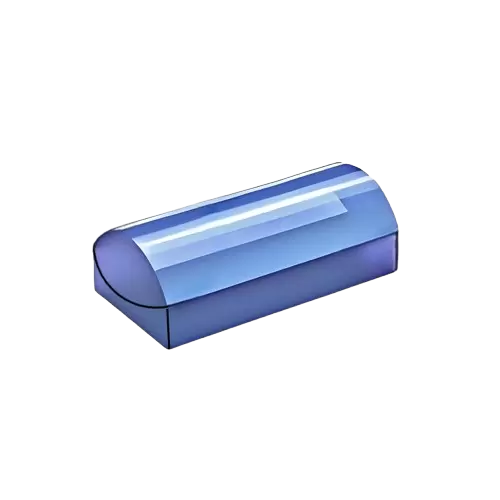
In precision optical systems, controlling light in one direction is often only part of the design challenge. When different wavelengths pass through a conventional cylindrical lens, variations in refractive index can cause each wavelength to focus at a slightly different position.
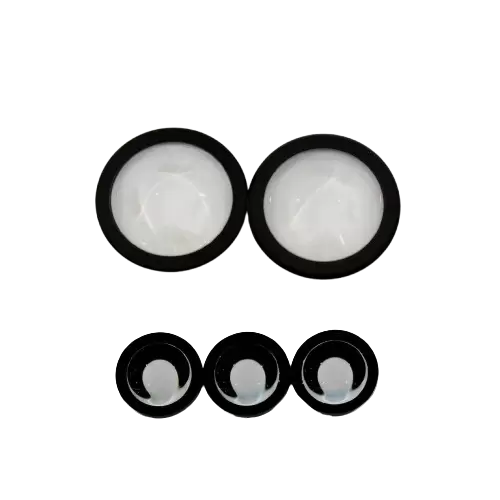
In precision optical systems, a lens that looks clear to the naked eye may still compromise the performance of the finished equipment. Insufficient transmission reduces the light reaching a sensor, chromatic aberration introduces color fringes around image details, and surface defects can create scattering or unwanted reflections.
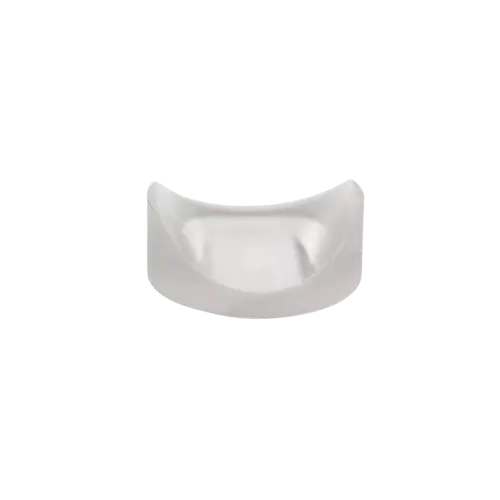
In many laser and imaging systems, controlling light in only one direction is a critical requirement. However, conventional cylindrical lenses can create challenges during integration, especially when optical alignment, positioning accuracy, and long-term stability are important.