

 en
 English
 繁体中文
 Japanese
 Korean
 Russian
 German
News
Deepen Optoelectronic Resources, Lead Technological Breakthroughs


Deepen Optoelectronic Resources, Lead Technological Breakthroughs
Industrial optical lenses play a critical role in machine vision systems, where image quality directly affects inspection reliability, measurement consistency, and production efficiency. A lens that performs adequately in a general imaging application may not deliver the clarity, distortion control, or depth of field required for automated inspection and precision measurement.
For machine vision integrators, automation equipment manufacturers, and industrial camera developers, choosing the Best industrial optical lenses means evaluating the complete imaging system rather than selecting a lens based on focal length or price alone. Sensor compatibility, working distance, target dimensions, illumination, and operating conditions all influence the final result.
Understanding Industrial optical lenses price is equally important. Differences in optical design, material selection, manufacturing tolerances, coatings, and customization requirements can significantly affect cost. A suitable purchasing decision balances verified optical performance with mechanical compatibility, production requirements, and the total cost of system integration.
Focal length determines the lens's imaging geometry and, together with sensor size and object distance, influences the field of view. A longer focal length generally produces a narrower field of view at a given object distance, while a shorter focal length can capture a wider area.
Working distance is the distance between the lens and the object being inspected. In automated equipment, this distance is often constrained by conveyor height, robot access, protective enclosures, or the available installation space.
Before selecting a lens, buyers should establish the target's dimensions, required field of view, camera sensor size, and available mounting distance. A lens that covers the entire component may still be unsuitable if its effective image quality is insufficient at the edges of the field.
For example, surface inspection of a large metal panel may require a different focal length and field of view from dimensional measurement of a small machined feature. Both applications need adequate detail, but their working distances and image coverage requirements may differ substantially.
Lens resolution determines how well the optical system reproduces fine object details. It must be considered alongside camera sensor resolution and pixel size.
A high-resolution camera cannot recover detail that the lens fails to resolve. Conversely, specifying an optical lens with resolution beyond the practical requirements of the sensor and inspection task may increase cost without producing a meaningful improvement in system performance.
For defect detection, the relevant question is whether the smallest feature of interest can be distinguished reliably in the captured image. For dimensional measurement, edge definition, contrast, calibration, and image-processing methods also affect the final measurement result.
Buyers should request resolution information under clearly defined test conditions rather than relying on a general description such as “high resolution.” The test wavelength, measurement method, image field position, and relevant aperture settings should be clarified where applicable.
Optical distortion changes the geometric relationship between object points and their image positions. Barrel and pincushion distortion are common forms that can affect machine vision measurements.
For presence detection or basic classification, moderate distortion may be acceptable if it does not interfere with the inspection algorithm. For dimensional inspection, coordinate measurement, and precise part positioning, distortion control becomes more important.
Distortion correction through calibration and software can help, but it does not eliminate every source of measurement error. Calibration quality, lens stability, image sampling, and the measurement setup must also be considered.
When comparing industrial lenses, buyers should check whether distortion data are available across the image field and whether the reported values correspond to the intended sensor format and operating conditions.
The aperture affects the amount of light reaching the sensor and influences depth of field, diffraction, and image sharpness.
A wider aperture can support shorter exposure times in low-light environments, but it generally reduces depth of field. A smaller aperture can increase depth of field, although excessive stopping down can introduce diffraction-related loss of detail.
Depth of field matters when inspecting components with uneven surfaces, variable heights, or inconsistent positioning. In these situations, the lens must maintain adequate sharpness across the required range of object distances.
Illumination must be evaluated at the same time. Reflective metal, transparent materials, dark surfaces, and fine surface defects may require different lighting geometries or wavelengths. Increasing lens specifications alone will not compensate for poor contrast or unsuitable lighting.
The lens image circle must adequately cover the camera sensor. If the sensor is larger than the lens's supported image format, the image may exhibit vignetting or degraded performance near the edges.
Pixel size also affects system-level resolution. Smaller pixels can sample finer image details, but the optical system must provide sufficient resolving capability for those details to be captured meaningfully.
Working wavelength is another essential selection parameter. Visible-light imaging, near-infrared applications, and other wavelength-specific systems may require different optical materials, coatings, and optical designs. A lens suitable for one wavelength range should not automatically be assumed to perform equally well in another.
For specialized applications, buyers should confirm the intended wavelength range, sensor sensitivity, lighting source, and coating requirements before requesting a quotation.
The price of an industrial optical lens reflects more than its focal length or physical size. Optical performance requirements, manufacturing complexity, material selection, inspection procedures, and production volume all influence the final quotation.
A lens designed for a standard imaging task may use a relatively straightforward optical configuration. Applications requiring low distortion, high resolution across a large image field, a wide aperture, or operation at a specific wavelength may require more complex optical design and tighter control of manufacturing variables.
Material selection also affects cost. ECOPTIK works with glass materials from Schott, CDGM, and Corning, as well as sapphire, CaF₂, MgF₂, fused silica, silicon, ZnSe, and ZnS. These materials have different optical and physical properties, so the appropriate choice depends on the required wavelength, transmission characteristics, environmental conditions, and optical design.
The number of lens elements, their individual specifications, and the precision required for centering, surface finishing, and assembly can also influence manufacturing cost. More elements do not automatically mean better performance; the design must be evaluated against the application's actual requirements.
Industrial optical lenses with similar external dimensions can have substantially different manufacturing requirements.
A lens intended for high-resolution inspection may require tighter optical tolerances than one used for basic object detection. A large aperture can introduce additional design and manufacturing challenges, while demanding distortion limits may require more extensive optimization and verification.
Sensor compatibility is another consideration. Supporting a larger sensor or maintaining consistent image quality across the entire field may require a different optical configuration from a lens designed for a smaller sensor.
When evaluating quotations, buyers should distinguish between specifications that are essential to the application and those that do not materially improve the inspection result. This helps avoid paying for optical performance that the system cannot use.
Optical coatings are selected according to wavelength, reflection control, transmission requirements, and the operating environment. Specialized wavelength requirements may also affect material availability, design effort, and testing procedures.
Customization can add engineering, prototyping, tooling, assembly, and verification costs. Depending on the design and production schedule, it may also affect lead time.
However, a custom lens can be commercially reasonable when a standard product cannot meet the required field of view, image quality, working distance, mechanical envelope, or wavelength requirements. A suitable custom design may reduce the need for mechanical redesign or additional optical components elsewhere in the system.
Purchasing consideration | Standard lens | Custom lens |
|---|---|---|
Initial engineering | Usually lower | May require design and validation work |
Lead time | Often shorter if available | Depends on design complexity and production planning |
System compatibility | Limited to available specifications | Can be designed around defined system requirements |
Cost structure | More standardized | May include non-recurring engineering costs |
Best fit | Established, conventional imaging tasks | Specialized optical or mechanical requirements |
These are general purchasing tendencies, not guaranteed outcomes. Actual cost and delivery time depend on the supplier, specifications, material availability, order quantity, and testing requirements.
When reviewing Industrial optical lenses price, buyers should ask whether the quotation includes optical design, prototypes, assembly, inspection reports, and any required customization. Two quotations are not directly comparable if their technical scope and acceptance criteria differ.
Lens selection should begin with the inspection task and the camera configuration. Buyers should establish the smallest feature to detect or measure, the required field of view, the object distance, and the available installation space.
The sensor's active dimensions help determine the field of view and lens image format. Pixel size and the required object-space detail help establish whether the optical resolution and image sampling are appropriate.
The lens, camera, illumination, and image-processing software must then be evaluated as one system. For example, a barcode reader may prioritize reliable contrast and sufficient depth of field, while precision measurement may place greater emphasis on geometric stability, edge definition, and calibration.
A lens that performs well in isolation may not deliver the desired result if the lighting produces glare, the exposure time causes motion blur, or the image-processing algorithm cannot reliably identify the relevant feature.
Industrial environments introduce challenges that are not always apparent during an initial optical evaluation. Vibration can affect image stability, temperature changes can alter alignment or focus, and dust or contamination can reduce transmission and contrast.
The appropriate solution depends on the equipment design and operating conditions. Buyers should verify the lens's specified temperature range, mechanical mounting requirements, environmental protection provisions, and any relevant vibration or contamination testing. These characteristics should be documented rather than assumed from the term “industrial.”
For production equipment, repeatability is especially important. A lens should be assessed not only for initial image quality but also for whether it can maintain the required performance under the intended operating and maintenance conditions.
Before approving an industrial optical lens, procurement teams should obtain a clearly defined technical specification covering the following items:
Optical performance: focal length, aperture, image format, resolution test conditions, distortion data, and any required field-wide performance limits.
Imaging geometry: working distance, field of view, depth of field, object dimensions, and installation constraints.
System compatibility: camera sensor format, pixel size, lens mount, mechanical envelope, and required focusing or aperture adjustment.
Application requirements: working wavelength, illumination configuration, exposure conditions, and the smallest feature that must be detected or measured.
Environmental suitability: specified operating temperature, vibration considerations, contamination protection, and maintenance requirements.
Quality documentation: inspection reports, acceptance criteria, measurement methods, and batch-to-batch consistency requirements.
These details help prevent disagreements after delivery. They also give the manufacturer a defined basis for recommending a standard lens, developing a customized optical assembly, or identifying requirements that need further testing.
A reliable supplier should be able to explain how the proposed optical design addresses the application's imaging requirements, not simply provide a product catalogue and price list. Optical design capability, material selection, precision fabrication, assembly, and documented inspection are all relevant when evaluating a manufacturing partner.
ECOPTIK, with 15 years of research into optical component fabrication technology, provides precision optical components including dome optics, spherical lenses, micro-optical components, cylindrical mirrors, filters, prisms, and windows. The company works with multiple optical materials and offers lens assembly services, supporting projects that require coordination between optical components and the final assembly.
Its testing equipment includes ZYGO laser interferometers, ZEISS CMM Spectrum, and Agilent Cary 7000 UMS. These instruments support different measurement and characterization tasks. The appropriate test method depends on the component, the property being evaluated, and the agreed acceptance criteria. Buyers should confirm which measurements are applicable to their lens and request the corresponding product inspection report.
For customized projects, provide the supplier with the camera model or sensor specifications, target dimensions, working distance, required wavelength, installation constraints, and inspection objective. This information allows the manufacturer to evaluate feasibility before committing to a design or quotation.
Selecting the Best industrial optical lenses requires a clear understanding of optical performance, sensor compatibility, imaging geometry, illumination, and operating conditions. Resolution, distortion, aperture, depth of field, and working distance should be assessed against the actual inspection task rather than treated as isolated specifications.
When comparing Industrial optical lenses price, buyers should also consider material selection, design complexity, manufacturing tolerances, coatings, customization, inspection documentation, and the cost of integrating the lens into the complete vision system.
The most suitable choice is not necessarily the most expensive lens or the one with the highest headline specification. It is the lens that meets the application's verified imaging requirements, fits the system reliably, and provides consistent performance at an acceptable total project cost.
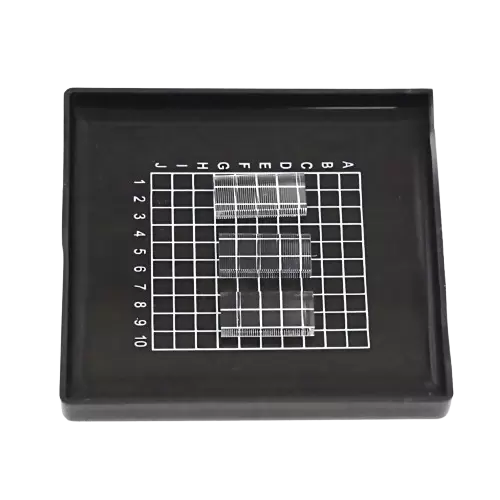
Traditional single lenses remain effective for many optical systems, but their physical size and limited integration become constraints when an optical module needs multiple focusing, imaging, or beam-control functions within a small area.
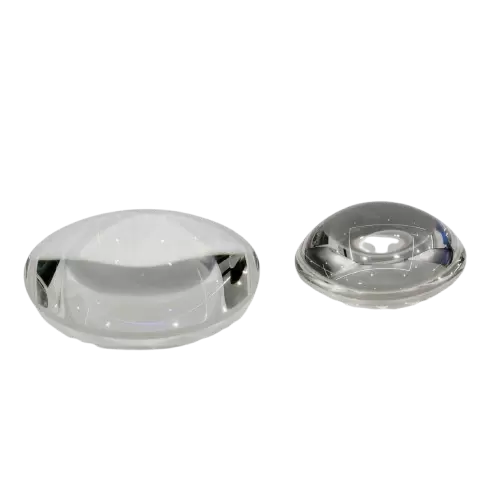
In modern infrared imaging systems, performance is no longer defined simply by whether a lens can “see in infrared.” Instead, it is determined by a tightly coupled optical engineering system that controls wavefront precision, thermal drift behavior, aberration correction, and spectral transmission efficiency across MWIR (mid-wave infrared) and LWIR (long-wave infrared) bands.
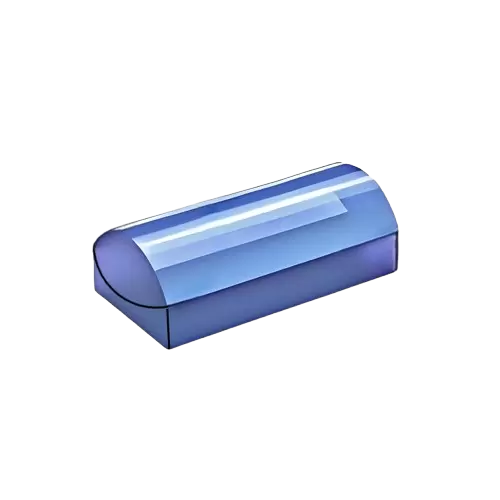
In precision optical systems, controlling light in one direction is often only part of the design challenge. When different wavelengths pass through a conventional cylindrical lens, variations in refractive index can cause each wavelength to focus at a slightly different position.