

 en
 English
 繁体中文
 Japanese
 Korean
 Russian
 German
News
Deepen Optoelectronic Resources, Lead Technological Breakthroughs


Deepen Optoelectronic Resources, Lead Technological Breakthroughs
Optical systems often need to distinguish a specific light signal from background illumination, scattered light, or unwanted wavelengths. In fluorescence imaging, machine vision, and precision measurement, these unwanted signals can reduce image contrast, weaken detection reliability, and introduce errors into measurement results. Selecting a filter without considering the light source, detector response, and optical path may therefore compromise the performance of the entire system.
A bandpass filter addresses this challenge by transmitting light within a defined wavelength range while attenuating wavelengths outside that range. However, not all filters with similar nominal specifications deliver the same practical results. Center wavelength accuracy, bandwidth, transmission, out-of-band blocking, and operating conditions all influence suitability.
For engineers and purchasing teams evaluating Bandpass filter Optics, understanding these parameters is essential. The same technical knowledge also helps buyers assess Bandpass Filter price differences and determine which specifications genuinely justify additional cost.
An optical bandpass filter selectively transmits a wavelength band while suppressing light at shorter and longer wavelengths. Many precision filters use multilayer dielectric thin-film coatings deposited on an optical substrate. Alternating layers with different refractive indices create wavelength-dependent interference, producing a transmission band and rejection regions.
Other filter designs may use absorptive materials or combinations of optical structures, depending on the required spectral range and application. The appropriate design depends on the wavelength, required transmission, blocking performance, environmental conditions, and system architecture.
Unlike an RF bandpass filter, which operates on electrical or electromagnetic signals in electronic circuits, an optical bandpass filter controls light transmission through an optical path. Its performance must be evaluated using optical spectral characteristics rather than electrical frequency-response specifications.
The center wavelength (CWL) identifies the nominal location of the filter's transmission band. Its accuracy matters when the target signal occupies a narrow spectral region, such as a fluorescence emission line or a laser wavelength. A mismatch between the filter passband and the target signal can reduce the amount of useful light reaching the detector.
The full width at half maximum (FWHM) describes the spectral width between the two wavelengths where transmission reaches half of its peak value. A narrow FWHM helps isolate a specific spectral feature and reject more nearby wavelengths. A wider FWHM allows more of a broad emission spectrum to pass, which can be useful when signal collection is more important than fine spectral discrimination.
Neither narrow nor wide bandwidth is universally superior. The correct choice depends on the source spectrum, target signal, background interference, and detector sensitivity.
Peak transmission indicates the maximum percentage of incident light transmitted through the filter under specified measurement conditions. Higher transmission can improve photon collection, particularly in low-light applications, but the peak value alone does not describe performance across the entire passband.
Optical density (OD) expresses attenuation in a specified blocking region. A higher OD corresponds to lower transmitted intensity at the relevant wavelengths. For example, OD 4 represents a transmittance of (10^{-4}), or 0.01%, at the wavelength being evaluated. This does not mean the filter blocks all wavelengths outside the passband equally; the actual blocking range and spectral response must be verified.
Buyers should therefore review the complete transmission curve, including passband shape, blocking limits, and any specified transition regions. The required OD should reflect the intensity of unwanted light relative to the target signal, rather than an arbitrary preference for the highest available specification.
Different applications impose different priorities:
Fluorescence imaging: The filter must transmit the intended emission band while rejecting excitation light. Center wavelength, bandwidth, and blocking performance affect background rejection and signal-to-noise ratio.
Spectral analysis: Bandwidth and wavelength accuracy influence how effectively the system isolates spectral features. Narrow bands may be necessary when adjacent signals must be distinguished.
Machine vision: The filter should match the illumination wavelength and camera sensitivity. Appropriate spectral selection can reduce ambient-light interference and improve image contrast.
Laser systems: The passband must accommodate the operating wavelength and relevant wavelength variation. Incidence angle, polarization, and laser power may also affect filter selection.
Optical sensors: The passband should overlap the target signal while limiting unwanted light that could cause measurement errors or detector saturation.
The detector's spectral response is as important as the filter itself. A filter can transmit the desired wavelength efficiently, but the overall system may still perform poorly if the detector has low sensitivity in that region.
The Bandpass Filter price reflects more than the physical size of the component. Design complexity, coating requirements, substrate selection, manufacturing tolerances, inspection procedures, and order quantity can all influence the final quotation.
A filter with a demanding center wavelength tolerance or narrow FWHM may require more detailed optical design, tighter process control, and additional verification. However, a narrowband filter is not automatically more expensive than every broadband alternative. Cost depends on the complete specification, coating architecture, wavelength region, production method, and manufacturing yield.
High peak transmission and strong out-of-band blocking can also impose competing design requirements. Achieving both across a defined wavelength range may require a more complex multilayer coating and tighter process control.
Buyers should specify the minimum acceptable transmission, required blocking OD, wavelength intervals for blocking, and applicable tolerances. Without these details, two quotations may describe filters that are not technically equivalent.
The substrate affects optical transmission, mechanical stability, thermal behavior, and compatibility with the operating environment. Depending on the application, manufacturers may use optical glass, fused silica, or other suitable materials. Material choice should account for the operating wavelength, temperature, incidence angle, and environmental exposure.
Filter diameter or dimensions, thickness, surface flatness, parallelism, surface quality, and mounting requirements can also affect cost. Larger components may require more demanding coating uniformity, while tight dimensional tolerances can increase processing and inspection requirements.
A buyer should avoid specifying unnecessarily demanding surface or dimensional tolerances. Requirements should follow the optical design and mounting method, not simply the assumption that tighter tolerances always produce better system performance.
Standard filters can be cost-effective when their available specifications match the application's wavelength, bandwidth, blocking range, dimensions, and operating conditions. Existing designs may reduce engineering effort and shorten procurement lead times, although availability and delivery schedules depend on the supplier.
Custom filters are appropriate when standard products cannot satisfy the required center wavelength, FWHM, blocking performance, size, substrate, or environmental conditions. Custom development may involve additional design work, process setup, sample evaluation, and inspection. Small production quantities can also carry a higher unit cost because these activities are distributed across fewer components.
The most economical choice is the filter that meets the actual system requirements without paying for unnecessary performance.
Higher OD can be valuable when unwanted wavelengths are much stronger than the target signal. For example, a fluorescence system may need strong rejection of excitation light to prevent background leakage from overwhelming weak emission. In a different system with little background interference, a less demanding blocking specification may be sufficient.
Similarly, higher peak transmission is beneficial only when it contributes meaningfully to the signal budget. Engineers should consider transmission across the useful passband, not just at its peak, and assess whether the added performance justifies its cost.
Purchase volume also matters. Larger orders may improve unit economics through more efficient production and coating runs, but actual pricing depends on the design, yield, inspection requirements, and supplier capacity. Requesting quotations for realistic quantities helps establish a meaningful comparison.
Before requesting a quotation, define the optical and mechanical requirements as clearly as possible. A useful specification should include:
Target wavelength: Identify the wavelength to be transmitted and any expected source variation.
Bandwidth: State the required FWHM and applicable tolerance.
Transmission: Define the minimum acceptable peak or passband transmission.
Blocking requirements: Specify the required OD and the wavelength intervals over which it must be maintained.
Optical geometry: Provide the incidence angle, beam conditions, polarization requirements where relevant, and clear aperture.
Mechanical requirements: Confirm dimensions, thickness, surface specifications, mounting constraints, and substrate preferences.
Operating environment: Identify temperature range, humidity, potential contamination, laser exposure, and other relevant conditions.
Incidence angle deserves particular attention. Interference-based bandpass filters can exhibit a shift toward shorter wavelengths as the angle of incidence increases. The magnitude depends on the coating design and optical conditions. A filter specified for near-normal incidence may therefore fail to deliver the expected passband when installed in a converging beam or used at an oblique angle.
Temperature can also change the spectral response through variations in refractive index and physical dimensions. The effect depends on the materials and coating construction. Applications with substantial temperature variation should establish acceptable wavelength drift and verify performance under relevant conditions.
A qualified optical manufacturer should be able to discuss coating design, substrate compatibility, spectral tolerances, inspection methods, and the limitations of the proposed specification. Buyers should also ask how transmission and blocking performance are measured, including the test angle, polarization, spectral resolution, and applicable temperature conditions.
ECOPTIK has 15 years of experience researching optical component fabrication technology and manufactures precision optical components including filters, lenses, prisms, windows, and micro-optical components. Its material portfolio includes optical glass from Schott, CDGM, and Corning, as well as sapphire, CaF₂, MgF₂, fused silica, silicon, ZnSe, and ZnS. Material suitability must be evaluated against each filter's operating wavelength and design requirements.
ECOPTIK's inspection resources include ZYGO laser interferometers, a ZEISS CMM Spectrum, and an Agilent Cary 7000 UMS. These instruments support different measurement tasks, including optical surface or dimensional characterization and optical measurement, as appropriate to the component and test configuration. Buyers should confirm which instrument and method will be used to verify their particular filter specifications and what product reports are available.
When comparing manufacturers, request consistent acceptance criteria, documented spectral results where applicable, and clear definitions of tolerances. Also evaluate coating durability, environmental suitability, traceability, lead time, and the manufacturer's ability to support repeat orders. These factors can be as important as the initial quotation when filters are used in production equipment.
Compare the filter's spectral transmission curve with the source spectrum, target signal, and detector response. Then verify the required CWL, FWHM, peak transmission, blocking range, incidence angle, dimensions, and environmental conditions. A nominal wavelength match alone is insufficient.
Their coating designs, wavelength tolerances, bandwidths, blocking requirements, substrates, surface specifications, inspection procedures, and order quantities may differ. Compare complete specifications and acceptance criteria rather than dimensions alone.
Choose a standard product when it satisfies all critical optical and mechanical requirements. Consider customization when the application needs a different passband, tighter tolerance, extended blocking, special substrate, or nonstandard dimensions. Evaluate the total cost and delivery implications before deciding.
Prioritize specifications that directly affect system performance, then select suitable substrates and coatings for the actual operating environment. Avoid paying for unnecessary transmission, blocking, or tolerance levels, but do not reduce critical requirements that protect measurement reliability or signal discrimination.
Selecting the right optical bandpass filter requires a system-level assessment of wavelength selection, signal transmission, background rejection, optical geometry, and environmental stability. Understanding these requirements also makes Bandpass Filter price comparisons more meaningful because buyers can distinguish necessary performance from unnecessary specification costs.
For engineers, equipment manufacturers, and purchasing teams, effective Bandpass filter Optics procurement begins with a clear technical specification and a manufacturer capable of explaining how the proposed design meets it. By matching filter performance to the source, detector, and application, buyers can make informed decisions that balance optical reliability, service life, and total procurement cost.
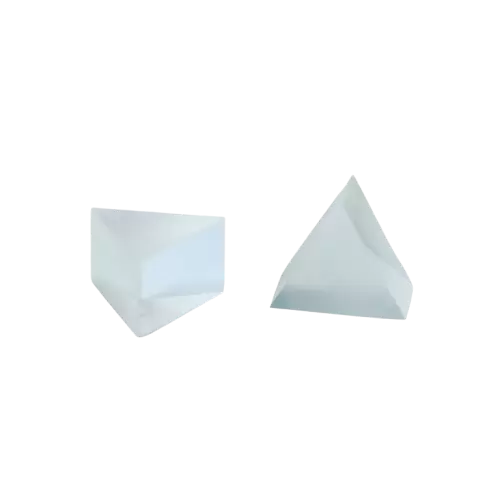
In modern precision optics engineering, the search for Right angle prism types is no longer about understanding geometric variations of a prism structure. Instead, optical engineers, system integrators, and procurement teams are evaluating how different prism configurations affect beam stability, angular precision, and long-term optical path integrity in high-performance systems.
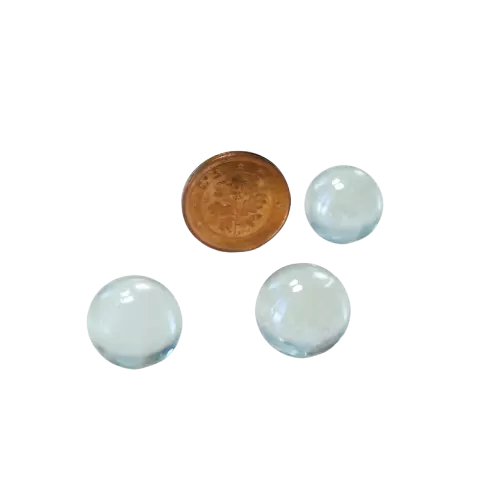
Optical glass spherical lenses are used in imaging systems, laser equipment, optical measurement instruments, and scientific devices where controlled refraction and predictable optical performance are essential.
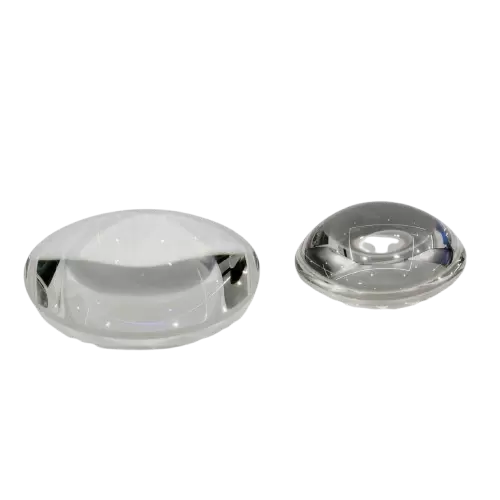
In modern precision optics manufacturing, the performance of a spherical lens is no longer determined solely by its material or nominal curvature, but by the surface precision achieved during the polishing stage.