

 en
 English
 繁体中文
 Japanese
 Korean
 Russian
 German
News
Deepen Optoelectronic Resources, Lead Technological Breakthroughs


Deepen Optoelectronic Resources, Lead Technological Breakthroughs
In laser systems, imaging equipment and precision optical instruments, controlling beam divergence is often as important as focusing light. Engineers may need to increase beam diameter, adjust wavefront curvature, compensate for an existing converging beam or modify the optical path within a limited installation space. A conventional positive lens cannot always meet these requirements.
An Optical Plano Concave Lens provides a practical solution through its negative focal length. With one flat surface and one inward-curved surface, it causes parallel incident rays to diverge after passing through the lens. This characteristic makes it useful in laser beam expansion assemblies, optical relay systems and applications requiring controlled changes in beam vergence.
However, selecting a suitable lens involves more than choosing a negative focal length. Radius of curvature, refractive index, clear aperture, surface accuracy, material transmission and coating performance all influence the final optical result. Understanding these factors also helps buyers evaluate the relationship between Plano concave lens uses and Optical plano concave lens price when specifying components for commercial or research applications.
A plano concave lens has two optical surfaces: one is planar, while the other has a concave profile. When a collimated beam enters the lens, refraction at the curved surface changes the direction of the rays. After exiting the lens, the rays spread outward and appear to originate from a virtual focal point on the incident side.
This is why a plano concave lens has a negative focal length. Unlike a plano convex lens, which converges parallel rays toward a real focal point, a plano concave lens increases the divergence of an initially collimated beam.
Several specifications determine how a plano concave lens performs in an optical assembly:
Focal length: Determines the optical power and the change in beam vergence. It directly influences the divergence produced by the lens.
Radius of curvature: Defines the curvature of the concave surface and contributes to the focal length.
Refractive index: Determines how strongly the material bends light. Its wavelength dependence can introduce chromatic differences.
Center thickness: Affects mechanical dimensions, mounting compatibility and the actual surface geometry.
Clear aperture: Defines the usable optical area. An insufficient aperture can cause beam clipping and reduce transmitted optical power.
Diameter tolerance: Influences mechanical fit and alignment within lens holders.
Surface figure and roughness: Surface errors can introduce wavefront distortion and scattering, affecting beam quality and imaging performance.
Centration and wedge: Errors in optical alignment can cause beam deviation and introduce unwanted aberrations.
These parameters should be evaluated together rather than specified independently. For example, a lens may have the required focal length but still produce unsatisfactory results if its surface figure or centration is unsuitable for the optical system.
Laser beam expansion and divergence control
One important application is adjusting the diameter and divergence of a laser beam. A plano concave lens can increase the divergence of an incident collimated beam. When paired with a positive lens, it can form a Galilean beam expander. In this configuration, the negative lens is positioned before the positive lens, and the combination produces an expanded collimated output under the appropriate design conditions.
A single negative lens should not be mistaken for a complete collimating system. Its function is to introduce or modify divergence; additional optical elements may be required to achieve a collimated output.
Optical imaging and relay systems
In imaging equipment, plano concave lenses can modify optical power distribution and help adjust intermediate image conjugates. They may also be incorporated into relay assemblies where designers need to control the overall vergence of light between optical stages.
Aberration management and optical path adjustment
A negative lens can contribute to the correction of optical aberrations when combined with other elements. For example, designers may use negative optical power to balance the positive power of another lens group or adjust the Petzval curvature of an imaging system. Its effectiveness depends on the complete prescription, not simply on the lens shape.
Laser and scientific instruments
Other applications include laser processing equipment, optical measurement instruments, spectroscopy assemblies and laboratory optical setups. In these systems, the lens can provide a controlled negative optical power for beam conditioning and optical layout adjustments.
Lens type | Optical power | Typical function |
|---|---|---|
Plano concave | Negative | Diverging light and adjusting beam vergence |
Plano convex | Positive | Converging light and focusing |
Double concave | Negative | Diverging light with two curved surfaces |
A plano concave lens is often selected when a flat mounting surface and negative optical power are desirable. A double concave lens may provide a different optical design with two curved surfaces. The appropriate choice depends on focal length, aberration requirements, available space and system configuration.
Material selection affects refractive power, transmission, dispersion, thermal behavior and manufacturing cost. The operating wavelength should be established before choosing the substrate.
N-BK7 optical glass is widely used in visible-light applications and many near-infrared systems. It offers good optical homogeneity, established manufacturing processes and relatively economical production. SCHOTT specifies a refractive index of 1.51680 at 587.6 nm for N-BK7. Its transmission characteristics should nevertheless be checked at the actual operating wavelength and component thickness.
SCHOTT+1Fused silica is a strong candidate for ultraviolet applications, high-energy laser systems and environments involving temperature variation. Its low thermal expansion and useful UV transmission make it suitable for applications where thermal stability and laser-induced damage resistance are important. However, the exact grade and wavelength range must be verified against the system requirements.
American Scientific Glassblowers Society+1Other materials may be appropriate for specialized applications:
Calcium fluoride (CaF₂): Used in ultraviolet and infrared optical systems where its broad transmission characteristics are beneficial.
Magnesium fluoride (MgF₂): Suitable for selected UV and infrared applications and commonly used in optical coating designs.
Sapphire: Offers high mechanical hardness and is useful where surface durability is important.
Silicon and zinc selenide (ZnSe): Considered for specific infrared applications, depending on wavelength and system requirements.
These materials are not interchangeable. Their refractive indices, dispersion, thermal properties and transmission limits differ. Material selection should be based on supplier data at the operating wavelength rather than a general transmission-range statement.
lambdaoptics.com+1The optical surface must maintain the intended geometry with sufficient accuracy. Even when the nominal focal length is correct, surface deviations can affect the transmitted wavefront.
Three specifications deserve particular attention:
Surface figure describes how closely the manufactured surface matches its designed shape. For a plano concave lens, errors in the curved surface can change local optical power, while errors in the planar surface can introduce wavefront distortion.
Surface roughness describes microscopic variations in the surface. Excessive roughness increases scattered light and can reduce contrast or signal quality, particularly in sensitive laser and imaging applications.
Centration and wedge describe alignment-related errors between the optical surfaces and the mechanical reference axis. Poor centration can introduce beam deviation, while wedge can cause an unintended angular change in the transmitted beam.
Center thickness and diameter tolerances also matter. Center thickness affects mechanical compatibility and the specified geometry, while diameter tolerance determines whether the lens fits its housing correctly. The clear aperture must accommodate the full working beam, including any expected alignment variation.
Specifications such as surface flatness, spherical surface power, irregularity and scratch-dig quality should be stated separately. A single general description such as "high precision" does not provide enough information for engineering acceptance.
Apollo Optical+1An uncoated glass surface reflects part of the incident light because of the refractive-index difference between air and glass. In systems with multiple optical elements, these losses can accumulate.
An anti-reflection (AR) coating uses thin-film interference to reduce reflection over a specified wavelength range and angle of incidence. Depending on the coating design, it can improve transmission, reduce unwanted reflections and help control ghost images.
When specifying a coating, buyers should provide:
Operating wavelength or wavelength band.
Required reflectance or transmittance.
Angle of incidence.
Polarization requirements, where relevant.
Laser power and damage-threshold requirements.
Environmental and cleaning conditions.
A coating optimized for visible light should not automatically be used for UV or infrared applications. Coating performance must be verified at the intended wavelength and incidence angle.
For practical selection, engineers should begin with the optical system rather than a catalog product.
Define the wavelength: Confirm the laser or illumination wavelength and choose a compatible substrate and coating.
Calculate the required negative focal length: Use the system's input vergence and required output divergence to determine the necessary optical power.
Check beam diameter and clear aperture: Ensure that the usable aperture accommodates the beam without clipping.
Evaluate surface specifications: Set surface figure, roughness and centration requirements according to the application's wavefront and alignment tolerances.
Check mechanical integration: Confirm diameter, center thickness, edge dimensions and mounting orientation.
Review environmental conditions: Consider temperature variation, laser power, contamination and vibration.
For example, a laboratory beam-conditioning assembly may prioritize focal-length accuracy and wavefront quality, while an industrial laser system may place greater emphasis on coating durability, thermal stability and repeatable mechanical mounting.
For optical equipment manufacturers and system integrators, selecting a plano concave lens should begin with the required optical function. A lens with a suitable negative focal length may still be unsuitable if its aperture, surface quality or material does not meet the system specifications.
The following factors should be evaluated during procurement:
Focal length: Determines the negative optical power required for beam divergence or optical power compensation.
Material: Influences refractive index, transmission, dispersion and thermal stability.
Diameter and clear aperture: Must match the beam dimensions and mechanical assembly.
Surface accuracy: Determines how closely the manufactured component reproduces the designed optical geometry.
Coating configuration: Should match the working wavelength, incidence angle and required reflection performance.
Inspection requirements: Determine whether additional interferometric, dimensional or spectral measurements are necessary.
Providing a complete optical drawing and application description allows manufacturers to evaluate these requirements before production.
The Optical plano concave lens price depends on the combination of material, dimensions, optical performance requirements and manufacturing complexity. There is no single price that applies to all negative lenses.
1. Optical material
Standard optical glass such as N-BK7 is commonly used for visible-light applications. Fused silica, CaF₂ and other specialized substrates may involve different material costs and processing requirements. Material availability and grade also influence the final quotation.
2. Focal length and curvature
The required focal length determines the curvature needed for a particular refractive index. Very specific focal lengths, larger apertures and demanding geometric requirements can increase machining and inspection complexity.
3. Lens diameter and thickness
Larger components generally require more raw material and may need additional grinding, polishing and handling time. Non-standard dimensions can also require dedicated manufacturing arrangements.
4. Surface quality and dimensional tolerances
Tighter surface figure, lower roughness, more accurate centration and stricter thickness tolerances require greater process control. Additional inspection may be necessary to verify that each component meets the specified acceptance criteria.
5. Optical coating
A standard single-wavelength AR coating and a broadband coating have different design and production requirements. Specialized UV, infrared or high-power laser coatings may require additional process development and performance verification.
6. Customization and order quantity
Standard catalog specifications can often be manufactured using established processes. Custom lenses may require individual optical calculations, tooling adjustments, process development and additional quality inspections.
Larger production quantities can improve manufacturing efficiency, while small customized orders may carry a higher unit cost because setup and inspection expenses are distributed across fewer components.
Purchasing consideration | Standard lens | Custom lens |
|---|---|---|
Dimensions | Established specifications | Application-specific |
Focal length | Available catalog options | Custom optical power |
Material | Common optical substrates | Standard or specialized materials |
Surface tolerances | Defined standard grades | Project-specific requirements |
Coating | Available standard coatings | Customized wavelength and performance |
Production | Established manufacturing process | May require additional development |
For buyers, the objective should not be to specify the tightest possible tolerances. Excessive precision can increase costs without providing a meaningful improvement in system performance.
A more effective approach is to identify which parameters directly influence the optical design and establish acceptance limits accordingly.
It uses refraction at its concave surface to make incident parallel rays diverge. The emerging rays appear to originate from a virtual focal point, giving the lens its negative focal length.
Common applications include laser beam divergence control, Galilean beam expanders, optical relay systems, imaging assemblies and optical power compensation. Its suitability depends on the complete optical design.
A plano concave lens has negative optical power and diverges parallel light. A plano convex lens has positive optical power and converges parallel light. They therefore perform different functions in an optical system.
For a thin plano concave lens in air, the approximate lensmaker equation is:
Focal Length = - Radius of Curvature / (Refractive Index - 1)For a thin plano concave lens in air, the approximate focal length can be calculated by dividing the negative radius of curvature by the refractive index minus one. In other words, Focal Length = - Radius of Curvature / (Refractive Index - 1). The negative sign indicates that the lens has diverging optical power.
Start with the input beam's existing divergence or convergence, the required output vergence and the available optical distance. The focal length should be calculated as part of the complete ray-tracing design rather than selected solely by comparing catalog specifications.
UV-grade fused silica is commonly considered for UV and high-energy laser applications. CaF₂ and MgF₂ can be appropriate for selected UV and infrared systems. Silicon and ZnSe are used in specific infrared applications. The correct choice depends on the exact wavelength, transmission, thermal conditions and coating compatibility.
The principal factors are substrate material, diameter, center thickness, focal length, curvature, surface figure, surface roughness, dimensional tolerances, coating requirements, inspection standards and order quantity. Custom optical designs generally require additional engineering and manufacturing evaluation.
Choosing an Optical Plano Concave Lens requires a clear understanding of the relationship between negative optical power, beam divergence, material properties and manufacturing precision. Focal length and curvature determine the basic optical function, while surface figure, roughness, centration and coating performance influence how reliably the lens performs within the complete optical assembly.
For engineers, the priority should be matching the lens specifications to the system's wavelength, beam diameter, optical layout and wavefront requirements. For procurement teams, understanding the relationship between material selection, manufacturing tolerances and customization helps establish a realistic balance between performance and cost.
ECOPTIK – Innovative and Enterprising Your Optical Customization Partner
With 15 years of experience in optical component fabrication technology research, ECOPTIK manufactures precision optical components, including spherical lenses, domes, micro-optical components, cylindrical mirrors, filters, prisms and optical windows.
The company works with optical materials from SCHOTT, CDGM and Corning, as well as sapphire, CaF₂, MgF₂, fused silica, silicon and ZnSe. Its manufacturing and inspection capabilities include ZYGO laser interferometers, ZEISS CMM Spectrum and Agilent Cary 7000 UMS, supporting dimensional and optical performance evaluation and product reporting.
Beyond individual optical components, ECOPTIK also offers lens assembly services for customers requiring integrated optical solutions.
Whether the requirement involves a standard negative focal length, a specialized substrate, precision surface finishing or customized optical specifications, ECOPTIK can evaluate the application requirements and discuss an appropriate manufacturing solution.
For a quotation, provide the required focal length, diameter, material, operating wavelength, surface quality, coating specifications and technical drawing. This information allows the manufacturing team to assess feasibility and provide a quotation based on the actual product requirements.
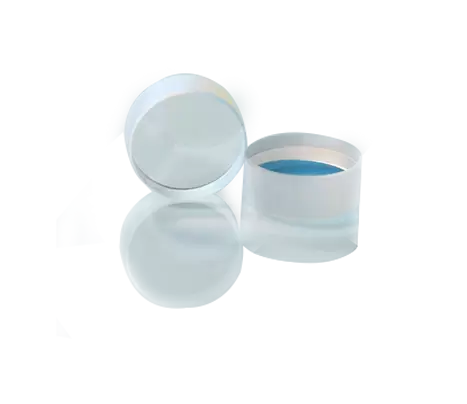
For optical engineers and procurement teams, choosing a plano convex lens is rarely just a matter of selecting a diameter and focal length. A lens that appears simple can produce very different results depending on its material, curvature, surface accuracy, center deviation, coating, and installation direction.
For telescope manufacturers, astronomy equipment suppliers, and optical system integrators, selecting an astronomical lens is a technical and commercial decision. A lens that appears economical on a quotation may introduce chromatic halos around bright stars, reduce planetary contrast, or produce distorted star images near the edge of a camera sensor.
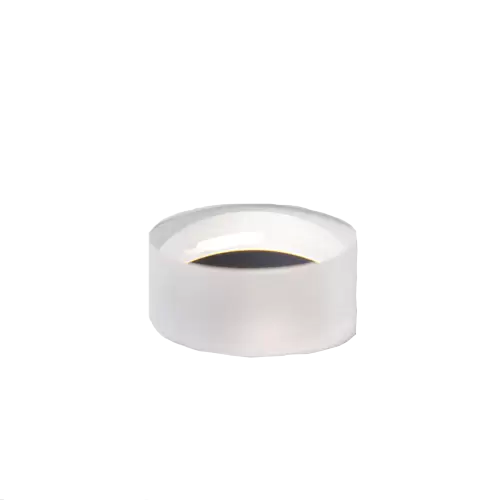
In precision optical engineering, understanding Plano concave lens uses requires moving beyond basic ray divergence concepts into system-level wavefront control.