

 en
 English
 繁体中文
 Japanese
 Korean
 Russian
 German
News
Deepen Optoelectronic Resources, Lead Technological Breakthroughs

Deepen Optoelectronic Resources, Lead Technological Breakthroughs
A laser mirror is more than a reflective component in an optical path. Its reflectivity, surface accuracy, coating performance, and resistance to laser-induced damage directly affect how efficiently a laser system operates. When a mirror is poorly matched to the laser wavelength, incidence angle, or power level, even a small optical loss can become a significant source of inefficiency in demanding applications.
For high-power laser systems, coating absorption may cause localized heating, while inadequate surface quality can introduce wavefront errors and affect beam propagation. A coating that cannot withstand the operating conditions may gradually degrade or suffer laser-induced damage, resulting in unstable output and unplanned maintenance.
Selecting the right laser mirror therefore requires more than comparing product prices or advertised reflectivity. Industrial laser manufacturers and optical system designers need to evaluate substrate materials, coating structures, optical tolerances, and testing methods together. Working with an experienced Best Laser Mirror Manufacturer or reliable Laser Mirror Supplier helps ensure that the component is designed around the actual requirements of the laser system.
The performance of a laser mirror depends on several interconnected optical parameters. Understanding these specifications is essential when selecting components for different wavelengths and operating conditions.
Reflectivity indicates the proportion of incident optical power reflected by a mirror under specified measurement conditions. Higher reflectivity generally reduces energy loss, which is particularly important in laser resonators, beam delivery systems, and applications involving repeated reflections.
However, reflectivity should never be evaluated independently of wavelength and incidence angle. A coating optimized for one wavelength may perform differently at another. Its response can also change with the angle of incidence and polarization state.
For example, a mirror designed for a 1064 nm laser should not automatically be considered suitable for a 532 nm or ultraviolet laser. Buyers should confirm the specified operating wavelength, bandwidth, incidence angle, and polarization requirements before selecting a product.
Surface figure describes how closely an optical surface matches its intended geometric shape. Errors in surface figure can distort the reflected wavefront, affecting beam quality, focusing behavior, and alignment accuracy.
Surface roughness is another important factor. Microscopic irregularities can scatter incident laser energy, reducing useful reflected power and potentially introducing stray light into sensitive optical systems.
For applications requiring precise beam control, buyers should examine surface figure and roughness specifications separately. The required tolerances depend on the optical design, beam diameter, wavelength, and system performance objectives.
LIDT describes the laser exposure level at which optical damage occurs under defined test conditions. It is particularly important for high-power and high-energy laser systems.
A mirror's damage resistance is influenced by substrate quality, coating materials, deposition processes, surface contamination, and manufacturing defects. However, LIDT values are meaningful only when accompanied by relevant test conditions, including wavelength, pulse duration, repetition rate, beam size, and testing methodology.
Continuous-wave (CW) and pulsed lasers should not be evaluated using interchangeable damage thresholds. Procurement teams should request test data that matches their actual operating conditions rather than relying on an isolated LIDT figure.
Different coating technologies serve different optical requirements.
Dielectric coatings use multiple thin-film layers with carefully controlled refractive indices and thicknesses. They can provide high reflectivity over a specified wavelength range and are widely used in precision laser optics. Their performance depends on the coating design, wavelength, incidence angle, and polarization.
Metallic coatings, such as aluminum, silver, and gold, offer broad spectral reflection characteristics. Aluminum is commonly considered for ultraviolet and visible applications, silver for visible and near-infrared applications, and gold for infrared applications. Actual suitability depends on the wavelength range, protective layers, environmental conditions, and required reflectance.
Broadband reflective coatings are designed to maintain useful reflection across a wider wavelength range than narrowband designs. They can be suitable for systems operating over multiple wavelengths, although achieving consistently high reflectivity across a broad range may involve different design trade-offs.
There is no universally best coating. A professional Laser Mirror Supplier should recommend a coating based on the laser source, operating wavelength, incidence angle, power density, and environmental requirements.
The substrate provides the mechanical and thermal foundation of the mirror. Material selection affects dimensional stability, thermal behavior, manufacturability, and compatibility with the coating process.
Fused silica is widely used in precision optical applications because of its favorable thermal properties and optical characteristics across a broad spectral region. Sapphire offers high hardness and mechanical strength, while silicon and other infrared-compatible materials may be considered for specific infrared optical designs.
The appropriate choice depends on wavelength transmission or reflection requirements, thermal loading, mirror dimensions, and the intended optical configuration. Substrate and coating should therefore be designed as one optical component rather than selected independently.
Ultraviolet systems require particular attention to material absorption and coating performance at shorter wavelengths. Visible laser systems often prioritize reflectivity, surface quality, and beam alignment. Infrared and high-power systems may place greater emphasis on thermal management, absorption control, and coating durability.
A professional laser mirror manufacturer must control the entire production process, from substrate preparation to final optical inspection. Small variations introduced during manufacturing can affect the performance of the finished component.
The manufacturing process typically begins with selecting and preparing an appropriate optical substrate. Grinding, polishing, and surface finishing establish the required geometry and optical quality.
Precision polishing is particularly important because surface figure errors can affect wavefront performance, while surface defects and roughness may contribute to scattering or coating-related problems.
Before coating, the substrate surface must also meet the cleanliness and preparation requirements of the deposition process. Contamination or surface defects can compromise coating adhesion and optical performance.
Optical coating is one of the most critical stages in laser mirror production. Thin-film deposition requires careful control of layer materials, thicknesses, deposition conditions, and process uniformity.
For multilayer dielectric coatings, even small variations in layer thickness can shift the spectral response and affect reflectivity. Coating uniformity is also important when mirrors have relatively large clear apertures or when consistent performance is required across multiple production batches.
A capable manufacturer should understand how coating design interacts with the substrate, wavelength, incidence angle, and laser operating conditions. Simply specifying a high-reflectivity coating is not sufficient for a demanding industrial application.
Testing equipment helps manufacturers verify whether optical components meet their specified requirements.
ZYGO laser interferometers can be used for optical surface and wavefront-related measurements. ZEISS CMM Spectrum provides dimensional metrology capabilities, while the Agilent Cary 7000 UMS supports advanced optical measurement, including spectral characterization.
These instruments serve different measurement purposes. Buyers should ask which parameters are actually measured, what test conditions are used, and whether inspection reports are available for the supplied components.
For high-power applications, optical characterization should also be distinguished from laser damage testing. A reflectance or surface measurement report does not, by itself, establish a mirror's LIDT.
Different laser applications place different demands on optical components.
Laser cutting and welding: Beam delivery mirrors must match the laser wavelength, power conditions, incidence angle, and mechanical configuration. Coating absorption and thermal effects are particularly important in high-power systems.
Medical laser equipment: Optical components may require specific wavelength performance, controlled beam quality, and consistent optical characteristics. Requirements depend on the laser type and equipment design.
Scientific research: Experimental systems may require precise wavelength control, defined polarization behavior, and carefully characterized surface quality.
Laser measurement and metrology: Surface figure, angular alignment, and optical stability can be critical to measurement accuracy.
High-power laser systems: Coating durability, absorption control, thermal stability, and verified damage resistance become especially important.
For custom laser mirrors, buyers should provide an optical drawing, substrate requirements, operating wavelength, angle of incidence, beam diameter, laser power or pulse energy, and whether the system uses CW or pulsed operation. Pulse duration, repetition rate, and environmental conditions should also be specified where relevant.
Choosing the right manufacturer requires an assessment of technical capability rather than relying on product descriptions alone.
A qualified manufacturer should be able to discuss substrate selection, polishing tolerances, coating design, and the relationship between optical specifications and actual system performance.
Buyers should also check whether the manufacturer can support custom dimensions, non-standard wavelengths, specific incidence angles, and application-dependent coating requirements.
A reliable supplier should explain how reflectivity, surface figure, surface roughness, and dimensional tolerances are inspected. Measurement reports should identify the relevant test methods and conditions.
For demanding applications, batch consistency is also important. Consistent substrate processing, coating deposition, and inspection procedures help reduce performance variation between replacement components and production batches.
Laser mirror prices are influenced by several technical factors:
Substrate material, dimensions, and thickness.
Coating materials and multilayer structure.
Operating wavelength and spectral bandwidth.
Surface figure and roughness tolerances.
Required laser damage resistance.
Inspection requirements and report specifications.
Customization complexity and order quantity.
A lower-priced mirror may be suitable for less demanding applications, but it should not be assumed to provide the same optical performance as a component manufactured to tighter tolerances or more demanding coating specifications.
When requesting quotations, buyers should provide complete technical requirements and ask suppliers to identify any deviations from the requested specifications. This makes quotations easier to compare and reduces the risk of selecting an unsuitable component.
ECOPTIK is an optical customization partner with 15 years of experience researching optical component fabrication technology. Its manufacturing portfolio includes domes, spherical lenses, micro-optical components, cylindrical mirrors, filters, prisms, and optical windows.
Material options include optical glass from Schott, CDGM, and Corning, as well as sapphire, CaF2, MgF2, fused silica, silicon, ZnSe, and ZnS. The appropriate material depends on the optical design, operating wavelength, and application requirements.
ECOPTIK also provides lens assembly services and maintains a range of optical inspection and measurement equipment. Its ZYGO laser interferometers support precision optical measurements, ZEISS CMM Spectrum provides dimensional inspection capabilities, and the Agilent Cary 7000 UMS supports optical characterization. These capabilities help support product evaluation and the preparation of measurement reports.
For buyers developing specialized laser optical systems, discussing the optical drawing, wavelength, coating requirements, and operating conditions with the manufacturer at an early stage can help establish a more suitable manufacturing approach.
Selecting the right laser mirror requires a comprehensive understanding of reflectivity, surface figure, roughness, coating durability, substrate properties, and laser damage resistance. These factors must be evaluated against the actual wavelength, incidence angle, power conditions, and application environment.
The Best Laser Mirror Manufacturer is not necessarily the supplier offering the highest advertised reflectivity or lowest price. It is the manufacturer capable of translating optical system requirements into appropriate material choices, precise fabrication processes, controlled coating designs, and verifiable inspection results.
Whether sourcing standard optical components or developing custom laser mirrors, buyers should prioritize technical compatibility, manufacturing consistency, and transparent quality verification. Contact ECOPTIK to discuss your optical drawings, application requirements, and potential customization solutions.
A precision optical system can lose image quality even when individual lens elements meet their nominal specifications. Spherical aberration can reduce focusing accuracy, while off-axis aberrations such as coma may affect image definition across the field of view. In many applications, these problems are related not only to the optical materials used but also to the curvature, orientation, and positioning of individual elements within the complete optical assembly.
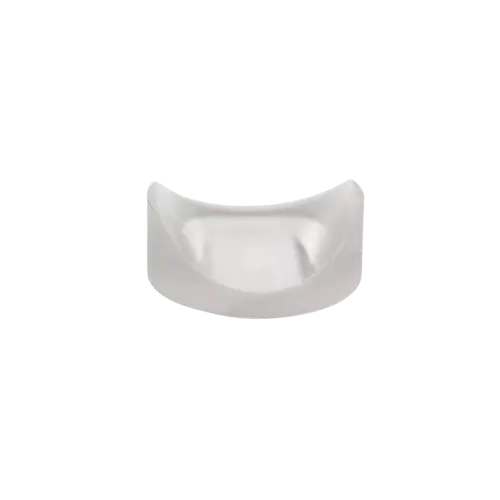
In many laser and imaging systems, controlling light in only one direction is a critical requirement. However, conventional cylindrical lenses can create challenges during integration, especially when optical alignment, positioning accuracy, and long-term stability are important.
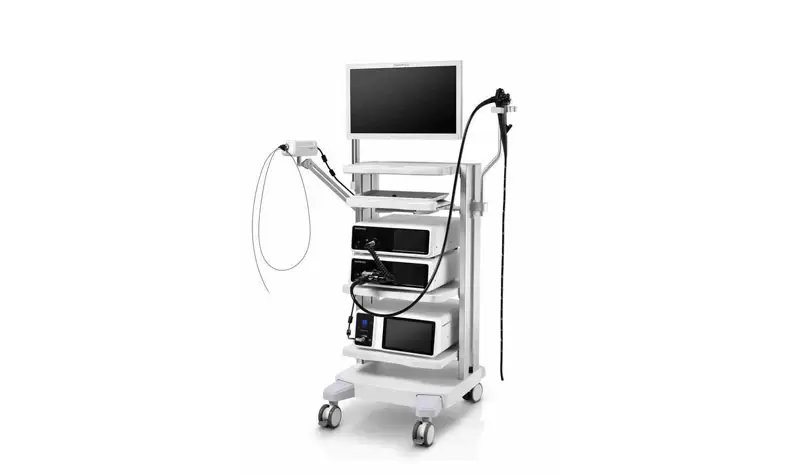
Endoscope is a medical device that can enter the body through natural channels or incisions for examination, treatment, and other procedures. According to different purposes and structures, endoscopes can be classified into various types.