

 en
 English
 繁体中文
 Japanese
 Korean
 Russian
 German
News
Deepen Optoelectronic Resources, Lead Technological Breakthroughs


Deepen Optoelectronic Resources, Lead Technological Breakthroughs
In demanding imaging systems, conventional spherical lenses can introduce spherical aberration because light rays passing through different zones of the lens do not converge at the same focal point. This can reduce image sharpness, particularly in systems requiring high resolution or consistent image quality across the field of view. Adding multiple spherical elements may help correct these aberrations, but it can also increase system size, weight, alignment complexity, and manufacturing costs.
An Aspherical Lens for Imaging offers another approach. Its carefully designed surface curvature provides additional freedom for controlling spherical aberration and other optical errors. However, achieving the intended performance depends not only on optical design but also on manufacturing accuracy. For high-end imaging applications, precision-polished aspherical lenses provide a flexible solution when demanding surface accuracy, specialized materials, or customized geometries are required.
Unlike spherical lenses, which have a constant radius of curvature across their optical surfaces, aspherical lenses use a continuously varying curvature to control how light rays travel through the optical system. A properly optimized aspheric profile can bring marginal and paraxial rays closer to a common focus, reducing spherical aberration and improving image sharpness.
Depending on the optical design, aspherical surfaces can also help correct coma, distortion, and other aberrations. Their effectiveness depends on the complete optical prescription, including aperture, field of view, wavelength, and surrounding optical elements.
For machine vision systems, this correction can improve image definition and support more reliable inspection of small features. In industrial imaging equipment, better control of optical aberrations can help maintain image quality across demanding operating conditions. High-resolution scientific instruments and astronomical optical systems may also benefit from precisely controlled aspherical surfaces.
Another advantage is the possibility of simplifying an optical assembly. In some designs, one aspherical element can replace multiple spherical elements while maintaining the required optical performance. This is not guaranteed for every system, since the final configuration depends on the optical design and performance targets.
ECOPTIK's Precision-Polished Aspherical Lens for Imaging is manufactured using ultra-precision material-removal processes. Rather than relying on an expensive forming mold, the process starts with an optical glass blank. CNC precision machining and polishing progressively generate the required aspherical curvature.
For suitable products and process conditions, surface figure accuracy can reach λ/40 RMS (approximately 15 nm). This is a product-specific manufacturing capability, not a universal specification for all aspherical lenses. The applicable wavelength, measurement method, aperture, and evaluation conditions should be defined in the technical drawing or inspection agreement.
Several manufacturing and finishing processes contribute to optical quality:
CNC precision polishing: Controls material removal to generate the designed aspherical profile. Process planning and correction are essential because local surface deviations can affect wavefront quality.
Magnetorheological finishing (MRF): Uses a controllable polishing medium to correct localized surface errors. It is particularly useful for improving figure accuracy and refining optical surfaces after earlier processing stages.
Ion Beam Figuring (IBF): Uses a focused ion beam to remove extremely small amounts of material in a controlled manner. It is commonly used for deterministic correction of residual surface-figure errors.
These processes address different aspects of optical manufacturing. Their selection depends on the substrate, geometry, required accuracy, and production sequence.
Surface figure accuracy is only one part of the quality equation. Surface roughness affects scattered light and can reduce image contrast, while subsurface damage may introduce additional scattering or compromise laser-induced damage performance. Consequently, a high-quality aspherical lens requires coordinated control of surface geometry, roughness, and subsurface integrity.
Interferometric testing, dimensional measurement, and appropriate surface inspection help verify whether the finished component meets its optical specification.
Understanding Aspheric Lenses Advantages Disadvantages is important when comparing precision-polished aspherical optics with conventional spherical and molded aspherical lenses.
Improved aberration correction: A properly optimized aspherical profile can reduce spherical aberration and other design-dependent optical errors, supporting sharper images and improved contrast.
Greater optical design flexibility: Aspherical surfaces provide additional design freedom, potentially reducing the number of elements required in certain imaging systems.
Customized manufacturing: Precision polishing does not require an expensive dedicated forming mold. This makes it attractive for prototypes, specialized optical assemblies, and small-batch production.
Large and specialized components: Precision machining and polishing can be considered for components ranging from tens of millimeters to meter-scale dimensions, subject to the manufacturer's actual equipment and process capabilities. It is also relevant to difficult-to-process materials such as silicon carbide (SiC), which cannot simply be treated as conventional moldable optical glass.
Aspherical lenses are more demanding to design, manufacture, and inspect than many conventional spherical components.
First, the optical prescription may require sophisticated design optimization and verification. Second, manufacturing a complex surface with tight figure tolerances requires controlled material removal and repeated measurement. Third, specialized finishing and inspection processes can increase production time and cost.
Assembly is another consideration. Even a highly accurate lens may not deliver its intended performance if decenter, tilt, spacing, or mounting stress are not properly controlled.
These manufacturing approaches should not be considered interchangeable.
| Manufacturing method | Main characteristics | Typical suitability |
|---|---|---|
| Precision polishing | Controlled material removal and surface correction | Custom optics, demanding figure requirements, large or specialized components |
| Glass molding | Forms optical surfaces using precision molds under controlled thermal conditions | Suitable production volumes and geometries, particularly repeatable designs |
| Diamond turning | Generates optical surfaces through precision cutting | Suitable materials and geometries, depending on surface-finish requirements |
Molded aspherical lenses can offer manufacturing efficiency for suitable designs and production quantities. However, mold fabrication, material behavior, component dimensions, and thermal processing impose their own limitations.
Precision polishing is particularly valuable when mold tooling is impractical, the material is difficult to mold, or the project requires customized geometry and controlled surface correction. Its actual achievable performance must still be evaluated against the substrate and component geometry.
The Aspherical Lens for Imaging Price depends on more than its diameter or nominal optical performance. Several interconnected engineering and manufacturing factors determine the final quotation.
Lens diameter and geometry: Larger components generally require more material, processing time, and specialized equipment. Steep aspheric departures, complex profiles, and challenging edge geometries can further increase manufacturing difficulty.
Substrate material: Optical glass from suppliers such as SCHOTT, CDGM, and Corning offers different optical and processing characteristics. Other materials, including sapphire, CaF2, MgF2, fused silica, silicon, ZnSe, and ZnS, may require different machining and polishing strategies.
Surface accuracy and roughness: Tighter figure tolerances require more precise processing, correction, and inspection. Lower roughness requirements may also demand additional finishing stages and verification.
Manufacturing and inspection processes: CNC polishing, MRF, and IBF involve different equipment, process controls, and measurement requirements. The selected combination directly influences manufacturing complexity.
Coatings and production quantity: Antireflection coatings or other application-specific coatings add requirements to the specification. Small-batch custom orders may also have higher per-unit costs because setup, engineering, and inspection expenses are distributed across fewer components.
Before requesting an Aspherical Lens for Imaging Price, buyers should provide sufficient optical and mechanical information:
Optical drawing and complete aspheric surface prescription.
Clear aperture, outer diameter, center thickness, and edge dimensions.
Substrate material and operating wavelength.
Surface figure tolerance and measurement definition.
Surface roughness and scratch-dig requirements.
Focal length, numerical aperture, field of view, and imaging requirements.
Coating specifications and environmental conditions.
Required quantity, inspection documentation, and delivery expectations.
For example, a machine vision lens designed for visible-light industrial inspection may have different material, coating, and surface requirements from an optical component used in a high-energy laser system.
Similarly, λ/40 RMS should not be treated as an automatic guarantee of a particular image resolution. Its practical contribution depends on wavelength, spatial distribution of surface errors, optical design, and the performance of the complete assembly.
A qualified supplier should demonstrate capabilities across material selection, optical fabrication, surface correction, and metrology rather than relying on a single accuracy specification.
ECOPTIK has 15 years of experience researching optical component fabrication technology. Its product range includes domes, spherical lenses, micro-optical components, cylindrical mirrors, filters, prisms, and optical windows.
The company works with glass materials from SCHOTT, CDGM, and Corning, as well as sapphire, CaF2, MgF2, fused silica, Si, ZnSe, and ZnS. Lens assembly services are also available for customized optical projects.
For quality verification, ECOPTIK possesses ZYGO laser interferometers, a ZEISS CMM Spectrum, and an Agilent Cary 7000 UMS. These instruments support optical and dimensional measurement requirements and the preparation of product reports.
When evaluating a manufacturer, optical engineers should examine whether its measurement methods correspond to the specified tolerances, whether the substrate is suitable for the application, and whether the supplier can maintain consistent quality throughout the production process.
Precision-polished aspherical lenses offer important advantages for high-resolution imaging, industrial inspection, machine vision, laser optics, astronomical instruments, and scientific research. Their value comes from the combination of optimized aspherical geometry, controlled surface figure, appropriate material selection, and reliable manufacturing.
When comparing suppliers or evaluating an Aspherical Lens for Imaging Price, buyers should consider the complete relationship between optical requirements, manufacturing difficulty, inspection standards, and production quantity. A technically suitable solution is not necessarily the one with the lowest initial price, but the one that meets the system's performance requirements with reliable manufacturing quality.
For customized aspherical optics, ECOPTIK can support material selection, precision fabrication, surface inspection, and lens assembly. Contact its optical engineering team to discuss your optical drawings, performance targets, and manufacturing requirements.
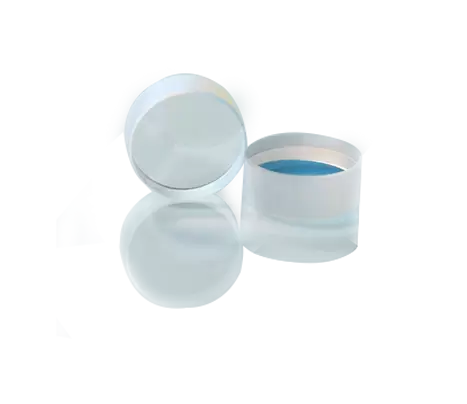
Spherical lens coating directly affects how efficiently an optical system transmits light, controls reflections, and maintains image quality over time. An uncoated lens can lose a meaningful portion of incident light through surface reflections, while an unsuitable or poorly controlled coating may introduce stray light, inconsistent transmission, surface defects, or premature coating failure.
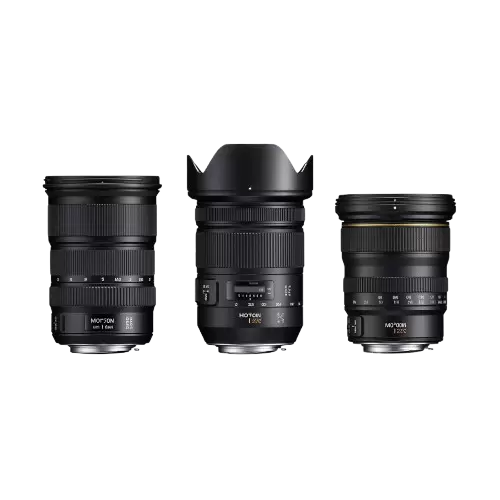
In industrial machine vision, lens selection directly affects whether a camera can produce images that are stable enough for measurement, inspection, and recognition. A consumer-grade lens or an unsuitable zoom lens may introduce changes in field of view, focus, magnification, or distortion when the focal setting changes.
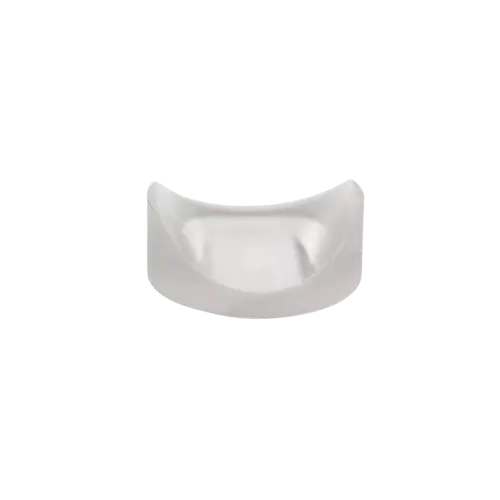
In many laser and imaging systems, controlling light in only one direction is a critical requirement. However, conventional cylindrical lenses can create challenges during integration, especially when optical alignment, positioning accuracy, and long-term stability are important.