
정밀 광학 시스템에서 빛을 한 방향으로 제어하는 것은 종종 설계 과제의 일부일 뿐입니다. 다양한 파장이 기존의 원통형 렌즈를 통과할 때 굴절률의 변화로 인해 각 파장이 약간 다른 위치에 초점을 맞출 수 있습니다.
В прецизионных оптических системах управление светом в одном направлении часто является лишь частью задачи проектирования. Когда разные длины волн проходят через обычную цилиндрическую линзу, изменения показателя преломления могут привести к тому, что каждая длина волны будет фокусироваться в несколько ином положении.
Bei optischen Präzisionssystemen ist die Steuerung des Lichts in eine Richtung oft nur ein Teil der Designherausforderung. Wenn unterschiedliche Wellenlängen eine herkömmliche Zylinderlinse passieren, können Unterschiede im Brechungsindex dazu führen, dass jede Wellenlänge an einer leicht unterschiedlichen Position fokussiert wird.
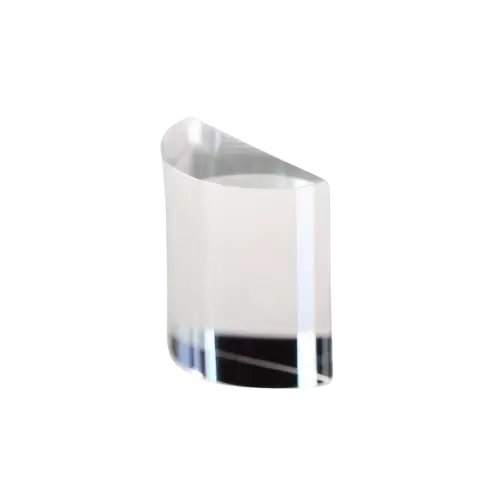
Optical systems do not always need a lens that focuses light in two axes. When the objective is to generate a laser line, illuminate a linear detector, modify beam aspect ratio, or focus a collimated beam in only one direction, a spherical lens can introduce an unwanted optical effect.
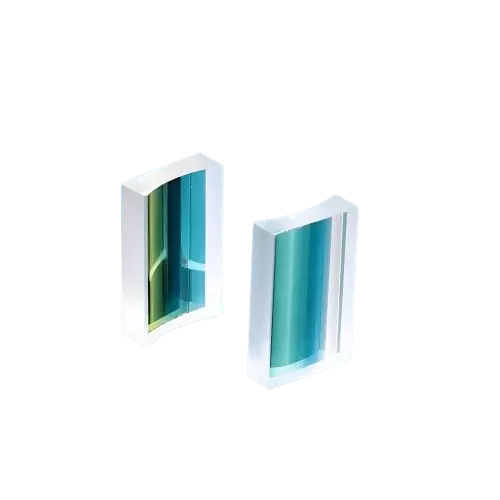
In many optical systems, beam control is required in only one direction. A laser may need to expand horizontally while retaining its original vertical dimension, or an imaging system may need to modify the width of an image without applying the same optical power to its height.
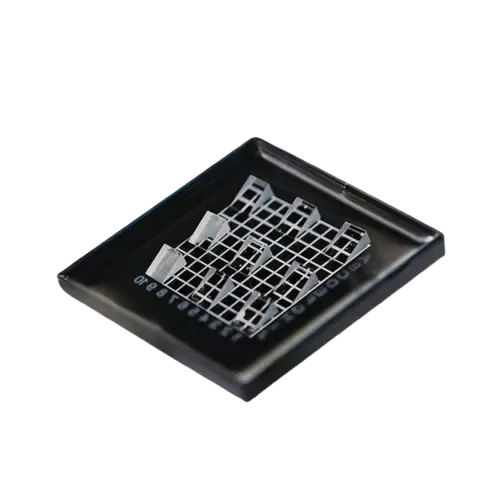
In compact optical instruments, the challenge is often not generating or transmitting light, but finding enough space to route it accurately. Conventional-size prisms can become difficult to integrate into endoscopes, laser diode (LD) to fiber coupling assemblies, and other precision instruments where every millimeter of mechanical space matters.


 en
en
 English
 繁体中文
繁体中文 Japanese
 Korean
 Russian
 German