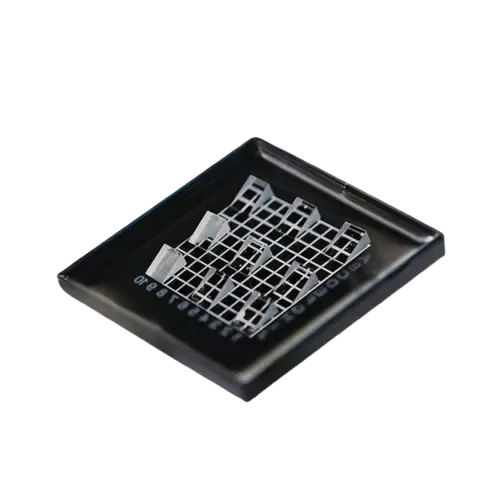
소형 광학 기기에서는 빛을 생성하거나 전송하는 것이 아니라 빛을 정확하게 라우팅할 수 있는 충분한 공간을 찾는 것이 과제인 경우가 많습니다. 기존 크기의 프리즘은 내시경, 레이저 다이오드(LD)와 파이버 커플링 어셈블리, 기계적 공간의 모든 밀리미터가 중요한 기타 정밀 기기에 통합하기 어려울 수 있습니다.
В компактных оптических приборах проблема часто заключается не в генерации или передаче света, а в поиске достаточного места для его точного направления. Призмы обычного размера может быть сложно интегрировать в эндоскопы, узлы соединения лазерных диодов (LD) с оптоволокном и другие прецизионные инструменты, где важен каждый миллиметр механического пространства.
Bei kompakten optischen Instrumenten besteht die Herausforderung oft nicht darin, Licht zu erzeugen oder zu übertragen, sondern genügend Platz zu finden, um es präzise zu leiten. Es kann schwierig sein, Prismen herkömmlicher Größe in Endoskope, Laserdioden (LD)-Faser-Kopplungsbaugruppen und andere Präzisionsinstrumente zu integrieren, bei denen es auf jeden Millimeter mechanischen Platz ankommt.
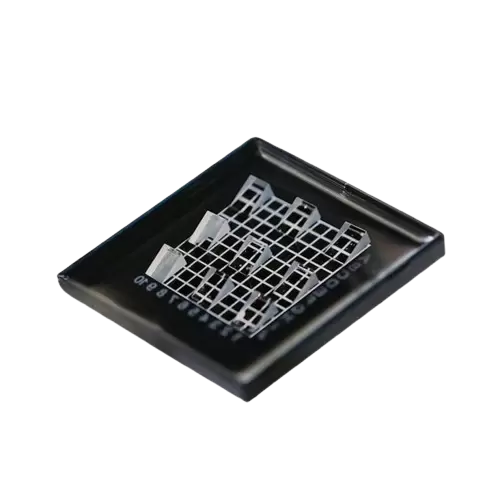
Standard optical prisms are not always practical when an optical path has to fit inside a few millimeters. In endoscopes, laser modules, fiber-coupling assemblies, and compact industrial instruments, a conventional prism can consume too much space, introduce unwanted optical path length, or simply lack the angular precision required by the system.
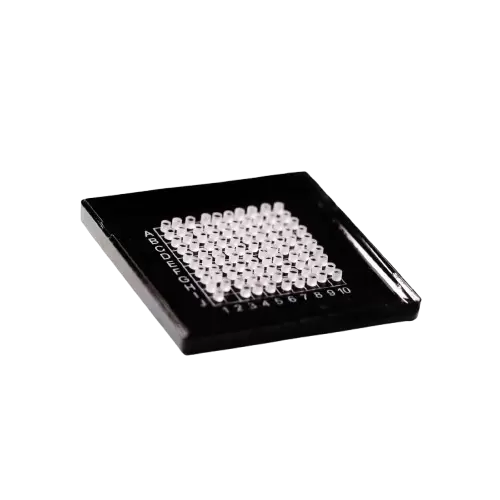
A compact optical system often has to solve a problem that a conventional spherical lens does not handle efficiently: controlling light in one direction while keeping the optical package small. In endoscopes, medical imaging modules, machine vision assemblies, and other precision instruments, a spherical lens may provide general imaging performance but cannot always deliver the required line-focusing behavior within a restricted optical path.
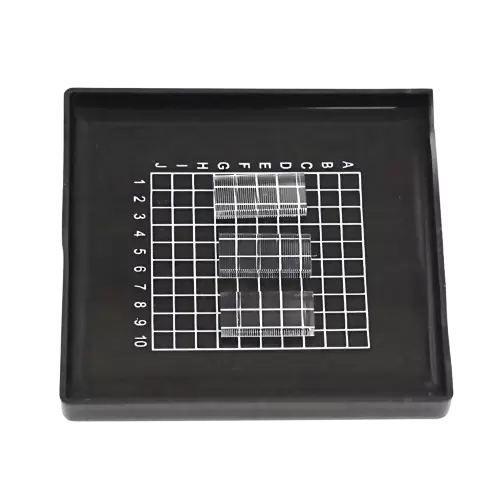
Traditional single lenses remain effective for many optical systems, but their physical size and limited integration become constraints when an optical module needs multiple focusing, imaging, or beam-control functions within a small area.


 en
en
 English
 繁体中文
繁体中文 Japanese
 Korean
 Russian
 German