

 en
en
 English
 繁体中文
繁体中文 Japanese
 Korean
 Russian
 German
News
Deepen Optoelectronic Resources, Lead Technological Breakthroughs

Deepen Optoelectronic Resources, Lead Technological Breakthroughs
 2026.03.27
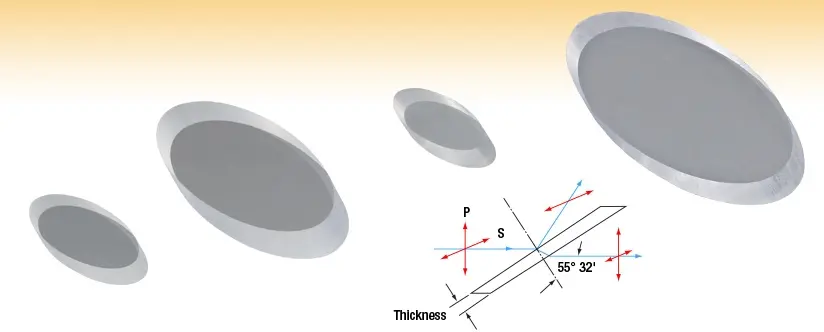
 Brewster windows are critical uncoated optical components in high-power laser systems, enabling zero‑reflection-loss transmission for p‑polarized light at Brewster’s angle while suppressing s-polarized light.
 2026.03.17
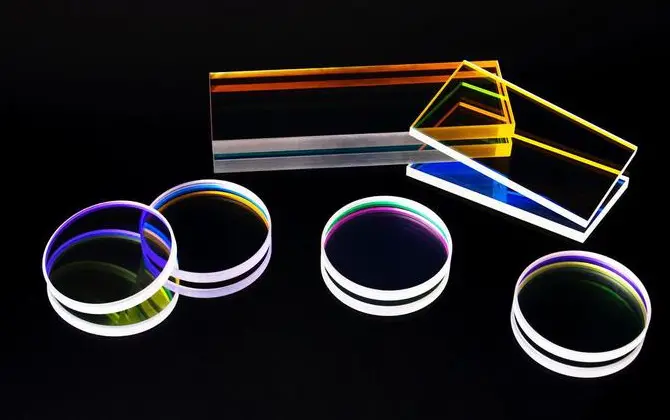
 In the world of precision optics, thin-film coatings are what transform a simple piece of glass into a functional optical component—whether it's an anti-reflection coating that maximizes light transmission, a dielectric mirror that reflects specific wavelengths, or a filter that precisely separates spectral bands . The performance of these coatings directly determines whether an optical system succeeds or fails. But how do manufacturers verify coating quality without risking damage to expensive
 2026.03.10
 2026.02.04
 Cylindrical mirror is a special optical component, and its working principle and application scenarios are significantly different from traditional spherical mirrors.
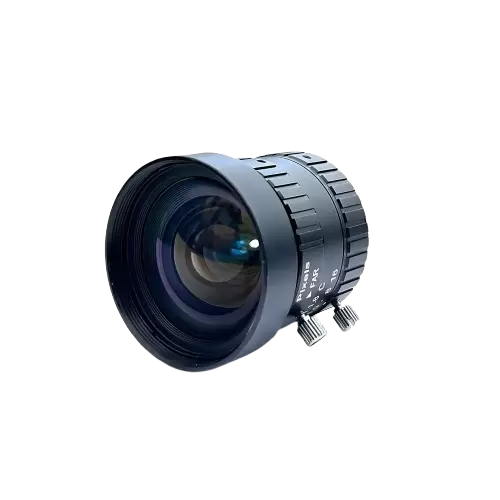
For industrial imaging, a lens designed for visible light cannot automatically deliver the same performance in the ultraviolet range. As wavelength decreases, optical materials that work well in the visible spectrum can introduce stronger absorption, reduced transmission, chromatic errors, and image degradation.
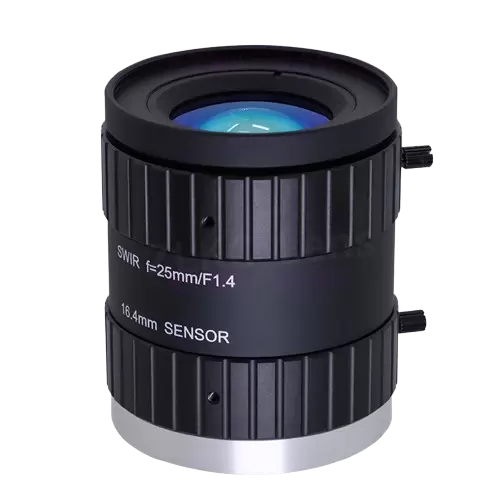
A standard visible-light lens is not automatically suitable for short-wave infrared imaging. As the operating wavelength moves beyond the visible range, optical transmission, dispersion, chromatic focus shift, aberration correction, coating performance, and detector matching all become design considerations.
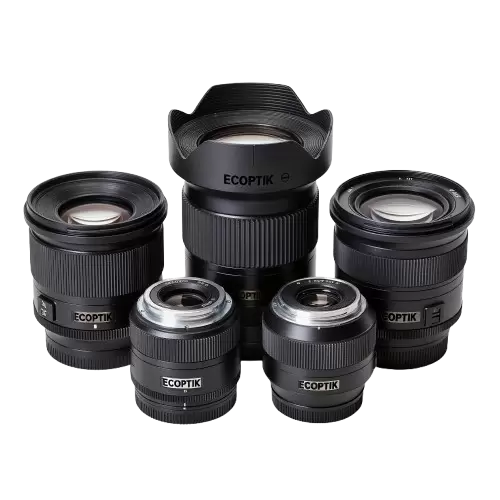
Standard optical lenses are designed around common imaging conditions, but many industrial and scientific systems operate within much tighter optical and mechanical constraints.
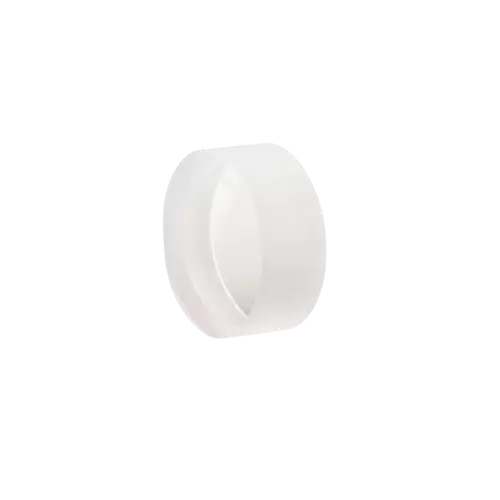
For precision optical systems, choosing a convex lens based only on diameter and focal length is rarely enough. The term “convex lens” covers several optical geometries, including double convex and plano-convex designs, and their performance can differ significantly even when their nominal focal lengths are similar.
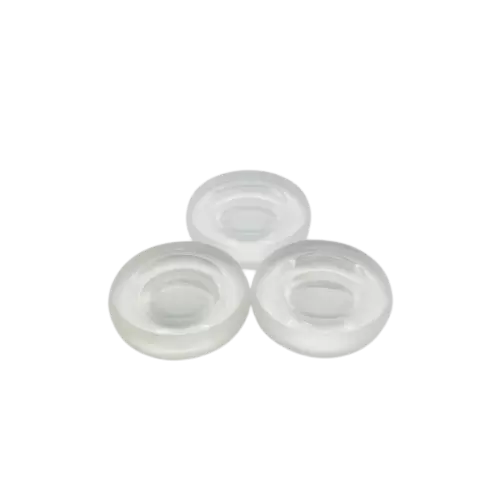
A positive lens is often the natural choice when an optical system needs to focus or converge light, but it cannot solve every beam-control problem. Laser and imaging systems may instead require a controlled increase in beam divergence, a larger beam diameter, or an adjustment that effectively increases the focal length of an existing optical arrangement.
A conventional spherical lens can provide the required optical power, but its simple geometry does not always provide sufficient aberration control in a precision optical system. As aperture increases or the lens is used away from the optical axis, spherical aberration, coma, and degradation toward the edge of the image can become more difficult to manage.